Custom Stone Crusher Machine Factories: Engineering Precision, Scalability, and Operational Efficiency
The global aggregates, mining, and construction industries are fundamentally dependent on the ability to reduce large, irregular rock formations into precise, usable fractions. While standardized crushing equipment serves a broad market, the most demanding operational environments—those characterized by unique feed materials, specific end-product gradations, space constraints, or extreme throughput requirements—necessitate a different approach. This is where custom stone crusher machine factories distinguish themselves. These are not mere assembly plants; they are integrated engineering ecosystems that combine metallurgical expertise, mechanical design, process simulation, and precision fabrication to deliver bespoke solutions. This article provides a detailed, professional examination of custom stone crusher machine factories, covering their core capabilities, design methodologies, manufacturing processes, quality assurance protocols, and the strategic advantages they offer to end-users.
1. Defining the Scope of a Custom Stone Crusher Factory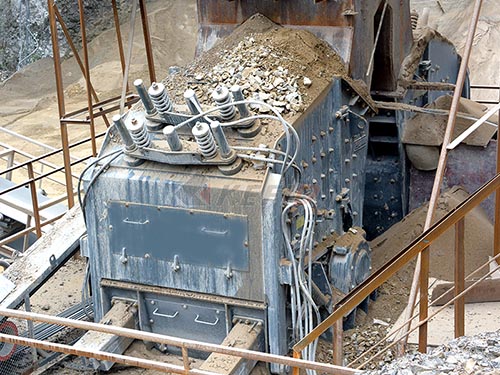
A custom stone crusher factory differs fundamentally from a conventional equipment manufacturer. A standard manufacturer produces a catalog of fixed models (e.g., a specific jaw crusher with a 1,200 mm x 900 mm feed opening). A custom factory, in contrast, operates on a project-specific basis. Its core mandate is to translate a client’s process requirements—often expressed in terms of feed material properties (abrasiveness, compressive strength, moisture content), desired output tonnage (tph), product size distribution (PSD), and physical installation footprint—into a functional, durable, and efficient machine.
The scope of customization can range from minor modifications (e.g., adjusting the discharge setting range on a standard cone crusher) to complete ground-up designs. This includes:
- Custom Feed Hoppers and Chutes: Designed to handle specific material flow characteristics, preventing bridging or spillage.
- Modified Crushing Chambers: Altering the geometry of the crushing cavity (e.g., in a cone or gyratory crusher) to optimize for a specific feed gradation or to produce a cubical product shape.
- Customized Drive Systems: Selecting between direct drive, V-belt drive, or hydraulic drive based on power availability, torque requirements, and space limitations.
- Specialized Base Frames and Skids: Engineering structural steel frames that integrate with existing plant infrastructure, mobile tracks, or modular containerized systems.
- Material-Specific Alloys: Selecting wear parts (jaw plates, blow bars, concaves, mantles) from a range of manganese steels, chromium steels, or composite materials based on the abrasiveness and impact characteristics of the feed.
2. The Engineering and Design Process: From Specification to Simulation
The backbone of a reputable custom factory is its engineering department. The process is iterative and data-driven, typically following these stages:
- Stage 1: Technical Feasibility and Material Testing. The factory’s engineers begin by analyzing the client’s raw material. This often involves laboratory testing of rock samples to determine compressive strength (e.g., using a Uniaxial Compressive Strength test), abrasiveness (e.g., Los Angeles Abrasion test), and work index. This data is critical because a crusher designed for soft limestone will fail catastrophically when fed with granite or basalt.
- Stage 2: Process Flow and Sizing Calculations. Using proprietary software and empirical formulas (e.g., Bond’s law for energy requirements), engineers calculate the required crushing force, the number of crushing stages (primary, secondary, tertiary), and the specific machine dimensions. For a custom jaw crusher, this involves determining the optimum throw, stroke, and toggle plate angle to achieve the desired reduction ratio.
- Stage 3: 3D Modeling and Finite Element Analysis (FEA). Once the preliminary dimensions are set, the entire machine is modeled in 3D CAD software (e.g., SolidWorks, Inventor). This model is then subjected to FEA. FEA is crucial for validating the structural integrity of the main frame, swing jaw, and eccentric shaft. It simulates stress distribution, fatigue life, and deflection under maximum load conditions. This step ensures that the custom machine does not just work, but works reliably for decades without catastrophic fatigue failure.
- Stage 4: Discrete Element Method (DEM) Simulation. For high-throughput or complex crushing applications, factories use DEM software to simulate the flow of rocks through the crushing chamber. This analysis helps optimize the chamber profile to prevent clogging, ensure even wear on the liners, and maximize throughput.
3. Manufacturing Capabilities and Core Fabrication Processes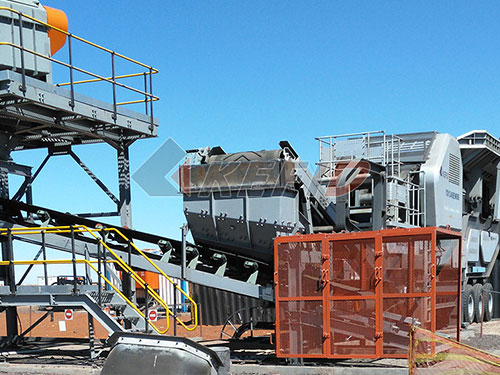
A custom stone crusher factory must possess a robust heavy fabrication infrastructure. Key capabilities include:
- Steel Preparation and Cutting: Large-format CNC plasma or laser cutting tables are used to cut high-strength steel plates (typically Q345B, Q355B, or Hardox) for the main frame components. Precision cutting ensures accurate weld joint preparation.
- Heavy Welding: The main frames of jaw and cone crushers are subjected to immense cyclic stresses. Therefore, factories employ certified welders (e.g., AWS D1.1 certified) and utilize submerged arc welding (SAW) or flux-cored arc welding (FCAW) processes. Post-weld heat treatment (stress relieving) is often performed in large industrial furnaces to eliminate residual stresses that could cause distortion or cracking during operation.
- Precision Machining: The heart of any crusher is its rotating components. Custom factories maintain large horizontal boring mills, vertical turning lathes, and CNC machining centers to machine the eccentric shafts, bearing housings, and flywheels. Tolerances are typically held to within 0.05 mm or tighter on critical bearing seats to ensure proper bearing life and smooth operation.
- Heat Treatment and Metallurgy: For wear parts, the factory either has in-house foundry capabilities or partners closely with specialized foundries. Custom jaw plates, for example, are cast from austenitic manganese steel (e.g., 12-14% Mn) and then subjected to work-hardening heat treatment. The factory’s metallurgists control the chemistry and quenching process to achieve the optimal balance between hardness (for wear resistance) and toughness (to resist breakage from impact).
4. Quality Assurance and Testing Protocols
Customization introduces inherent risks; therefore, quality assurance (QA) is non-negotiable. A professional factory implements a multi-layered QA system:
- Incoming Material Inspection: All steel plates and forgings are verified against mill certificates to confirm chemical composition and mechanical properties.
- In-Process Dimensional Inspection: Using laser trackers and CMM (Coordinate Measuring Machines), critical dimensions are verified at each stage—from cutting to final machining.
- Non-Destructive Testing (NDT): All critical welds are subjected to ultrasonic testing (UT) or magnetic particle inspection (MPI) to detect subsurface flaws. This is a mandatory step for pressure-bearing or high-stress components.
- Assembly and No-Load Run Test: After fabrication, the crusher is fully assembled on the factory floor. It is then run without feed material for a specified duration (e.g., 4-8 hours). Engineers monitor bearing temperatures, vibration levels, and noise. Vibration analysis is performed to ensure the rotating assembly is dynamically balanced. Only after passing this rigorous test is the machine disassembled, painted, and prepared for shipping.
5. The Strategic Advantages of Choosing Custom Manufacturing
While the upfront cost of a custom crusher is typically 15-30% higher than a standard model, the total cost of ownership (TCO) often favors the custom solution. The advantages are multifaceted:
- Optimized Throughput and Efficiency: A machine designed for a specific feed size and material will operate at its peak efficiency. It will consume less power per ton of crushed material and achieve higher throughput than a standard machine that is over-spec’d or under-spec’d for the application.
- Extended Wear Life: By selecting the correct wear material and chamber geometry, a custom crusher can significantly extend the life of liners. For example, a custom-designed blow bar for an impact crusher can last 40-50% longer than a generic bar, directly reducing operational costs and downtime.
- Seamless Integration: Custom factories can design the crusher to fit into an existing plant with minimal civil works. This includes matching inlet and outlet heights, integrating with existing conveyors, and designing base frames that fit on existing foundations or mobile chassis.
- Handling Non-Standard Materials: Some materials, such as river gravel with high silica content, slag, or recycled concrete with rebar, are notoriously difficult to process. Standard machines may choke or suffer premature wear. A custom factory can design a specific rotor configuration, an adjustable breaker plate system, or a specialized feed mechanism to handle these challenging materials reliably.
- Future-Proofing: A reputable custom factory provides comprehensive documentation, including 3D models and detailed drawings. This allows the end-user to easily source replacement parts or make future modifications without reverse engineering.
6. Industry Applications and Case Scenarios
Custom stone crushers are prevalent in several specific sectors:
- Mining (Underground and Open-Pit): Here, space is often at a premium. Custom low-profile jaw crushers or sizers are designed to fit into underground tunnels with limited headroom.
- Aggregate Production for High-Spec Concrete: For producing premium aggregates for dam construction or high-rise buildings, custom cone crushers with specific chamber profiles are used to achieve a high cubicity (cubical shape) and a narrow PSD.
- Recycling and Demolition: Custom impact crushers with reinforced rotors and hydraulic opening mechanisms are designed to handle reinforced concrete and asphalt, with features to eject rebar safely.
- Specialized Industrial Minerals: For processing abrasive materials like bauxite or corundum, custom roll crushers with tungsten carbide-coated segments are engineered.
7. Selecting a Reliable Custom Factory: Key Evaluation Criteria
For a project manager or procurement specialist, selecting the right factory is critical. The evaluation should go beyond price quotes. Key criteria include:
- Engineering Track Record: Request case studies and references from projects with similar material types and tonnages.
- In-House Capabilities: Verify that the factory has in-house machining, welding, and testing capabilities. Outsourcing critical components can lead to quality control issues.
- Metallurgical Expertise: Inquire about their wear part development process. Do they have a metallurgist on staff? Can they provide wear life guarantees based on your specific material?
- After-Sales Support: A custom machine is unique. The factory must offer robust technical support, including installation supervision, commissioning, and a guaranteed supply of spare parts for the machine’s lifetime.
- Lead Time and Project Management: Custom manufacturing requires a longer lead time (typically 12-20 weeks). A professional factory will provide a detailed project timeline with clear milestones and regular progress reports.
Conclusion
Custom stone crusher machine factories represent the pinnacle of engineering capability in the mineral processing industry. They move beyond the limitations of off-the-shelf equipment, offering solutions that are precisely tuned to the physical and chemical properties of the feed material and the economic constraints of the operation. By leveraging advanced simulation software, precision manufacturing, and rigorous quality control, these factories deliver machines that offer superior efficiency, durability, and integration. While the initial investment is higher, the return on investment—through reduced energy consumption, lower wear costs, and maximized uptime—makes custom engineering a strategic choice for serious operators who view their crushing plant as a long-term asset rather than a commodity purchase. In an industry where downtime is measured in thousands of dollars per hour, the reliability and precision of a custom-built crusher are not just features; they are essential business imperatives.
