
Custom Slag Crusher Plant Manufacturers: Engineering Solutions for Industrial Waste Processing
In the modern industrial landscape, the efficient management and recycling of by-products have become critical for both economic and environmental sustainability. Among these by-products, slag—a molten by-product generated during the smelting of ores in metallurgical processes—presents both a challenge and an opportunity. Slag, depending on its source (e.g., blast furnace slag, steel slag, ferroalloy slag, or non-ferrous slag), can be processed into valuable secondary raw materials for construction, cement production, road building, and agriculture. However, the physical and chemical properties of slag vary significantly, necessitating specialized crushing and screening equipment. This is where custom slag crusher plant manufacturers play a pivotal role. These manufacturers design, engineer, and fabricate tailored processing systems that address the unique characteristics of different slag types, ensuring maximum recovery, minimal downtime, and compliance with environmental regulations.
Understanding Slag and Its Processing Challenges
Before delving into the specifics of custom plant manufacturing, it is essential to understand why slag requires specialized crushing solutions. Unlike natural stone or ores, slag often possesses high abrasiveness, variable hardness (ranging from 2 to 7 on the Mohs scale), metallic content (including free iron), and a tendency to be brittle or tough depending on its cooling rate. For instance, air-cooled blast furnace slag is relatively easy to crush, while steel slag, which contains high levels of free lime (CaO) and iron oxides, can be extremely abrasive and may cause rapid wear to standard crusher components. Additionally, slag often contains metallic inclusions that must be separated to produce a clean aggregate. These factors make off-the-shelf crushing plants inadequate for efficient slag processing. A custom approach is required to optimize throughput, product quality, and equipment longevity.
The Role of Custom Slag Crusher Plant Manufacturers
Custom slag crusher plant manufacturers are not merely suppliers of machinery; they are engineering partners that provide end-to-end solutions. Their expertise encompasses:
Material Analysis and Characterization: The first step in designing a custom plant is a thorough analysis of the slag. Manufacturers conduct tests to determine the slag’s chemical composition, abrasiveness, moisture content, and particle size distribution. This data informs the selection of crusher types (e.g., jaw crushers, cone crushers, impact crushers, or specialized hammer mills), screen decks, magnetic separators, and dust suppression systems.
Process Flow Design: Based on the material analysis, manufacturers design a process flow that maximizes efficiency. For example, a typical steel slag processing line might include: primary jaw crushing to reduce large lumps, secondary cone or impact crushing for further size reduction, magnetic separation to recover ferrous metals, and multiple stages of screening to produce specific aggregate sizes. For blast furnace slag, a simpler circuit with a ball mill or vertical roller mill might be used for fine grinding.
Customized Equipment Selection: Standard crushers are often modified or replaced with heavy-duty versions. For instance, manufacturers may use manganese steel or ceramic-lined crusher jaws to resist abrasion. Impact crushers may be fitted with wear-resistant blow bars and adjustable rotor speeds to handle slag’s variable toughness. Additionally, custom plants often incorporate hydraulic adjustment systems to compensate for wear and maintain consistent product size.
Integration of Ancillary Systems: Slag processing generates dust, noise, and heat. Custom manufacturers integrate dust collection systems (baghouses or wet scrubbers), soundproofing enclosures, and cooling systems for crusher bearings. They also design conveyor systems with proper belt widths and impact idlers to handle heavy, sharp-edged slag.
Automation and Control: Modern custom plants are equipped with PLC-based control systems that monitor crusher load, motor current, and product quality in real time. This allows for automatic adjustments to feed rate and crusher settings, reducing human error and improving consistency.
Key Components of a Custom Slag Crusher Plant
A well-designed custom slag crusher plant typically includes the following components, each tailored to the specific slag type:
Primary Crusher: Often a heavy-duty jaw crusher with a deep cavity and high reduction ratio. For extremely hard slag, a gyratory crusher may be used. The feed opening is designed to accommodate large slag blocks (up to 1 meter in size).
Secondary/Tertiary Crushers: Cone crushers are preferred for producing cubical aggregates, while impact crushers are used for materials with lower abrasiveness. For slag with high metallic content, a vertical shaft impactor (VSI) with a rock-on-steel configuration may be employed to minimize wear.
Magnetic Separation: Overbelt magnets, drum magnets, or eddy current separators are used to recover ferrous and non-ferrous metals. These are often placed after each crushing stage to prevent metal from damaging downstream equipment.
Screening System: Multi-deck vibrating screens with heavy-duty wire mesh or polyurethane panels are used to separate slag into multiple fractions (e.g., 0-5mm, 5-20mm, 20-40mm). The screen angle and vibration frequency are adjusted to prevent blinding from sticky slag.
Dust Suppression: Water spray nozzles or foam systems are installed at transfer points and crusher discharge to control airborne particulates. For dry processing, baghouse filters with pulse-jet cleaning are common.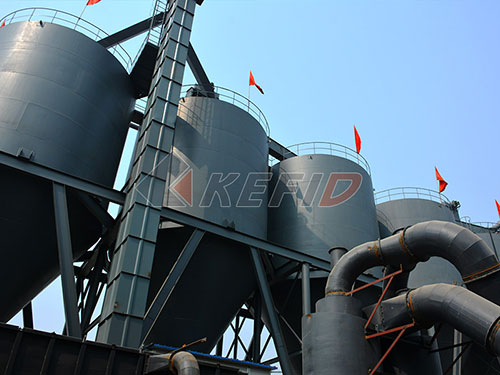
Control Room: A centralized control panel with HMI (Human-Machine Interface) allows operators to monitor all equipment, adjust parameters, and receive alarms for maintenance.
Advantages of Customization Over Standard Plants
While standard crushing plants are cheaper and faster to procure, they often fall short in slag processing for several reasons:
Wear Life: Standard crushers may require frequent replacement of wear parts, leading to high operating costs. Custom plants use thicker, harder liners and optimized crushing chambers to extend wear life by 30-50%.
Product Quality: Off-the-shelf plants may produce inconsistent particle shapes or excessive fines. Custom designs incorporate adjustable crusher settings and multiple screening stages to achieve precise gradation requirements.
Metallic Recovery: Standard plants lack integrated magnetic separation, resulting in lost metal value and contamination of the final product. Custom plants can recover up to 95% of metallic content.
Energy Efficiency: Custom plants are designed to match the specific power requirements of the slag, reducing energy consumption per ton of processed material.
Leading Custom Slag Crusher Plant Manufacturers
Several global and regional manufacturers specialize in custom slag processing solutions. While it is not appropriate to endorse specific companies, it is useful to describe the typical capabilities of such manufacturers:
Engineering and Design Expertise: Top manufacturers have in-house metallurgists, mechanical engineers, and process designers who collaborate with clients to develop bespoke solutions. They often use 3D modeling software (e.g., SolidWorks, AutoCAD) to simulate plant layouts and material flow.
Manufacturing Capabilities: These companies operate heavy fabrication facilities with CNC machining, welding, and heat treatment capabilities. They can produce custom crusher frames, shafts, and wear parts to exact specifications.
Global Service Network: Many manufacturers offer installation, commissioning, and after-sales support, including spare parts supply and remote monitoring. Some provide training for local operators.
Compliance and Certification: Reputable manufacturers ensure their plants meet international standards such as ISO 9001, CE, and OSHA safety requirements. They also design for environmental compliance, including noise and dust emission limits.
Case Study: Custom Plant for Steel Slag Processing
To illustrate the value of customization, consider a hypothetical steel slag processing plant designed by a custom manufacturer. The client, a steel mill in an emerging economy, produces 200,000 tons of slag annually. The slag contains 15% free iron, 10% free lime, and has an abrasion index of 0.8. A standard plant would experience rapid wear and produce a product with high free lime content, making it unsuitable for cement production.
The custom manufacturer designs a plant with the following features:
The result: The plant achieves a throughput of 150 tons per hour, produces aggregates with less than 1% free lime, and recovers 30,000 tons of scrap metal annually. The wear life of crusher liners is 6 months, compared to 2 months for a standard plant.
Challenges and Future Trends
Despite the advantages, custom slag crusher plants face challenges such as high initial capital cost, longer lead times (often 6-12 months), and the need for skilled operators. However, the long-term benefits—lower operating costs, higher product value, and reduced environmental liability—often outweigh these drawbacks.
Future trends in custom slag plant manufacturing include:
Conclusion
Custom slag crusher plant manufacturers are indispensable partners in the industrial recycling ecosystem. By providing tailored solutions that account for the unique properties of different slag types, they enable steel mills, foundries, and non-ferrous metal producers to transform waste into valuable resources. The expertise required—from material science to mechanical engineering—ensures that these plants deliver high efficiency, low operating costs, and environmental compliance. As global demand for sustainable construction materials grows, the role of custom slag crusher plant manufacturers will only become more critical. For any industrial operation seeking to maximize the value of its slag by-products, investing in a custom-designed processing plant is not just an option—it is a strategic necessity.
If you have any questions about our products, please feel free to contact us. We take all inquiries and suggestions very seriously.