Custom Sand Gravel Mining Makers: Engineering Solutions for the Global Aggregate Industry
Introduction
The global demand for sand and gravel, collectively known as aggregates, is staggering. As the second most consumed natural resource after water, these materials form the literal foundation of modern civilization—from concrete and asphalt to glass and electronics. However, not all sand and gravel are created equal. The specific requirements of construction projects, industrial applications, and environmental regulations demand precise material specifications. This is where the concept of “Custom Sand Gravel Mining Makers” becomes critical. These are not merely manufacturers of mining equipment; they are specialized engineering firms that design, fabricate, and deploy bespoke machinery and processing systems tailored to unique geological conditions, production targets, and end-use quality standards. This article provides a professional, objective, and comprehensive examination of the custom sand and gravel mining maker industry, exploring its technological foundations, market drivers, operational challenges, and future trajectory.
1. Defining the “Custom Sand Gravel Mining Maker”
A “Custom Sand Gravel Mining Maker” is an entity—typically an engineering, procurement, and construction (EPC) contractor or a specialized original equipment manufacturer (OEM)—that provides end-to-end solutions for aggregate extraction and processing. Unlike standard equipment suppliers who offer off-the-shelf crushers, screens, and conveyors, custom makers engage in a deep diagnostic process. They analyze the client’s deposit (e.g., alluvial riverbed, hard rock quarry, marine dredging site), the desired product gradation (e.g., 0-4 mm fine sand, 4-20 mm gravel, 20-40 mm coarse aggregate), and the required throughput (tons per hour). The output is a fully integrated, often modular, mining and processing plant that may include:
- Primary Crushing: Jaw crushers or gyratory crushers for reducing run-of-mine material.
- Secondary/Tertiary Crushing: Cone crushers, impact crushers, or vertical shaft impactors (VSIs) for shaping and further size reduction.
- Screening: Multi-deck vibrating screens for precise particle size separation.
- Washing & Classification: Log washers, hydrocyclones, sand screws, and dewatering screens to remove clay, silt, and organic matter.
- Water Management: Thickeners, filter presses, and closed-loop water systems to meet environmental discharge standards.
- Automation & Control: PLC-based systems for real-time monitoring, load balancing, and predictive maintenance.
The “custom” aspect extends beyond hardware. It includes process flow design, site layout optimization, electrical and civil engineering, and often long-term service agreements.
2. The Technological Core: From Geology to Gradation
The success of a custom sand and gravel mining maker hinges on its ability to translate geological data into a viable processing circuit. The process begins with a thorough material characterization:
- Petrographic Analysis: Determines rock type, hardness (Mohs scale), and abrasiveness. For example, processing granite requires different wear-resistant liners than processing limestone.
- Sieve Analysis & Fineness Modulus: Establishes the existing particle size distribution and the target distribution. For concrete sand, the fineness modulus typically must fall between 2.3 and 3.1.
- Clay Content & Plasticity Index: High clay content necessitates intensive scrubbing and washing stages to avoid compromising concrete strength.
- Moisture Content: Influences the design of dewatering equipment and stockpile management.
Based on these parameters, the custom maker designs a flowsheet. For instance, a deposit with high silt content might require a two-stage washing system: a log washer for coarse material followed by a hydrocyclone cluster for fine sand recovery. Conversely, a hard rock quarry producing high-quality cubical aggregates might prioritize a VSI crusher with an autogenous rock-on-rock chamber.
Advanced simulation software (e.g., Bruno, AggFlow) is used to model the entire circuit, predicting throughput, power consumption, and product yield. This digital twin allows the maker to optimize the plant before a single component is fabricated, reducing commissioning risks.
3. Key Equipment Categories in Custom Solutions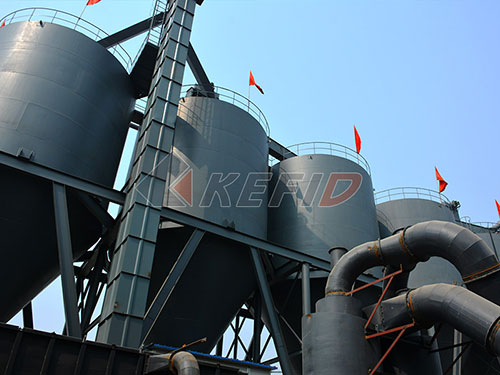
Custom makers do not reinvent the wheel; they select, modify, and integrate proven technologies. The following are critical equipment categories where customization is most pronounced:
- Crushers: While standard models exist, custom makers often specify modified chamber profiles, eccentric throw adjustments, and hydraulic setting systems to match the feed material. For example, a custom solution for a river gravel deposit might use a “cubicity” cone crusher with a specialized liner profile to minimize flat and elongated particles.
- Screens: Custom screen decks are designed with specific aperture shapes (square, slotted, round), wire diameters, and materials (polyurethane, rubber, woven wire) to maximize efficiency and minimize blinding. Multi-frequency screens are sometimes employed for difficult-to-screen materials.
- Washing Equipment: This is where customization is most intensive. A custom sand plant might include a “dewatering screen” with a specially designed wedge-wire panel to achieve a moisture content below 15%, or a “hydrosizer” (hydraulic classifier) that uses upward current water to separate sand into multiple precise fractions (e.g., concrete sand, masonry sand, asphalt sand).
- Conveying & Stockpiling: Custom makers design transfer points to minimize dust generation and material degradation. Radial stackers with variable speed drives allow for blending multiple products in stockpiles.
4. Market Drivers and Industry Applications
The demand for custom sand and gravel mining makers is driven by several macro-trends:
- Infrastructure Development: Large-scale projects (high-speed rail, airports, dams) require consistent, high-quality aggregates in enormous volumes. Standard plants often cannot meet the specific gradation or cleanliness requirements.
- Urbanization & Concrete Demand: The global concrete market, valued at over $600 billion, demands sand with a specific particle shape and gradation. Custom plants can produce “manufactured sand” (M-sand) from crushed rock, which is increasingly replacing natural river sand due to environmental restrictions.
- Environmental Regulations: Stricter limits on water usage, dust emissions, and tailings disposal force operators to invest in custom solutions. Closed-loop water systems and zero-liquid-discharge (ZLD) plants are now common custom offerings.
- Resource Depletion: As high-quality natural deposits are exhausted, operators must process lower-grade materials (e.g., highly weathered rock, contaminated alluvium). Custom makers design plants to handle these challenging feeds economically.
- Regional Specificity: A sand and gravel plant in the Middle East must handle high temperatures and scarce water, while a plant in Scandinavia must operate in freezing conditions. Custom makers adapt insulation, heating, and de-icing systems accordingly.
5. Operational Challenges and Engineering Responses
Custom sand and gravel mining is not without significant challenges:
- Feed Variability: Even within a single deposit, material properties can change dramatically. Custom makers address this by designing flexible circuits with bypass chutes, adjustable crusher settings, and surge bins to buffer fluctuations.
- Wear and Tear: Abrasive materials like quartzite can wear out crusher liners in weeks. Custom solutions include using high-chrome iron alloys, ceramic inserts, and automated liner monitoring systems.
- Water Scarcity: In arid regions, water is a critical constraint. Custom makers now offer “dry processing” systems that use air classifiers and electrostatic separation to remove fines without water, though these are less effective for high-clay materials.
- Energy Efficiency: Crushing and grinding are energy-intensive. Custom plants increasingly incorporate variable frequency drives (VFDs), high-efficiency motors, and regenerative braking on conveyors to reduce power consumption by 15-30%.
- Regulatory Compliance: Permitting for new mines is increasingly difficult. Custom makers help by designing plants that minimize noise, dust, and visual impact, often incorporating enclosed structures and misting systems.
6. Case Study: Custom Plant for Manufactured Sand Production
Consider a hypothetical but realistic scenario: A quarry in India has abundant granite but faces a ban on river sand mining. The operator needs to produce 200 tons per hour of M-sand for the local concrete market. A custom maker would design a plant with:
- Stage 1: A jaw crusher to reduce 600 mm feed to 150 mm.
- Stage 2: A cone crusher to reduce to 40 mm.
- Stage 3: A VSI crusher with a rock-on-rock chamber to produce cubical particles.
- Screening: A triple-deck screen to separate 0-4.75 mm (M-sand), 4.75-10 mm (chipping), and +10 mm (recirculated).
- Washing: A hydrocyclone and dewatering screen to remove minus 75 micron fines, achieving a fineness modulus of 2.8.
- Automation: A central control room with real-time particle size analyzers (e.g., online sieve analyzers) to adjust crusher settings automatically.
The result is a product that meets IS 383 standards, with a consistent gradation and a low flakiness index, commanding a premium price in the market.
7. The Future: Digitalization, Sustainability, and Modularity
The custom sand and gravel mining maker industry is evolving rapidly. Key trends include: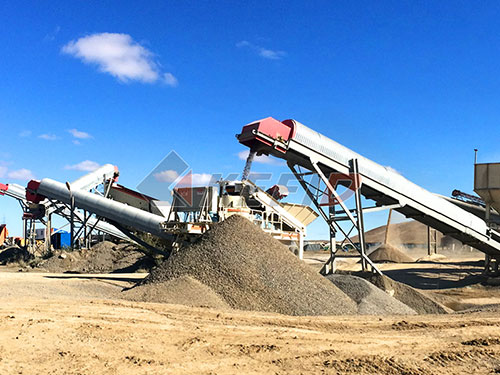
- Digital Twins & AI: Advanced simulation and machine learning algorithms will predict wear patterns, optimize crusher settings, and schedule maintenance, reducing downtime by up to 20%.
- Modular & Mobile Plants: Custom makers are increasingly offering containerized, plug-and-play modules that can be rapidly deployed, relocated, and expanded. This is critical for temporary infrastructure projects or remote sites.
- Circular Economy: Custom plants are being designed to process construction and demolition (C&D) waste into recycled aggregates. This requires specialized magnetic separators, air classifiers, and washing systems to remove contaminants like wood, plastic, and gypsum.
- Carbon Footprint Reduction: Electrification of mining equipment, use of renewable energy, and carbon capture technologies are being integrated into custom plant designs. Some makers now offer “net-zero” plant concepts.
- Remote Monitoring & Service: IoT sensors and satellite communications allow custom makers to monitor plant performance from a central hub, offering predictive diagnostics and remote troubleshooting.
Conclusion
Custom sand and gravel mining makers represent the pinnacle of engineering in the aggregate industry. They are not simply vendors of machinery; they are partners in solving complex geological, operational, and environmental challenges. By combining deep materials science knowledge with advanced mechanical and process engineering, they enable the production of the precise, high-quality aggregates that underpin modern infrastructure. As global demand for sand and gravel continues to rise, and as natural resources become scarcer and regulations tighter, the role of these custom solution providers will only grow in importance. The future of construction depends not just on the availability of aggregates, but on the ability to produce them efficiently, sustainably, and to exacting specifications—a task that only a true custom maker can deliver.
