
Custom Iron Ore Crushing Plant Producers: Engineering Solutions for Global Mining Demands
The global mining industry, particularly the iron ore sector, operates under increasingly complex conditions. Ore grades are declining, deposits are becoming more remote, and environmental regulations are tightening. In this context, the “one-size-fits-all” approach to mineral processing is no longer viable. This has given rise to a specialized niche within heavy machinery manufacturing: custom iron ore crushing plant producers. These are engineering firms that design, fabricate, and commission crushing systems tailored to the specific mineralogical, geographical, and operational requirements of a given mine site. This article provides a detailed, professional, and objective examination of these producers, their engineering capabilities, the critical factors in customization, and the market dynamics that define this high-stakes industry.
1. The Rationale for Customization in Iron Ore Crushing
Iron ore is not a homogeneous commodity. It exists in various forms—hematite, magnetite, goethite, limonite, and siderite—each with distinct hardness (measured by the Bond Work Index), abrasiveness, moisture content, and liberation size. A crushing plant designed for a high-grade hematite deposit in Western Australia will fail catastrophically if deployed on a low-grade, clay-rich magnetite deposit in Brazil. Custom producers address these variables through:
2. Key Engineering Capabilities of Leading Producers
Top-tier custom iron ore crushing plant producers distinguish themselves through a combination of mechanical engineering expertise, process optimization, and project management. Their core capabilities include:
2.1. Primary Crushing Solutions
The primary crusher is the gateway to the plant. For iron ore, gyratory crushers are often preferred for high-capacity operations (above 5,000 tph) due to their ability to handle large, hard feed. However, jaw crushers remain cost-effective for smaller operations. Custom producers design the feed hopper, apron feeder, and crusher foundation to absorb massive dynamic loads while ensuring consistent feed. They also integrate metal detectors and magnetic separators upstream to protect downstream equipment from tramp iron.
2.2. Secondary and Tertiary Crushing Circuits
This is where customization becomes most critical. For hard, abrasive ores, cone crushers with heavy-duty manganese liners are standard. However, for ores with high clay content, producers may incorporate high-pressure grinding rolls (HPGRs) or vertical shaft impactors (VSIs) to reduce recirculating loads and prevent clogging. The circuit design must balance reduction ratios, energy consumption, and liner wear life. Advanced producers use simulation software (e.g., JKSimMet, Bruno) to model the entire circuit, predicting how changes in feed characteristics affect product quality.
2.3. Screening and Classification
Efficient screening is vital to separate crushed ore into saleable fractions. Custom producers design multi-deck vibrating screens with adjustable stroke, amplitude, and inclination. For fine screening, they may incorporate Derrick or Multotec stack sizers. In wet processing applications, hydrocyclones and dewatering screens are integrated to handle slurries. The goal is to achieve sharp separation without blinding (clogging) the screen media, a common issue with sticky, high-moisture ores.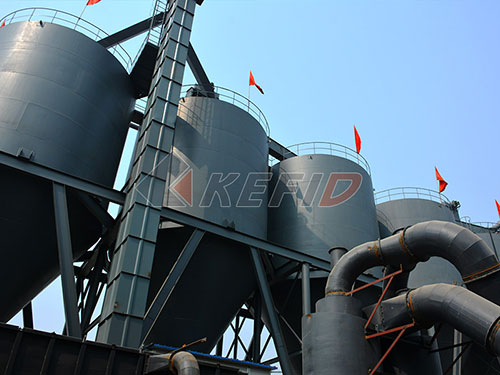
2.4. Dust Control and Environmental Compliance
Iron ore crushing generates significant respirable silica dust. Custom producers are now required to integrate comprehensive dust suppression systems, including water spray nozzles, fog cannons, baghouse filters, and enclosed transfer chutes. In regions with strict emission standards (e.g., Australia, Canada, Europe), producers must design plants that achieve less than 1 mg/m³ of particulate matter. This often involves computational fluid dynamics (CFD) modeling to optimize airflow and capture efficiency.
2.5. Automation and Control Systems
Modern custom plants are highly automated. Producers integrate programmable logic controllers (PLCs), supervisory control and data acquisition (SCADA) systems, and remote monitoring capabilities. Sensors measure crusher power draw, bearing temperature, oil flow, and vibration. Advanced systems use machine learning algorithms to predict liner wear and optimize crusher settings in real-time. This reduces downtime and improves overall equipment effectiveness (OEE).
3. The Custom Plant Design Process: A Step-by-Step Overview
The journey from concept to commissioning is rigorous and typically spans 12 to 24 months for a large-scale plant. The process involves:
4. Major Global Custom Iron Ore Crushing Plant Producers
While many companies offer standard crushing equipment, only a few have the engineering depth to deliver truly custom solutions. Notable producers include:
5. Challenges and Future Trends
Custom iron ore crushing plant producers face several challenges:
Future trends include:
6. Conclusion
Custom iron ore crushing plant producers are not merely equipment suppliers; they are strategic partners in the mining value chain. Their ability to engineer solutions that optimize recovery, minimize waste, and comply with environmental standards is critical to the profitability and sustainability of iron ore operations. As ore bodies become more challenging and markets demand higher product quality, the role of these specialized producers will only grow. For mining companies, selecting the right partner—one with proven metallurgical expertise, robust engineering capabilities, and a global service network—is a decision that directly impacts the bottom line for decades to come. The future of iron ore processing lies in precision, adaptability, and innovation, and custom plant producers are at the forefront of this transformation.
If you have any questions about our products, please feel free to contact us. We take all inquiries and suggestions very seriously.