
Title: Crushing and Screening Equipment OEM Factory Samples: A Comprehensive Overview
Introduction
In the aggregate, mining, construction, and recycling industries, the efficiency and reliability of crushing and screening equipment are fundamental to operational success. Original Equipment Manufacturers (OEMs) play a pivotal role in delivering machinery that meets rigorous performance, durability, and safety standards. An increasingly important aspect of the OEM procurement and qualification process is the evaluation of factory samples—physical specimens, material test pieces, and pre-production units that demonstrate manufacturing quality and design integrity. This article provides a detailed, objective examination of crushing and screening equipment OEM factory samples, covering their purpose, types, evaluation criteria, manufacturing processes, quality assurance protocols, and industry best practices.
The Role of Factory Samples in OEM Procurement
Factory samples serve as tangible evidence of an OEM’s manufacturing capabilities before full-scale production or bulk order commitment. For crushing and screening equipment—which includes jaw crushers, cone crushers, impact crushers, vibrating screens, feeders, and associated wear parts—samples allow prospective buyers, distributors, and engineering teams to verify that the manufacturer can consistently meet specifications. Unlike consumer goods, industrial crushing and screening machinery involves high-tonnage fabrication, precision machining, and rigorous metallurgical controls. Consequently, factory samples are not merely promotional items; they are functional validation tools.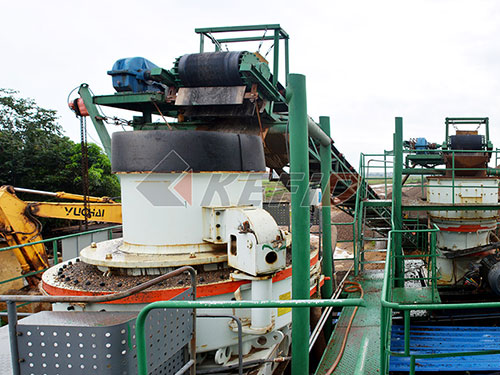
Samples may take several forms: raw material test coupons (e.g., steel plate sections for wear liners), machined components (e.g., crusher jaw plates, screen mesh panels, bearings housings), sub-assemblies (e.g., vibrator shaft assemblies), or complete pre-production machines. Each type addresses a specific stage of the qualification process.
Types of Factory Samples for Crushing and Screening Equipment
Material Test Coupons and Metallurgical Samples
These samples verify the chemical composition and mechanical properties of steels, alloys, and castings used in high-wear applications. For example, manganese steel jaw plates (typically 18% Mn) require verification of hardness, impact toughness, and work-hardening behavior. OEMs provide coupons for spectrographic analysis, tensile testing, and hardness mapping.
Machined Component Samples
Critical components such as eccentric shafts, cone crusher liners, screen deck frames, and bearing seats are sampled to confirm dimensional accuracy, surface finish, and tolerances. These samples are often accompanied by coordinate measuring machine (CMM) reports and material certificates.
Wear Part Samples
Jaw plates, blow bars, screen media (woven wire, polyurethane, rubber), and side liners are common sample categories. Wear part samples allow buyers to assess casting quality, heat treatment uniformity, and fitment compatibility with existing equipment.
Sub-Assembly and Module Samples
For screening equipment, vibrator units, spring assemblies, and drive mechanisms may be sampled as modules. These demonstrate assembly precision, balancing quality, and lubrication system integrity.
Pre-Production or Pilot Units
In some cases, OEMs provide complete pilot machines—e.g., a small-scale jaw crusher or a single-deck vibrating screen—for factory acceptance testing (FAT). These units undergo performance trials under simulated load conditions.
Evaluation Criteria for Factory Samples
Objective evaluation of OEM factory samples requires a structured approach. Key criteria include:
Manufacturing Processes Reflected in Samples
Factory samples reveal the OEM’s manufacturing discipline. For crushing equipment, typical processes include:
Quality Assurance Protocols for Sample Approval
A robust OEM factory sample program integrates quality assurance at multiple stages:
OEMs that maintain ISO 9001, ISO 14001, or IATF 16949 certifications typically have documented sample control procedures. Buyers should request the OEM’s sample approval workflow and verify that samples are drawn from the same production line that will fulfill the order.
Industry Best Practices and Considerations
Challenges and Limitations
Factory samples are not without limitations. Small samples may not reveal scale-up issues such as heat treatment variation across large castings or welding distortion in full-size frames. Additionally, sample evaluation cannot fully predict long-term wear life; accelerated wear testing or field trials remain necessary. Buyers should therefore combine sample approval with factory audits, reference checks, and performance guarantees.
Conclusion
Crushing and screening equipment OEM factory samples are a critical component of supplier qualification and quality assurance. They provide objective evidence of material integrity, dimensional precision, and manufacturing consistency—factors that directly influence equipment reliability, uptime, and total cost of ownership. By implementing structured sample evaluation criteria, demanding full traceability, and integrating sample approval into a broader quality management framework, procurement teams can mitigate risk and foster long-term partnerships with OEMs. As the industry continues to emphasize durability and operational efficiency, the role of rigorous factory sample programs will only grow in importance.
If you have any questions about our products, please feel free to contact us. We take all inquiries and suggestions very seriously.