Commercial 250-300 TPH Stone Crushing Plant Factory: Design, Operation, and Market Considerations
Introduction
In the global aggregates and mining industry, the demand for consistent, high-quality crushed stone is a fundamental driver of infrastructure development, construction, and industrial manufacturing. Among the various scales of production, the 250-300 tons per hour (TPH) stone crushing plant occupies a strategic niche. It represents a significant step up from smaller, mobile or semi-mobile units, yet it is not as capital-intensive or logistically complex as the 500+ TPH mega-plants. A commercial factory designed to produce 250-300 TPH of crushed stone is typically a fixed, permanent installation intended for long-term operation, supplying regional markets with a variety of aggregate sizes for concrete, asphalt, road base, and railway ballast.
This article provides a comprehensive, professional, and objective examination of a commercial 250-300 TPH stone crushing plant factory. It will cover the core design philosophy, key equipment configuration, operational workflows, critical factors for site selection, environmental and safety considerations, and the economic viability of such an investment. The goal is to offer a detailed technical overview for industry professionals, investors, and engineers.
1. Core Design Philosophy and Capacity Rationale
The 250-300 TPH capacity is not arbitrary. It is a sweet spot that balances several competing factors: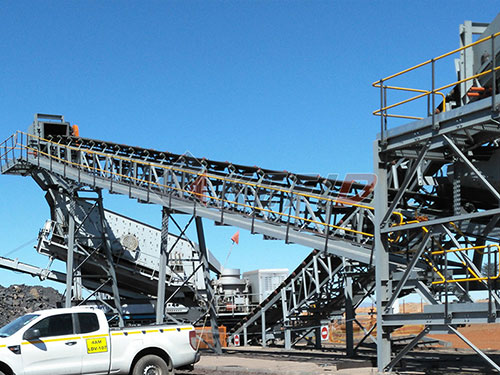
- Economies of Scale: At this throughput, the cost per ton of produced aggregate is significantly lower than smaller plants (e.g., 100-150 TPH). The fixed costs of land, permitting, and primary infrastructure are spread over a larger output.
- Market Demand: This capacity is well-suited to serve a medium-sized metropolitan area, a major highway construction project, or a cluster of concrete batching plants. It provides enough material to be a primary supplier without the risk of oversupplying a limited local market.
- Equipment Availability and Reliability: The machinery required for this capacity—primary jaw crushers, secondary cone crushers, tertiary vertical shaft impactors (VSIs), and vibrating screens—is mature, widely available from multiple global manufacturers, and has well-documented maintenance cycles.
- Logistical Feasibility: A 250-300 TPH plant requires a moderate-sized quarry or pit. The daily feed requirement (assuming a 10-hour shift) is 2,500 to 3,000 tons of raw stone. This is manageable for a single large excavator and a fleet of 3-4 haul trucks.
The design philosophy for a commercial factory at this scale prioritizes reliability, maintainability, and product flexibility. The plant must be able to run for extended periods with minimal unplanned downtime, as any stoppage directly impacts revenue and contractual obligations.
2. Key Equipment Configuration and Process Flow
A typical 250-300 TPH stationary crushing plant is a multi-stage operation. The process is designed to reduce run-of-mine (ROM) rock, which can be up to 800-1000 mm in size, down to final products ranging from 0-5 mm (manufactured sand) to 40-70 mm (ballast). A standard configuration includes the following stages:
Stage 1: Primary Crushing
- Equipment: A heavy-duty jaw crusher (e.g., 1200 x 900 mm or equivalent). A vibrating grizzly feeder (VGF) is placed before the crusher. The VGF performs two critical functions: it meters the feed rate and, more importantly, removes fines (0-150 mm) via a grizzly section. This “scalping” process prevents unnecessary wear on the jaw crusher and improves overall efficiency.
- Output: The jaw crusher reduces the ROM rock to a size of approximately 150-250 mm.
Stage 2: Secondary Crushing
- Equipment: A cone crusher (e.g., standard head, 4.25 ft or 5.5 ft). The material from the primary crusher is conveyed to a secondary surge bin and then fed into the cone crusher. The cone crusher is ideal for hard, abrasive rock (granite, basalt, quartzite) due to its high reduction ratio and low wear cost per ton.
- Output: The secondary crusher reduces the material to 40-80 mm.
Stage 3: Tertiary Crushing and Screening
- Equipment: This stage is the heart of the plant’s flexibility. It typically includes one or two cone crushers (short head) or a vertical shaft impactor (VSI). A series of multi-deck vibrating screens (e.g., 2-3 screens of 6m x 2m or 7m x 2.5m) are used to separate the material into different size fractions.
- Process: The material from the secondary crusher is screened. Oversized material (+40 mm) is recirculated back to the tertiary crushers. The correctly sized material is further screened to produce specific products: 0-5 mm (sand), 5-10 mm, 10-20 mm, 20-40 mm.
- VSI Role: If high-quality cubical aggregates are required (e.g., for asphalt or high-strength concrete), a VSI crusher is used in the final stage. The VSI uses a rock-on-rock crushing action to improve particle shape and reduce flakiness.
Stage 4: Washing (Optional but Common)
- Equipment: A sand screw washer and a log washer or hydro-cyclone system.
- Purpose: In many commercial applications, especially for concrete and asphalt, the aggregates must be clean and free of clay, silt, and dust. A washing plant removes these impurities, improving the final product’s quality and market value.
Stage 5: Stockpiling and Loadout
- Equipment: Conveyor belts, radial stackers, and a truck loading bin.
- Process: The final products are conveyed to separate stockpiles. A well-designed plant uses radial stackers to minimize segregation and maintain product quality. The loadout system allows for rapid filling of dump trucks, typically using a weighbridge for accurate billing.
3. Factory Infrastructure and Site Selection
A commercial 250-300 TPH stone crushing plant is not just a collection of crushers; it is a factory. The site must be carefully chosen and developed.
- Quarry Proximity: The plant should be located as close as possible to the quarry face to minimize haulage costs. A distance of less than 1 km is ideal. The quarry itself must have sufficient reserves (typically 5-10 million tons) to justify the capital investment.
- Power Supply: A plant of this size requires a substantial electrical load, often in the range of 600-900 kW. A dedicated high-voltage power line and a transformer substation are necessary. Diesel generators are used only as backup.
- Water Supply: For washing and dust suppression, a reliable water source (borehole, river, or reservoir) is critical. A settling pond system is required to treat and recycle process water, complying with environmental regulations.
- Site Layout: The factory layout must be linear or L-shaped to allow for efficient material flow. The primary crusher is at the lowest elevation to receive dump trucks. Conveyors then elevate the material through the crushing and screening stages, using gravity to reduce energy consumption. The final stockpiles are at a higher elevation or on a flat area.
- Road Access: The site must have a well-maintained, heavy-duty access road for incoming raw materials and outgoing product trucks. A weighbridge and a truck waiting area are essential for traffic management.
4. Operational Considerations and Maintenance
Operating a 250-300 TPH plant requires a skilled team and a rigorous maintenance schedule.
- Personnel: A typical shift requires a plant operator (control room), a loader operator (for stockpiles), a maintenance technician, and a quality control technician. The quarry requires a blaster, excavator operator, and truck drivers.
- Automation: Modern plants are controlled by a Programmable Logic Controller (PLC) system. The operator can monitor crusher power draw, conveyor belt speeds, and screen efficiency from a central control room. Automation allows for automatic start-up and shutdown sequences, reducing human error.
- Preventive Maintenance: This is the single most important factor for profitability. Key maintenance tasks include:
- Daily: Visual inspections of crusher liners, screen mesh, belt condition, and lubrication levels.
- Weekly: Checking crusher oil levels, changing screen panels, and greasing bearings.
- Monthly: Replacing worn crusher liners (depending on rock abrasiveness), inspecting conveyor belt splices, and checking electrical connections.
- Quarterly: Major overhauls of crushers, replacing oil and filters, and inspecting the structural steelwork.
- Wear Parts Management: The cost of wear parts (jaw plates, cone liners, screen meshes, VSI tips) is a major operating expense. A well-managed factory will have a stock of critical wear parts on site to minimize downtime. The choice of crusher type (e.g., using high-chrome alloys for VSIs) directly impacts wear life.
5. Environmental and Safety Compliance
A commercial stone crushing plant is subject to stringent environmental and safety regulations.
- Dust Control: This is the most visible environmental issue. Mitigation measures include:
- Water spray nozzles at all transfer points (conveyor heads, crusher inlets).
- Enclosed conveyor belts and crusher houses.
- A central dust collection system (baghouse or wet scrubber) for the crushing and screening areas.
- Regular watering of haul roads.
- Noise Control: Crushers and screens generate significant noise. The plant should be located away from residential areas. Acoustic enclosures and earth berms can be used to reduce noise levels.
- Water Management: The washing plant produces a slurry of water and fine particles. This must be processed in a settling pond system. The clarified water is recycled, and the settled sludge (fines) is removed periodically for disposal or use in other applications (e.g., brick making).
- Safety: The plant must comply with local occupational health and safety standards. Key safety features include:
- Emergency stop cords along all conveyors.
- Guarding on all moving parts (belts, pulleys, crusher openings).
- Lockout/tagout (LOTO) procedures for maintenance.
- Personal protective equipment (PPE) for all personnel (hard hats, safety glasses, high-visibility vests, steel-toed boots).
- Regular safety training and drills.
6. Economic Viability and Market Factors
The decision to build a 250-300 TPH stone crushing plant factory is a major capital investment, typically ranging from $5 million to $15 million USD, depending on the level of automation, the need for washing, and the cost of civil works.
- Capital Expenditure (CAPEX): The largest costs are the primary crusher, secondary and tertiary crushers, screens, and conveyors. Site preparation, foundations, and electrical infrastructure are also significant.
- Operating Expenditure (OPEX): The main costs are:
- Power: 30-40% of OPEX.
- Wear parts: 20-30% of OPEX.
- Labor: 15-20% of OPEX.
- Maintenance and repairs: 10-15% of OPEX.
- Revenue: The selling price of aggregates varies greatly by region. In a developed market, a 250-300 TPH plant can generate annual revenue of $10-20 million, assuming a selling price of $15-25 per ton.
- Payback Period: A well-managed plant in a strong market can achieve a payback period of 3-5 years. However, this is highly sensitive to market demand, transportation costs, and competition.
Conclusion
A commercial 250-300 TPH stone crushing plant factory represents a significant, long-term investment in the aggregates industry. It is a complex, multi-stage industrial facility that requires careful planning, robust engineering, and disciplined operational management. The success of such a plant hinges on selecting the right equipment configuration for the specific rock type, ensuring a reliable supply of raw materials, implementing rigorous preventive maintenance, and strictly adhering to environmental and safety standards.
For investors and operators, the 250-300 TPH scale offers a compelling balance between capital cost, operational efficiency, and market reach. It is a proven, mature technology that, when executed correctly, can provide a stable and profitable return for decades. However, it is not a “set-and-forget” operation. It demands continuous attention to quality control, cost management, and market dynamics. In the hands of a skilled team, a 250-300 TPH stone crushing plant is a cornerstone of regional infrastructure development.
