
Chinese Stone Crusher Machine Cost: A Comprehensive Analysis of Pricing, Factors, and Market Trends
The stone crushing industry is a cornerstone of infrastructure development, construction, and mining operations globally. China, as the world’s largest manufacturer and exporter of crushing equipment, plays a pivotal role in supplying cost-effective and technologically advanced stone crusher machines. Understanding the cost of these machines is critical for buyers—from small-scale quarry operators to large multinational mining corporations—as it directly impacts project budgets, operational efficiency, and long-term profitability. This article provides a detailed, objective analysis of Chinese stone crusher machine costs, examining the price ranges, influencing factors, types of crushers, hidden expenses, and market dynamics.
Chinese manufacturers produce a wide variety of stone crushers, each designed for specific applications, feed sizes, and output requirements. The cost varies significantly based on the machine’s type, capacity, and complexity. Below is a breakdown of common crusher types and their approximate price ranges in the Chinese market (as of 2025, in USD, for new equipment):
Jaw Crushers: These are primary crushers used for coarse crushing of hard, abrasive materials. Prices typically range from $10,000 to $150,000. Small models (e.g., PE-150×250) may cost as low as $8,000, while large, heavy-duty units (e.g., PE-1200×1500) can exceed $200,000. The price depends on feed opening size, eccentric shaft design, and motor power.
Cone Crushers: Used for secondary or tertiary crushing of medium-hard to hard materials. Prices range from $30,000 to $300,000. Single-cylinder hydraulic cone crushers are more affordable (starting around $25,000), while multi-cylinder models with advanced automation can cost over $400,000. The crushing chamber design, cavity type, and hydraulic system complexity are key cost drivers.
Impact Crushers: Suitable for softer, less abrasive materials (e.g., limestone, gypsum). Prices range from $15,000 to $120,000. Horizontal shaft impactors (HSI) are generally cheaper than vertical shaft impactors (VSI), which are used for sand making and shaping. VSI crushers with rotor diameters above 1 meter can cost $80,000–$200,000.
Hammer Crushers: Ideal for medium-hard materials in cement and coal industries. Prices range from $5,000 to $50,000. Large ring hammer crushers for coal preparation plants may reach $70,000.
Mobile Crushing Plants: These integrated units combine a crusher, feeder, screen, and conveyor on a tracked or wheeled chassis. Prices range from $50,000 to $500,000 for standard configurations. High-capacity mobile plants with advanced control systems can exceed $1 million. The cost is heavily influenced by the crusher type (e.g., jaw + cone combination), chassis design, and automation level.
Sand Making Machines (VSI Crushers): Dedicated for artificial sand production. Prices range from $20,000 to $150,000. The rotor speed, wear parts material (e.g., tungsten carbide vs. high-chromium steel), and capacity (e.g., 30 t/h vs. 600 t/h) are major cost factors.
The price of a stone crusher machine is not arbitrary; it is determined by a combination of technical, economic, and market factors. Understanding these helps buyers make informed decisions.
Capacity, measured in tons per hour (t/h), is the most significant cost driver. A small jaw crusher with a capacity of 1–5 t/h may cost under $10,000, while a 500 t/h jaw crusher can exceed $200,000. Similarly, the required output size (e.g., 0–5 mm for sand vs. 20–40 mm for road base) affects the machine’s design complexity and cost. Crushers with adjustable discharge settings or multiple crushing chambers command higher prices.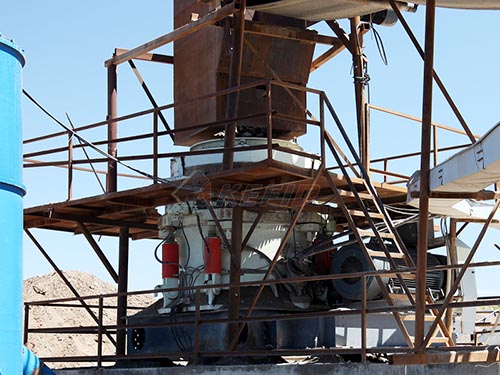
Chinese manufacturers use a range of materials for critical components:
Basic crushers with manual adjustment and simple electrical panels are cheaper. Advanced models feature PLC (Programmable Logic Controller) systems, remote monitoring, automatic cavity clearing, and load-sensing hydraulics. These can add $5,000–$50,000 to the cost, depending on sophistication.
China has thousands of crusher manufacturers, ranging from small workshops to global giants like Sandvik (Chinese subsidiary), Metso Outotec (local production), and domestic leaders like Shibang Industry & Technology Group, Zhengzhou Yifan Machinery, and Henan Hongxing Mining Machinery. Established brands often charge a premium of 15–30% over lesser-known factories due to better quality control, after-sales service, and warranty terms.
Customized solutions—such as crushers designed for specific materials (e.g., river pebble, basalt), extreme climates (e.g., high altitude, cold regions), or mobile applications—increase engineering and production costs. Features like dust suppression systems, noise reduction enclosures, or explosion-proof motors add 5–15% to the base price.
For international buyers, the cost of shipping from Chinese ports (e.g., Shanghai, Ningbo) to the destination country is a major factor. A 40-ton crusher may cost $3,000–$10,000 for sea freight, plus inland transportation. Import duties, taxes, and customs clearance fees vary by country (e.g., 5–20% in many developing nations). Buyers should also consider the cost of a shipping container or bulk cargo.
The Chinese yuan (CNY) exchange rate against the US dollar or local currency affects the final price. Additionally, raw material costs (steel, copper, rubber) and energy prices in China can cause quarterly price adjustments. For example, a 10% increase in steel prices may raise crusher costs by 3–5%.
The purchase price is only one component of the total cost. A comprehensive analysis must include:
Chinese stone crushers are generally 30–60% cheaper than equivalent models from European (e.g., Metso, Sandvik, Terex) or American (e.g., Cedarapids, KPI-JCI) manufacturers. For example, a 300 t/h cone crusher from a Chinese brand may cost $120,000–$180,000, while a comparable European unit could be $250,000–$400,000. However, the lower initial cost may be offset by:
Chinese manufacturers have improved significantly in quality over the past decade, with many now offering ISO 9001 certification, CE marking, and warranties of 1–3 years. For budget-constrained projects, Chinese crushers are often the most cost-effective choice.
The Chinese stone crusher market is evolving rapidly:
To optimize cost without compromising quality, consider the following:
The cost of a Chinese stone crusher machine is highly variable, ranging from a few thousand dollars for small hammer crushers to over half a million dollars for large mobile plants. The final price depends on machine type, capacity, build quality, automation, brand, and customization. While Chinese crushers offer significant upfront savings compared to Western brands, buyers must consider total cost of ownership, including wear parts, energy, and maintenance. By conducting thorough research, leveraging competitive pricing, and partnering with reputable manufacturers, buyers can acquire cost-effective, reliable stone crushing solutions that meet their project needs. As China continues to innovate and improve quality standards, its stone crusher machines remain a compelling option for global infrastructure and mining projects.
If you have any questions about our products, please feel free to contact us. We take all inquiries and suggestions very seriously.