
Chinese Slag Crusher Plant Makers: A Comprehensive Industry Analysis
The global metallurgical and construction sectors have long recognized the dual challenge and opportunity presented by slag—the glassy by-product left over after the separation of metal from its ore. In China, the world’s largest producer of crude steel and non-ferrous metals, the management of blast furnace slag, steel slag, copper slag, and nickel slag is not merely an environmental obligation but a significant economic resource. This has given rise to a sophisticated and highly competitive domestic industry: Chinese slag crusher plant makers. These manufacturers design, engineer, and supply complete turnkey systems that transform abrasive, high-hardness slag into valuable aggregates, cementitious materials, and road base. This article provides a detailed, professional examination of the key players, technological capabilities, market dynamics, and future trajectory of China’s slag crusher plant manufacturing sector.
1. The Market Context: Why China Leads in Slag Processing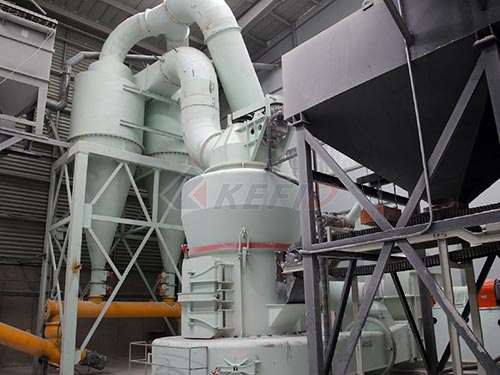
To understand the capabilities of Chinese plant makers, one must first appreciate the scale of the feedstock. According to the World Steel Association, China produced over 1.0 billion metric tons of crude steel annually in recent years. For every ton of crude steel, approximately 0.15 to 0.20 tons of steel slag is generated, alongside 0.30 to 0.60 tons of blast furnace slag. This translates into hundreds of millions of tons of slag per year. Historically, much of this was landfilled, causing severe soil and water contamination. However, stringent government policies—such as the “14th Five-Year Plan for Circular Economy” and the “Green Manufacturing” initiative—have mandated that by 2025, the comprehensive utilization rate of bulk industrial solid waste, including slag, must exceed 60% for steel plants.
This regulatory pressure, combined with the economic value of recycled slag (used in cement clinker, concrete admixtures, and railway ballast), has created a massive domestic demand for high-efficiency crushing and screening plants. Chinese manufacturers have responded not by copying foreign designs but by iterating rapidly to handle the unique properties of Chinese slag—which often has higher free calcium oxide (f-CaO) and magnesium oxide (MgO) content, requiring specialized aging and crushing processes.
2. Core Technological Competencies of Chinese Makers
A modern slag crusher plant is not a single machine but an integrated system comprising feeding, primary crushing, secondary crushing, screening, magnetic separation, and dust collection. Chinese manufacturers have developed distinct expertise in several critical areas:
Abrasion-Resistant Crushing Chambers: Slag has a Mohs hardness of 6-7 and an abrasion index significantly higher than limestone. Leading Chinese makers, such as Shanghai Shibang Machinery (SBM) and Zhengzhou Yifan Machinery, utilize high-chromium alloy blow bars and manganese steel jaw plates. More importantly, they have pioneered the use of composite wear liners that can be replaced in modular sections, reducing downtime. For example, the use of hydraulic toggle plates in jaw crushers allows for automatic overload protection when uncrushable metal scrap enters the feed.
Magnetic Separation Integration: Steel slag contains 5-10% metallic iron, which must be recovered for both economic and equipment-protection reasons. Chinese plant makers have perfected the integration of self-cleaning overband magnets and drum magnetic separators directly into the conveyor system. Advanced plants now employ eddy current separators for non-ferrous metals and sensor-based sorting (using X-ray transmission) to distinguish between high-density metallic particles and low-density slag aggregates. Companies like Fote Heavy Machinery have developed proprietary magnetic pulleys that achieve over 98% metal recovery rates.
Vertical Shaft Impact (VSI) and Cone Crusher Optimization: For secondary and tertiary crushing, Chinese makers have moved beyond traditional impact crushers. The use of VSI crushers with rock-on-rock crushing chambers is now standard for producing cubical, high-strength aggregates. Notably, manufacturers such as Hangzhou Dongkun and Shanghai Unitruston have developed VSI rotors with tungsten carbide tips that can process 50,000 tons of slag before requiring maintenance—a 40% improvement over imported equivalents. For high-hardness ferrochrome or ferronickel slag, multi-cylinder hydraulic cone crushers with automatic setting adjustment are preferred, and Chinese firms now offer these with intelligent load-sensing systems that adjust the closed-side setting (CSS) in real-time based on feed particle size distribution.
Dust Suppression and Environmental Compliance: The crushing of dry slag generates significant PM2.5 and PM10 particulate matter. Chinese plant makers have integrated baghouse dust collectors with pulse-jet cleaning as standard equipment, not optional add-ons. Furthermore, the latest generation of plants from companies like Liming Heavy Industry features fully enclosed transfer points with negative pressure ventilation and water-spray misting systems that achieve emission levels below 10 mg/Nm³, compliant with China’s ultra-low emission standards (GB 31570-2015). This environmental engineering capability is a key differentiator, as many international clients now require compliance with EU or US EPA standards.
3. Leading Manufacturers and Their Product Portfolios
The Chinese market is fragmented, with hundreds of small fabricators, but a clear tier of engineering-driven leaders has emerged:
Shanghai Shibang Machinery (SBM): A global giant, SBM offers the CI5X series impact crusher specifically designed for medium-hard slag. Their turnkey plants include a patented hydraulic wedge adjustment system that allows operators to change the discharge opening in under five minutes, crucial for varying slag feed sizes. SBM’s strength lies in its after-sales network, with service centers in over 30 countries.
Zhengzhou Yifan Machinery (Yifan): Known for their Mobile Crushing and Screening Plants, Yifan has pioneered the semi-mobile slag processing unit. This is a significant innovation for steel mills with limited space. Their YF series mobile plant integrates a jaw crusher, magnetic separator, and double-deck vibrating screen on a single tracked chassis, capable of processing 200-300 tons per hour. This mobility allows the plant to be positioned directly next to the slag cooling pit, eliminating haulage costs.
Fote Heavy Machinery (FTM): FTM specializes in roller crushers and hammer crushers for wet and sticky slag. Their unique double-roller crusher with toothed segments is highly effective for primary breaking of solidified slag blocks, which often have tensile strengths exceeding 200 MPa. FTM also offers complete slag grinding plants that integrate vertical roller mills (VRM) for producing slag powder (GGBS), a high-value cement substitute.
Shanghai Unitruston (Truston): Truston has focused on the export market, customizing plants for Southeast Asia, Africa, and South America. Their plants are designed for ease of operation in regions with lower technical expertise, featuring PLC-controlled automation with manual override and simplified hydraulic systems. They are also one of the few Chinese makers to offer containerized plant modules, which significantly reduce shipping and on-site erection time.
Hangzhou Dongkun (DK): A specialist in high-pressure grinding rolls (HPGR), DK has adapted this technology for slag. HPGR is more energy-efficient than conventional crushing for hard, abrasive materials, reducing power consumption by up to 30%. DK’s HPGR units are now being integrated into large-scale steel slag processing lines in Hebei and Jiangsu provinces, where energy costs are a primary concern.
4. Engineering Design and Project Execution Capabilities
Beyond individual machines, the true value of a plant maker lies in its ability to deliver a functional, reliable system. Chinese makers have matured significantly in this regard:
Process Flow Design: Leading firms employ metallurgical engineers who conduct ore characterization tests (including Bond Work Index and abrasion index) on client-provided slag samples. Based on this data, they design a flow sheet that balances reduction ratio, energy consumption, and product gradation. For example, a typical steel slag plant design includes a grizzly feeder to remove oversized lumps, a jaw crusher for primary reduction to 150mm, a magnetic drum to extract scrap, a cone crusher for secondary reduction to 40mm, and a VSI crusher for final shaping to 10mm.
Structural and Civil Integration: Chinese makers now provide complete 3D plant layouts using software like SolidWorks and Bentley. They coordinate with civil engineers to design reinforced concrete foundations that absorb the dynamic loads of crushers. Many offer steel structure platforms with modular stairways and walkways, reducing the need for on-site welding and improving safety.
Automation and Digitalization: The latest plants from Chinese makers feature Distributed Control Systems (DCS) and Programmable Logic Controllers (PLC) from Siemens or Schneider Electric. These systems monitor bearing temperatures, vibration levels, motor amperage, and conveyor belt speed. Advanced plants now include remote diagnostics via 5G or satellite, allowing the manufacturer’s engineers in Shanghai or Zhengzhou to troubleshoot a plant in Indonesia or Brazil in real-time. This digital service model is a major competitive advantage over Western competitors who often charge premium rates for site visits.
5. Quality Control and International Standards
A common misconception is that Chinese equipment is of inferior quality. While this may be true for low-end fabricators, the top-tier makers have invested heavily in quality assurance. They adhere to ISO 9001:2015 for quality management and ISO 14001 for environmental management. Critical components—such as bearings (SKF, NSK), motors (Siemens, ABB), and hydraulic pumps (Parker, Rexroth)—are sourced from global leaders. Furthermore, the main crusher housings are fabricated from Q345B or Q355B low-alloy high-strength steel, with stress-relieving heat treatment performed after welding to prevent cracking under cyclic loading. Many leading makers have obtained CE certification for the European market and GOST certification for Russia, ensuring compliance with stringent safety and performance directives.
6. Economic and Operational Advantages
The primary reason international clients choose Chinese plant makers is the cost-to-performance ratio. A complete 200 tph slag crushing plant from a top-tier Chinese manufacturer typically costs 30-40% less than an equivalent European or Japanese system. This cost advantage arises from lower labor costs, a mature local supply chain for wear parts, and economies of scale in manufacturing. However, the total cost of ownership (TCO) is also favorable. Chinese wear parts (e.g., blow bars, jaw plates) are 50-60% cheaper than OEM parts from Metso or Sandvik, and with the improved wear life mentioned earlier, the cost per ton of crushed slag is often below $0.15. Additionally, Chinese makers offer rapid delivery times—typically 4-6 months for a complete plant, compared to 9-12 months for Western suppliers—which is critical for steel mills facing regulatory deadlines.
7. Challenges and Strategic Considerations
Despite their strengths, Chinese slag crusher plant makers face several challenges:
Perception of Risk: Some conservative international buyers still perceive Chinese equipment as high-risk, preferring established Western brands. To counter this, leading Chinese makers now offer performance guarantees with liquidated damages, and they increasingly partner with local engineering firms in target markets to provide installation and commissioning support.
After-Sales Spare Parts Logistics: While wear parts are cheap, the logistics of shipping them can be slow. To mitigate this, major Chinese makers have established overseas warehouses in key markets (e.g., Dubai, Johannesburg, Jakarta) stocking critical spares like filters, seals, and hydraulic cartridges.
Customization for Exotic Slags: Non-ferrous slags (e.g., copper, nickel, lead-zinc) have different chemical properties, including high sulfur content and potential for acid generation. Chinese makers have historically focused on iron and steel slag. However, companies like Gongyi Forui Machinery are now developing specialized corrosion-resistant liners and closed-loop water systems to handle these more challenging feedstocks.
8. Future Trends and Innovation
Looking forward, Chinese slag crusher plant makers are aligning with global sustainability trends:
Carbon Neutrality: The Chinese government’s “Dual Carbon” goals (peak carbon by 2030, neutrality by 2060) are driving innovation in electric-drive crushers with regenerative braking systems. Some manufacturers are experimenting with solar-assisted power systems for remote mobile plants.
AI and Machine Learning: The next generation of plants will use AI algorithms to predict wear part failure based on historical operating data. For example, by analyzing current draw and vibration frequency, the system can forecast when a mantle needs replacement, preventing catastrophic breakdowns.
Circular Economy Integration: Future plants will not just crush slag but will also co-process other industrial wastes, such as fly ash and desulfurization gypsum, to produce blended cementitious materials. Chinese makers are designing flexible plants with multiple feed hoppers and blending silos to accommodate this.
Conclusion
Chinese slag crusher plant makers have evolved from low-cost imitators into sophisticated engineering solution providers. They dominate the domestic market due to regulatory necessity and are rapidly expanding their global footprint by offering advanced automation, robust environmental controls, and unmatched cost efficiency. For any steel producer, cement manufacturer, or construction aggregate company seeking to valorize slag waste, engaging with a top-tier Chinese plant maker is no longer a compromise but a strategic advantage. The key to success lies in rigorous due diligence—selecting a manufacturer with proven reference plants, verifiable wear part life data, and a genuine commitment to after-sales support. As the world moves toward a circular economy, these Chinese firms are positioned to be the primary architects of slag-to-value infrastructure for decades to come.
If you have any questions about our products, please feel free to contact us. We take all inquiries and suggestions very seriously.