
Crushing and Screening Equipment Vendors: Cost Structures, Pricing Factors, and Strategic Procurement Considerations
Introduction
In the aggregates, mining, construction, and recycling industries, crushing and screening equipment represents one of the most significant capital expenditures a company will undertake. Whether a producer is establishing a greenfield quarry, expanding an existing operation, or replacing aging assets, the cost of crushing and screening equipment—and the vendors who supply it—directly influences project feasibility, operating margins, and long-term competitiveness. Understanding how vendors price their equipment, what drives cost variability, and how procurement decisions should be structured is essential for any organization seeking to optimize its investment. This article provides a detailed examination of crushing and screening equipment vendor costs, the factors that shape pricing, and the strategic considerations that inform effective purchasing decisions.
The Landscape of Crushing and Screening Equipment Vendors
The global market for crushing and screening equipment is served by a diverse array of vendors, ranging from multinational OEMs (original equipment manufacturers) to regional fabricators and specialized niche suppliers. Major global players—such as Metso, Sandvik, Terex, Astec, Kleemann, and McCloskey—offer comprehensive product lines spanning jaw crushers, cone crushers, impact crushers, vibrating screens, and complete modular plants. These vendors typically command premium pricing due to brand reputation, engineering sophistication, global service networks, and parts availability.
At the other end of the spectrum, regional and local vendors—particularly prevalent in markets such as China, India, Turkey, and parts of Eastern Europe—offer equipment at substantially lower price points. These vendors may provide adequate performance for less demanding applications, but often with trade-offs in durability, automation, after-sales support, and compliance with international standards. Between these extremes, a range of mid-tier vendors competes on a balance of price, quality, and service, giving buyers a broad spectrum of options.
Core Cost Categories in Crushing and Screening Equipment
When evaluating vendor costs, it is critical to distinguish between the initial purchase price and the total cost of ownership (TCO). Vendors may quote attractive upfront prices while higher lifetime costs—in parts, maintenance, downtime, and energy—erode the apparent savings. The principal cost categories include:
Capital Acquisition Cost: The purchase price of the equipment itself, including crushers, screens, feeders, conveyors, and structural components. This is the most visible cost and the primary basis for vendor comparison.
Installation and Commissioning: Costs associated with site preparation, foundations, structural steel, electrical systems, and vendor-provided commissioning services. For modular or mobile plants, these costs are lower; for stationary plants, they can be substantial.
Spare Parts and Wear Components: Jaw plates, cone liners, blow bars, screen media, and conveyor belting represent recurring costs that vary significantly by vendor and material abrasiveness.
Maintenance and Labor: Routine servicing, scheduled overhauls, and unplanned repairs. Vendors with complex or proprietary designs may require specialized labor, increasing costs.
Energy Consumption: Crushers and screens are energy-intensive. Drive efficiency, motor selection, and equipment design influence electricity or diesel consumption over the asset’s life.
Downtime and Productivity Loss: Equipment reliability and vendor responsiveness to breakdowns directly affect production output and, consequently, revenue.
Key Factors Influencing Vendor Pricing
Vendor pricing for crushing and screening equipment is not arbitrary; it reflects a combination of technical, economic, and market factors.
Equipment Type and Capacity. Jaw crushers, for example, are generally less expensive than cone or impact crushers of comparable throughput due to simpler design and fewer wear parts. Capacity, measured in tonnes per hour, scales price non-linearly: doubling capacity may increase cost by 60–80%, depending on design complexity.
Material Characteristics. Vendors must account for feed size, hardness, abrasiveness, and moisture content when specifying equipment. Hard rock applications demand more robust crushers and wear-resistant liners, raising both purchase price and operating cost.
Mobility and Configuration. Mobile and track-mounted plants carry a premium over stationary equivalents due to undercarriage systems, onboard power units, and compact engineering. Modular plants offer a middle ground, balancing portability with cost efficiency.
Automation and Control Systems. Advanced control systems, remote monitoring, and automated adjustment mechanisms add cost but can improve productivity and reduce labor requirements. Vendors increasingly position these features as value-added differentiators.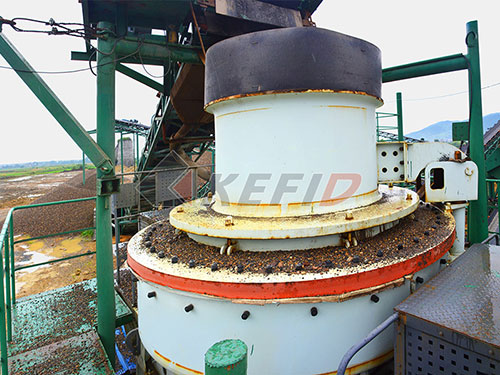
Compliance and Certification. Equipment meeting CE, UL, or other regulatory standards may carry higher prices due to testing, documentation, and design modifications. In some markets, non-compliant equipment is available at lower cost but may face operational restrictions.
Currency, Logistics, and Tariffs. For imported equipment, exchange rate fluctuations, freight costs, and import duties can materially affect landed cost. Vendors with local manufacturing or assembly capabilities may offer more stable pricing.
After-Sales Support and Warranty. Vendors with extensive service networks, guaranteed parts availability, and comprehensive warranties typically charge more. Buyers must assess whether the premium is justified by reduced risk and downtime.
Typical Price Ranges by Equipment Category
While precise pricing depends on specifications and market conditions, indicative ranges provide a useful reference. A small mobile jaw crusher may range from USD 150,000 to 400,000, while a high-capacity stationary primary gyratory crusher can exceed USD 2 million. Cone crushers vary from approximately USD 200,000 for compact units to over USD 1.5 million for large, high-performance models. Vibrating screens typically range from USD 30,000 to 300,000 depending on size, deck configuration, and construction. Complete crushing and screening plants—integrating multiple crushers, screens, conveyors, and controls—can range from under USD 500,000 for small modular systems to well over USD 10 million for large-scale stationary installations.
These figures are illustrative and should not substitute for detailed vendor quotations tailored to specific project requirements.
The Role of Vendors in Cost Optimization
Vendors are not merely suppliers; they are partners in cost optimization. Leading vendors offer services such as application engineering, flow sheet design, and simulation modeling to ensure equipment selection aligns with production goals. They may also provide financing, rental, or lease-to-own options, reducing upfront capital burden. Some vendors offer performance-based contracts, where compensation is tied to throughput or availability targets, aligning vendor incentives with buyer outcomes.
Conversely, vendors with limited engineering support may sell equipment as commodities, leaving buyers to manage integration and optimization independently. This can result in higher total costs despite lower purchase prices.
Strategic Procurement Considerations
To manage costs effectively, buyers should adopt a structured procurement approach:
Conclusion
The cost of crushing and screening equipment from vendors is a multifaceted issue that extends far beyond the initial quotation. Vendors operate across a wide spectrum of price, quality, and service, and buyers must navigate this landscape with a clear understanding of their operational requirements and financial objectives. By focusing on total cost of ownership, engaging vendors as strategic partners, and applying disciplined procurement practices, organizations can secure equipment that delivers reliable performance and sustainable value. In an industry where margins are tight and uptime is critical, informed vendor selection and cost management are not merely administrative tasks—they are competitive imperatives.
If you have any questions about our products, please feel free to contact us. We take all inquiries and suggestions very seriously.