Title: China Quarry Ballast Crushing Equipment Dealer: Market Landscape, Technical Specifications, and Procurement Strategy

Introduction

In the global railway infrastructure and construction sector, ballast—the crushed stone layer beneath railway tracks—plays a critical role in load distribution, drainage, and track stability. The production of high-quality ballast requires specialized crushing equipment capable of delivering consistent particle size, angularity, and durability. China, as the world’s largest producer of crushed stone and a leading manufacturer of mining and quarry machinery, hosts a dense network of dealers and distributors for ballast crushing equipment. This article provides a professional, objective analysis of the role, market structure, technical parameters, and selection criteria for a China-based quarry ballast crushing equipment dealer, with a focus on operational efficiency, regulatory compliance, and after-sales support.

1. Definition and Scope of a “Dealer” in the Chinese Crushing Equipment Market

In the Chinese context, a “dealer” (经销商) for quarry ballast crushing equipment is not merely a reseller. Dealers typically operate under exclusive or semi-exclusive agreements with original equipment manufacturers (OEMs) such as Shanghai Shibang Machinery (SBM), Zhengzhou Yifan Machinery, Henan Liming Heavy Industry, and Sandvik Mining and Rock Technology’s Chinese subsidiaries. Their scope includes:

  • New equipment sales: Jaw crushers, cone crushers, impact crushers, vertical shaft impactors (VSI), vibrating screens, and feeders.
  • Used and refurbished equipment: Many dealers maintain a stock of pre-owned machines, often reconditioned to meet Chinese national safety standards (GB/T 15715-2014 for crushing machinery).
  • Spare parts and wear components: Manganese liners, blow bars, toggle plates, bearings, and hydraulic parts.
  • Turnkey project support: Some large dealers offer engineering, installation, and commissioning services for complete ballast production lines (typically 100–500 t/h capacity).

It is essential to distinguish between a “dealer” and a “manufacturer’s direct sales office.” Dealers often provide localized inventory, faster delivery, and flexible financing, whereas direct sales may offer lower base prices but longer lead times and less regional support.

2. Technical Requirements for Ballast Crushing Equipment

Ballast for high-speed rail (HSR) in China must comply with the Ministry of Railways’ standard TB/T 2140-2008, which specifies:

  • Particle size distribution: Typically 22.4 mm to 63 mm, with less than 5% of particles below 22.4 mm and less than 5% above 63 mm.
  • Flakiness index: Must be below 20% for HSR ballast.
  • Los Angeles abrasion loss: Maximum 20% (for granite or basalt) or 25% (for limestone, depending on regional specifications).
  • Water absorption: Less than 0.5% for igneous rocks.

To meet these criteria, a dealer must recommend a crushing circuit that includes:

  • Primary crushing: A jaw crusher (e.g., PE-900×1200) with a feed opening of 900×1200 mm, capable of reducing run-of-mine rock (up to 750 mm) to 150–200 mm.
  • Secondary crushing: A cone crusher (e.g., CS420 or HP300) or an impact crusher (PFW series) to reduce material to 40–80 mm.
  • Tertiary crushing: A VSI crusher (e.g., Barmac B7150SE or Chinese equivalent) to achieve cubical shape and control flakiness index.
  • Screening: A triple-deck vibrating screen (e.g., 2YK2475) with mesh sizes of 63 mm, 40 mm, and 22.4 mm to separate ballast fractions.

A competent dealer will provide a process flow diagram, power consumption estimates (typically 0.8–1.2 kWh per ton of finished ballast), and dust suppression recommendations (e.g., water spray systems or baghouse filters) to meet China’s environmental protection standards (GB 16297-1996 for air pollutants).

3. Market Structure and Leading Dealers

The Chinese market for quarry ballast crushing equipment is highly fragmented but regionally concentrated. Key dealer hubs include:

  • Zhengzhou, Henan Province: Home to dozens of dealers for Yifan, Liming, and Zhongde Heavy Industry. Zhengzhou dealers often serve the central and western railway projects (e.g., Lanzhou–Xinjiang HSR).
  • Shanghai and Jiangsu: Dealers here focus on high-end imported brands (Sandvik, Metso) and large domestic OEMs (SBM). They cater to coastal quarry operations and export-oriented projects.
  • Shandong Province: Known for lower-cost equipment, with dealers in Jinan and Linyi offering budget-friendly solutions for small and medium quarries.

Notable dealer characteristics:

  • Inventory depth: Top-tier dealers maintain at least 10–15 units of popular models (e.g., PE-750×1060 jaw crushers) in stock.
  • Technical staff: A qualified dealer employs at least 3–5 application engineers who can conduct site surveys, test rock hardness (Mohs scale), and recommend appropriate crushing chambers.
  • Financial services: Many dealers offer lease-to-own options (融资租赁) with 20–30% down payment and 24–36 month terms, backed by Chinese leasing companies.

4. Quality Assurance and Certification

A professional dealer must ensure that all equipment meets the following certifications:

  • ISO 9001:2015 for quality management systems.
  • CE marking for export to European markets (if applicable).
  • China Compulsory Certification (CCC) for electrical components.
  • Mining Safety Approval (MA) for underground or high-risk applications, though ballast quarries are typically open-pit.

Dealers should provide a Certificate of Conformity for each machine, along with a Factory Acceptance Test (FAT) report. For used equipment, the dealer must disclose the machine’s working hours, previous maintenance logs, and any structural repairs (e.g., cracked frames or replaced bearings). Reputable dealers also offer a 6–12 month warranty on major components (main shaft, eccentric shaft, and hydraulic system).

5. After-Sales Service and Spare Parts Logistics

The true value of a dealer lies in post-purchase support. For ballast crushing operations, downtime is extremely costly—a 200 t/h plant can lose approximately USD 3,000–5,000 per day of stoppage. Therefore, a dealer’s service network must include:

  • Regional warehouses: Ideally within 300 km of the quarry site, stocking critical wear parts (e.g., jaw plates, mantle, concave) with a lead time of less than 48 hours.
  • Field service teams: At least 2–3 mobile service vehicles equipped with diagnostic tools (vibration analyzers, thermal imaging cameras).
  • Remote monitoring: Some advanced dealers offer IoT-enabled sensors that transmit crusher load, bearing temperature, and oil pressure data to a cloud platform, enabling predictive maintenance.

6. Pricing Structure and Total Cost of Ownership (TCO)

Prices for ballast crushing equipment in China vary significantly based on brand, capacity, and automation level. As of 2025, indicative dealer prices (ex-factory, excluding VAT) are:

  • Primary jaw crusher (PE-900×1200): USD 85,000 – 120,000 (domestic) / USD 150,000 – 200,000 (imported).
  • Secondary cone crusher (HP300 equivalent): USD 130,000 – 180,000.
  • VSI crusher (Barmac B7150SE equivalent): USD 90,000 – 140,000.
  • Complete 200 t/h ballast line (including screens, conveyors, and control system): USD 450,000 – 700,000.

However, the purchase price is only 40–50% of the TCO over a 10-year lifespan. The remaining costs include:

  • Wear parts: Manganese liners for a cone crusher cost approximately USD 0.02–0.04 per ton of crushed material.
  • Energy consumption: At 1.0 kWh/t and an industrial electricity price of USD 0.08/kWh, energy costs reach USD 0.08/t.
  • Maintenance labor: USD 0.01–0.02/t.
  • Downtime risk: Unplanned failures can add USD 0.05–0.10/t if not mitigated by dealer support.

A professional dealer will provide a detailed TCO model, comparing different equipment configurations (e.g., impact crusher vs. cone crusher for secondary stage) based on the specific rock type (granite, basalt, quartzite) and the required production rate.

7. Environmental and Regulatory Compliance

Since 2018, China’s Ministry of Ecology and Environment has enforced stricter emission limits for quarry operations. A dealer must ensure that the crushing equipment is compatible with:China Quarry Ballast Crushing Equipment Dealer
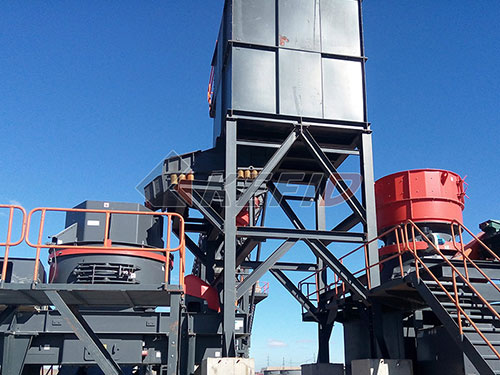
  • Dust control: Enclosed crushing chambers, water spray nozzles at transfer points, and negative pressure ventilation systems.
  • Noise reduction: Acoustic enclosures for crushers and screens, with noise levels below 75 dB(A) at a distance of 1 meter.
  • Wastewater management: Closed-loop water recycling for wet screening processes.

Dealers who fail to provide compliance documentation (e.g., Environmental Impact Assessment approval for the equipment) may expose the buyer to fines of up to USD 50,000 and forced shutdowns.

8. Procurement Strategy: How to Select a Reliable DealerChina Quarry Ballast Crushing Equipment Dealer
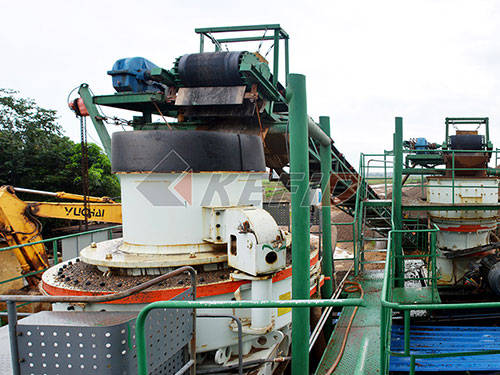
For an international buyer or a domestic quarry operator, the following steps are recommended:

  1. Verify dealer authorization: Request a copy of the OEM’s dealer certificate and cross-check with the manufacturer’s official website.
  2. Conduct a factory audit: Visit the dealer’s warehouse and service center. Check for organized spare parts inventory and the presence of diagnostic equipment.
  3. Request references: Ask for contact details of at least three quarries that have purchased similar equipment from the dealer within the last two years.
  4. Negotiate service level agreements (SLAs): Ensure the contract specifies response time (e.g., 4 hours for remote support, 24 hours for on-site dispatch), warranty terms, and penalties for non-compliance.
  5. Consider third-party inspection: Hire an independent inspection agency (e.g., SGS, Bureau Veritas) to verify the equipment’s condition before shipment, especially for used machines.

9. Future Trends and Dealer Adaptation

The Chinese quarry equipment market is undergoing rapid digitalization. Leading dealers are now offering:

  • AI-based crusher optimization: Software that adjusts closed-side settings (CSS) in real-time based on feed size and power draw.
  • Electric and hybrid drives: To reduce carbon footprint, some dealers promote fully electric crushing plants with energy recovery systems.
  • Modular and mobile units: For temporary railway construction sites, dealers supply track-mounted mobile crushers (e.g., Lokotrack LT106) that can be relocated within 48 hours.

Dealers who fail to adopt these technologies risk losing market share to direct OEM e-commerce platforms and international distributors.

Conclusion

A China quarry ballast crushing equipment dealer is a critical intermediary that provides not only machinery but also engineering expertise, spare parts logistics, and regulatory compliance support. The selection of a reliable dealer requires a thorough evaluation of technical capability, financial stability, and after-sales infrastructure. By understanding the specific requirements of ballast production—particle shape, abrasion resistance, and strict size grading—buyers can leverage the competitive pricing and rapid delivery of Chinese dealers while mitigating risks through contractual safeguards and independent inspections. As China continues to expand its high-speed rail network and export crushing equipment globally, the role of professional dealers will remain indispensable for efficient and sustainable ballast production.

Leave Message

*

If you have any questions about our products, please feel free to contact us. We take all inquiries and suggestions very seriously.