Impact Crushers: The Dynamics of Efficient Size Reduction
In the vast and essential world of aggregate processing, mining, and recycling, the fundamental operation of size reduction is paramount. Among the array of crushing technologies available, the impact crusher stands out for its unique principle of operation, offering a blend of high reduction ratios, superior product shape, and operational versatility. This article provides a comprehensive examination of impact crushers, delving into their working principles, design configurations, key applications, advantages, limitations, and technological advancements.
1. Fundamental Working Principle: Kinetic Energy Conversion
At its core, an impact crusher utilizes the principle of impact to reduce material size. Unlike compressive crushers like jaw or cone crushers that apply gradual pressure, impact crushers are dynamic systems. The process is straightforward yet highly effective:
- Acceleration: Material is fed into the crushing chamber.
- Impact: It encounters rapidly rotating rotors fitted with blow bars (hammers). The rotors impart high kinetic energy to the incoming feed particles.
- Fragmentation: The accelerated particles are then either hurled against solid anvils or breaker plates (in horizontal shaft designs) or collide with other material in the crushing chamber (in vertical shaft designs). This sudden, high-energy collision causes the material to fracture along its natural cleavage planes.
- Control & Discharge: The resulting product size is controlled primarily by the speed of the rotor and the distance between the blow bars and the impact surfaces (the setting). Sized material exits through openings in the bottom or sides of the crusher.
This “throw-and-smash” mechanism makes impact crushing highly efficient for materials with moderate to low abrasiveness and where a cubical product shape is desired.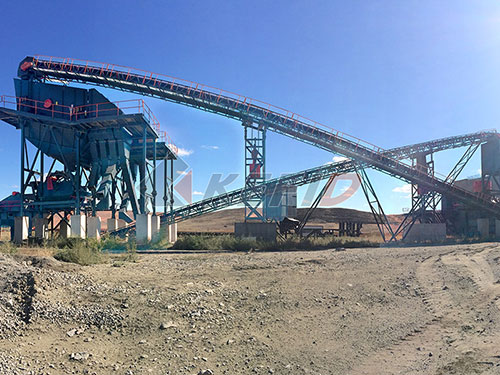
2. Primary Design Configurations: Horizontal vs. Vertical Shaft
Impact crushers are predominantly categorized into two distinct designs, each suited for specific stages in the crushing circuit.
A. Horizontal Shaft Impact Crusher (HSI)
The HSI is characterized by a horizontal rotor shaft around which blow bars are mounted. The chamber typically features two or more massive adjustable curtains or breaker plates against which the propelled material impacts.
- Operation: Material is fed from above, struck by blow bars, and thrown against the breaker plates repeatedly until it is small enough to pass through the gap between the rotor and the curtain.
- Applications: HSIs are exceptionally versatile. They serve as excellent primary crushers for soft to medium-hard materials like limestone, recycled concrete, and asphalt. They are also widely used in secondary crushing roles. Modern HSIs offer extensive adjustability (hydraulic or mechanical) for apron gaps and rotor speed, allowing precise control over product gradation.
- Product Characteristics: HSIs produce a well-shaped, cubical product with a high reduction ratio (often up to 20:1).
B. Vertical Shaft Impact Crusher (VSI)
The VSI employs a vertical rotor shaft. Material is fed into the center of the rotor (or via a feed tube), where it is accelerated outward by centrifugal force either from shoes on a rotating table or from impellers on a central rotor.
- Operation: The ejected material forms a “rock shelf” within an enclosed chamber; subsequent incoming material crushes against this shelf in a process known as “rock-on-rock” crushing. Some designs also incorporate “rock-on-anvil” configurations.
- Applications: VSIs are almost exclusively used in tertiary or quaternary crushing stages for shaping and fine grinding (“manufactured sand” production). Their primary function is to improve particle shape and liberate minerals locked within aggregates.
- Product Characteristics: They are unparalleled in producing highly cubical products with consistent gradation. This makes them indispensable for producing high-quality concrete sand and asphalt chips where particle shape directly impacts strength and binder requirements.
3. Key Applications Across Industries
The versatility of impact crushers has cemented their role in several critical sectors:
- Aggregate Production: For processing limestone, granite, sandstone, and other natural stones into construction aggregates.
- Recycling: This is arguably where impact crushers shine brightest. Their ability to handle variable feed materials—like concrete rubble, asphalt millings bricks—and liberate rebar through tramp metal release systems makes them ideal for CD&E (Construction & Demolition Waste) recycling operations.
- Mining & Minerals: Used for processing softer industrial minerals like coal gypsum phosphate.
- Manufactured Sand Production: Primarily using VSIs to create fine aggregate that meets strict specifications often surpassing natural sand in quality for high-performance concrete.
4. Advantages & Limitations: A Balanced Perspective
Advantages:
- Superior Product Shape: Produces highly cubical particles which enhance compaction strength in asphalt/concrete reduce voids require less binder
- High Reduction Ratios: Capable of significant size reduction in single stage simplifying entire crushing circuits
- Selective Crushing: Tends to fracture materials along natural weaknesses leading efficient liberation lower energy consumption per ton compared compression crushers when applied correctly
- Versatility in Feed Material: Can handle damp sticky materials better than compressive crushers less prone to clogging
- **Adaptability Modern Features Include hydraulic adjustment tramp metal release systems automated control interfaces
Limitations:
- High Wear Costs Abrasive Materials Rapid wear blow bars aprons liners especially when processing hard abrasive stone like quartzite granite This increases operational costs necessitates frequent component changes
- Fines Generation Inherently produces more fines than compression crushers may not be desirable applications requiring coarse product fractions
- Sensitivity Feed Size Consistency Optimal performance requires steady controlled feed Overloading feeding oversized material can cause severe damage imbalance
- Energy Consumption While efficient specific applications high rotor speeds result higher energy use compared jaw crushers primary stage
5 Technological Evolution Future Trends
Impact crusher technology has evolved significantly moving beyond simple brute force machines towards intelligent optimized systems:
- Advanced Wear Materials Development ultra-high-chrome ceramics composite metal matrix blow bars dramatically extending service life even abrasive applications
- Automation Control Integration real-time monitoring rotor speed bearing temperature hydraulic pressure allows predictive maintenance prevents catastrophic failures Modern systems can automatically adjust settings maintain consistent product quality despite varying feed conditions
- Hybrid Drive Systems Introduction electric diesel hybrid drives variable frequency drives VFDs improve fuel efficiency provide precise control over rotor velocity
- Design Refinements Improved chamber geometries optimized feed arrangements ensure better material flow increased throughput reduced recirculating load
Conclusion Strategic Tool Modern Processing
Impact crusher represents sophisticated dynamic solution within comminution landscape Its strength lies not raw power but its ability harness kinetic energy create precisely shaped aggregates meet stringent modern construction standards While not universal answer every crushing task—particularly highly abrasive primary applications—its role secondary tertiary recycling stages remains virtually unchallenged
The choice implement HSI VSI ultimately depends specific application desired product characteristics nature feed material economic considerations wear cost management As technology continues advance bridging gap between durability efficiency impact crusher will undoubtedly remain cornerstone efficient flexible size reduction strategies across global aggregate mining recycling industries Its continued evolution testament ongoing pursuit balancing productivity quality operational economy relentless demands built environment
