Title: Comprehensive Analysis of CE Marked Quarry Ballast Crushing Equipment: Design, Compliance, and Operational Excellence
Introduction
In the global railway infrastructure and construction industries, ballast—the coarse aggregate layer that supports railway tracks—plays a critical role in load distribution, drainage, and track stability. The production of high-quality ballast requires specialized crushing equipment capable of delivering consistent particle size, shape, and durability. Among the most stringent requirements for such machinery is the CE marking, which signifies conformity with European health, safety, and environmental protection standards. This article provides a detailed, professional, and objective examination of CE marked quarry ballast crushing equipment, including its design principles, regulatory compliance, key components, operational parameters, and sample specifications. The discussion is intended for engineers, procurement specialists, quarry operators, and regulatory professionals seeking a thorough understanding of this specialized machinery.
1. Understanding CE Marking for Quarry Crushing Equipment
CE marking is a mandatory conformity mark for products sold within the European Economic Area (EEA). For quarry ballast crushing equipment, CE marking indicates that the machinery meets the essential requirements of relevant European directives, most notably:
- Machinery Directive 2006/42/EC: Covers safety aspects such as guarding, emergency stops, noise reduction, and risk of mechanical hazards.
- Electromagnetic Compatibility (EMC) Directive 2014/30/EU: Ensures that electrical and electronic components do not generate electromagnetic interference that could disrupt other equipment.
- Low Voltage Directive 2014/35/EU: Applies to electrical equipment operating within certain voltage ranges, ensuring protection against electric shock and fire.
- Noise Emission Directive 2000/14/EC: Sets limits on noise levels for outdoor equipment, which is critical for quarry operations near residential areas.
A CE marked ballast crusher must undergo a conformity assessment procedure, often involving third-party testing and technical documentation review. The manufacturer must issue a Declaration of Conformity and affix the CE mark visibly on the machine. This process ensures that the equipment is designed, manufactured, and tested to minimize risks to operators, maintenance personnel, and the environment.
2. Key Design Features of Ballast Crushing Equipment
Ballast crushing equipment is distinct from general aggregate crushers due to the specific requirements of railway ballast. According to standards such as EN 13450 (Aggregates for Railway Ballast), ballast must have a narrow particle size distribution (typically 31.5 mm to 50 mm), high resistance to fragmentation (Los Angeles coefficient ≤ 20), and a high percentage of cubic particles. CE marked crushers are engineered to meet these demands through the following design features:
2.1 Crushing Chamber Geometry
- Jaw Crushers: Used for primary crushing, with a deep, symmetrical crushing chamber that ensures even wear and consistent product size. CE compliant jaw crushers incorporate hydraulic adjustment systems for closed side setting (CSS) to control output particle size.
- Cone Crushers: Preferred for secondary and tertiary crushing due to their ability to produce cubical particles. CE marked cone crushers feature advanced tramp release systems, hydraulic clearing, and automated setting adjustment to maintain product quality.
- Impact Crushers: Used for shaping and fine crushing, with rotor configurations that maximize impact force while minimizing wear. CE compliance requires robust rotor locking mechanisms and access doors with safety interlocks.
2.2 Wear Parts and Materials
- High-manganese steel (e.g., 14% Mn) or chromium carbide overlay for liners, blow bars, and concaves.
- Wear parts must be designed for easy replacement to reduce downtime. CE marking requires that replacement procedures are clearly documented in the user manual and that tools for safe handling are provided.
2.3 Screening and Classification
- Integrated vibrating screens with adjustable amplitude and frequency to separate ballast into precise fractions.
- CE compliant screens must have anti-vibration mounts, dust suppression systems, and emergency stop buttons within easy reach.
2.4 Dust and Noise Control
- Enclosed crushing circuits with water spray or dry dust collection systems to meet emission limits.
- Noise reduction measures include rubber lining in chutes, sound-dampening panels, and low-noise hydraulic pumps.
3. Operational Parameters and Performance Metrics
To evaluate a CE marked ballast crusher, operators must consider the following performance indicators:
- Throughput Capacity: Typically ranging from 100 to 500 tonnes per hour for mobile units, and up to 1,000 tph for stationary plants.
- Reduction Ratio: Jaw crushers achieve 4:1 to 6:1; cone crushers 3:1 to 5:1; impact crushers up to 10:1.
- Product Shape: CE marked crushers must produce a flakiness index (percentage of particles with thickness less than 0.6 times their length) below 15% for ballast.
- Power Consumption: Specific energy consumption (kWh per tonne) is a key metric; modern CE compliant crushers use variable frequency drives (VFDs) to optimize energy use.
- Availability and Maintenance: Mean time between failures (MTBF) and mean time to repair (MTTR) are critical for quarry profitability. CE documentation includes recommended maintenance schedules and spare parts lists.
4. Sample Specification: CE Marked Mobile Ballast Crushing Plant
Below is a representative sample specification for a CE marked mobile ballast crushing unit, typical of equipment used in European quarries:
Model: MB-450 Ballast Crusher (Manufacturer: QuarryTech GmbH)
General Information
- CE Declaration of Conformity: Yes (Directives 2006/42/EC, 2014/30/EU, 2000/14/EC)
- Application: Primary and secondary crushing of granite, basalt, and limestone for railway ballast
- Mobility: Track-mounted, hydraulic drive, remote control
- Transport weight: 48 tonnes
- Operating weight: 52 tonnes (including options)
Crushing Unit
- Primary: Single-toggle jaw crusher, feed opening 1,100 mm x 750 mm
- CSS range: 75–200 mm (hydraulic adjustment)
- Secondary: Cone crusher, 1,300 mm head diameter, automatic setting regulation
- CSS range: 20–50 mm
- Throughput: 250–350 t/h (depending on feed material and CSS)
Screening Unit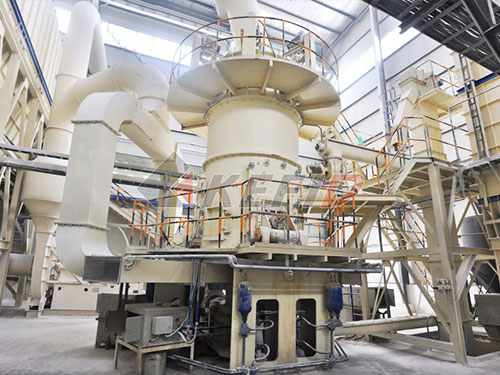
- Double-deck vibrating screen, 4,500 mm x 1,500 mm
- Deck 1: 50 mm aperture (oversize return to cone crusher)
- Deck 2: 31.5 mm aperture (ballast product)
- Undersize: <31.5 mm (reject or further processing)
Power System
- Engine: Caterpillar C13, 310 kW, Tier 4 Final / Stage V compliant
- Electric generator: 150 kVA for auxiliary systems
- Fuel tank: 600 liters (continuous operation ~12 hours)
Safety and Compliance Features
- Emergency stop buttons at all operator stations and remote control
- Guarding for all moving parts (CE compliant mesh and interlock switches)
- Noise level: ≤ 110 dB(A) at operator position (with cab closed)
- Dust suppression: Water spray nozzles at crusher inlet and screen discharge
- Fire suppression system in engine compartment
- Lockout/tagout points for maintenance
Optional Equipment
- Metal detector and magnetic separator
- Remote monitoring system (IoT-enabled)
- Additional dust extraction unit (baghouse filter)
- Soundproof enclosure for engine and crusher
5. Regulatory and Quality Assurance Considerations
Beyond CE marking, ballast crushing equipment must comply with national and international standards for aggregate production. Key references include:
- EN 13450:2002 – Aggregates for railway ballast
- ISO 9001:2015 – Quality management systems (often required by quarry operators)
- ISO 14001:2015 – Environmental management (for sustainable quarrying)
- OHSAS 18001 / ISO 45001 – Occupational health and safety
CE marked equipment typically undergoes factory acceptance testing (FAT) and site acceptance testing (SAT) to verify performance. The manufacturer must provide:
- Technical file (including design calculations, risk assessment, and test reports)
- User manual in the language of the destination country
- Spare parts catalog and maintenance schedule
- Training for operators and maintenance staff
6. Advantages of CE Marked Equipment for Quarry Operators
Investing in CE marked ballast crushers offers several tangible benefits:
- Legal Compliance: Avoids fines and market access restrictions in the EU and other regions that recognize CE marking.
- Safety: Reduced risk of accidents due to rigorous design and testing. CE marked machines include features such as two-hand controls, light curtains, and automatic shutdown in case of overload.
- Quality Assurance: Consistent product quality due to precise setting control and wear monitoring.
- Resale Value: CE marked equipment is easier to sell in secondary markets due to documented compliance.
- Insurance: Many insurers offer lower premiums for CE certified machinery.
7. Challenges and Limitations
Despite their advantages, CE marked ballast crushers also present challenges:
- Higher Initial Cost: Compliance testing and documentation add 10–20% to the purchase price compared to non-CE equipment.
- Complexity: Advanced electronic controls and safety systems require skilled technicians for maintenance.
- Adaptability: Some CE requirements (e.g., noise limits) may be difficult to meet in very hard rock applications where higher impact energy is needed.
- Documentation Burden: Maintaining CE compliance requires ongoing record-keeping, especially when modifications are made.
8. Future Trends in CE Marked Ballast Crushing
The industry is moving toward:
- Digitalization: CE marked crushers with integrated sensors for real-time monitoring of wear, vibration, and energy consumption. Data can be used for predictive maintenance and optimization.
- Electrification: Battery-electric or hybrid crushers to reduce emissions and noise, aligning with stricter EU environmental targets.
- Modular Design: Plug-and-play components that simplify CE re-certification when upgrading.
- Circular Economy: Crushers designed for easier disassembly and recycling of wear parts.
Conclusion
CE marked quarry ballast crushing equipment represents the gold standard in safety, quality, and environmental responsibility. From robust jaw and cone crushers to integrated screening and dust control systems, these machines are engineered to produce railway ballast that meets the exacting standards of EN 13450. For quarry operators, investing in CE certified equipment is not merely a regulatory obligation but a strategic decision that enhances operational efficiency, reduces liability, and ensures long-term competitiveness. As technology evolves, the integration of digital monitoring and electrification will further elevate the performance and sustainability of these essential machines. Whether for a new quarry development or an upgrade of existing plant, a thorough understanding of CE marking and its implications is indispensable for making informed procurement decisions.
