
CE-Marked Gyratory Crusher Design Service: Engineering Compliance, Performance, and Lifecycle Assurance
Introduction
In the primary crushing stage of hard rock mining and large-scale aggregate production, the gyratory crusher remains the equipment of choice for high-capacity, continuous operation. However, as European and international markets tighten machinery safety, environmental, and performance requirements, the design of a gyratory crusher can no longer be treated as a purely mechanical exercise. A CE-marked gyratory crusher design service integrates regulatory compliance, mechanical integrity, control system architecture, and lifecycle documentation into a single engineering package. This article examines what such a service entails, why it is necessary, how it is executed, and what technical and commercial benefits it delivers to OEMs, mine operators, and EPC contractors.
1. The Regulatory Basis for CE Marking of Gyratory Crushers
A gyratory crusher placed on the European Economic Area (EEA) market is subject to the Machinery Directive 2006/42/EC (soon to be superseded by the Machinery Regulation (EU) 2023/1230). Depending on its scope and configuration, additional directives may apply, including:
A CE-marked design service must therefore begin with a regulatory applicability matrix, identifying which directives and harmonised standards apply to the specific crusher configuration, site conditions, and intended use. This is not a paperwork exercise; it directly determines design features such as guard interlocks, emergency stop architecture, hydraulic relief settings, and noise enclosure requirements.
2. Scope of a CE-Marked Gyratory Crusher Design Service
A comprehensive design service typically covers the following work packages:
2.1 Risk Assessment and Hazard Elimination
The service provider performs a systematic risk assessment according to ISO 12100:2010, covering all life phases: transport, assembly, commissioning, operation, maintenance, and decommissioning. For a gyratory crusher, dominant hazards include:
The design service must demonstrate the hierarchy of controls: inherently safe design first, then safeguarding, then information for use. For example, instead of relying on warning labels near the spider arms, the design should incorporate captive fastening and interlocked access doors.
2.2 Mechanical Design and Verification
The core mechanical design includes:
All calculations must be traceable and included in the Technical File required for CE marking.
2.3 Electrical, Control, and Functional Safety
Modern gyratory crushers are controlled by PLC/SCADA systems with condition monitoring. The design service must address:
2.4 Noise and Dust Control
The Outdoor Noise Directive sets permissible sound power levels for crushers. A CE-marked design service must include:
2.5 Documentation and Technical File
The CE mark is only valid if a complete Technical File is compiled and retained for ten years. The design service should deliver:
3. The Design Process: From Concept to CE Mark
A structured design service follows a stage-gate process:
Stage 1 – Requirements Capture
Define capacity (t/h), feed size (ROM), product size, ore competency (Wi, Ai), altitude, ambient temperature, and local grid code. Identify applicable directives and standards.
Stage 2 – Concept Design
Select crusher size, eccentric speed, throw, and drive power. Perform preliminary risk assessment and identify safety-critical functions.
Stage 3 – Detailed Design
Complete 3D CAD, FEA, hydraulic schematics, electrical schematics, and control narrative. Conduct design FMEA and functional safety validation.
Stage 4 – Prototype and Type Testing
Where required, perform noise measurement, pressure test of hydraulic circuits, and functional test of safety functions. For series production, establish a routine test protocol.
Stage 5 – Technical File Compilation and DoC
Compile all evidence, draft the DoC, and affix the CE mark. Ensure the manufacturer’s quality system (ISO 9001) supports traceability.
Stage 6 – Post-Market Surveillance
Monitor field failures, update risk assessment, and issue service bulletins. The new Machinery Regulation increases obligations for digital documentation and cybersecurity updates.
4. Why a Specialised Design Service Is Necessary
Many OEMs and mining companies attempt to self-certify gyratory crushers using in-house teams. Common pitfalls include:
A specialised CE-marked design service brings:
5. Integration with Digital Engineering and Industry 4.0
Modern design services increasingly use digital twins of the gyratory crusher. A digital twin can:
This aligns with the EU Machinery Regulation’s emphasis on digital instructions and technical documentation. A CE-marked design service that incorporates digital twins provides a future-proof pathway for regulatory compliance and operational excellence.
6. Case Example: CE Marking a 60-110 Gyratory Crusher for a Scandinavian Mine
Consider a 60-110 gyratory crusher (600 mm feed opening, 1100 mm mantle diameter) destined for an underground mine in Sweden. The design service would:
Without this service, the crusher could be detained at port, fined, or required to undergo expensive retrofits.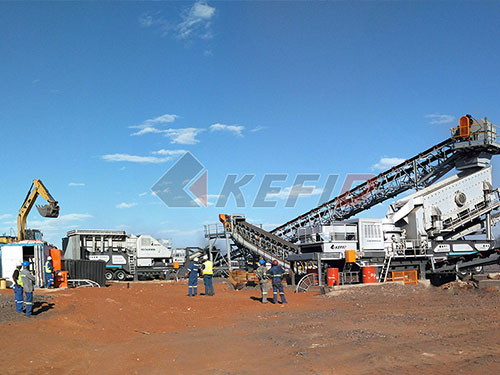
7. Selecting a CE-Marked Gyratory Crusher Design Service Provider
Key selection criteria include:
Conclusion
A CE-marked gyratory crusher design service is not merely a compliance formality. It is an integrated engineering discipline that combines mechanical design, control system safety, regulatory law, and lifecycle documentation. For OEMs seeking access to European and other regulated markets, and for mine operators requiring reliable, safe, and legally compliant primary crushing equipment, investing in a specialised design service is essential. The result is a crusher that not only meets the CE mark but also delivers higher availability, lower maintenance risk, and long-term regulatory confidence. As the Machinery Regulation (EU) 2023/1230 enters into force, the demand for such services will only increase, making early adoption a strategic advantage rather than a cost.
If you have any questions about our products, please feel free to contact us. We take all inquiries and suggestions very seriously.