
Bulk Gold Ore Crushing Equipment: The Strategic Role of OEM Factories in Modern Mining Operations
Introduction
In the global mining industry, the efficient extraction of gold from low-grade, high-volume ore deposits depends fundamentally on the performance and reliability of crushing equipment. Bulk gold ore crushing is the first critical stage in the comminution circuit, where run-of-mine (ROM) material is reduced from large boulders to a size suitable for grinding and subsequent leaching or flotation. As gold grades continue to decline and ore bodies become more complex, the demand for robust, high-capacity crushing solutions has intensified. This has elevated the importance of Original Equipment Manufacturer (OEM) factories that specialize in producing bulk gold ore crushing equipment. These factories are not merely suppliers; they are strategic partners that integrate engineering expertise, metallurgical knowledge, and manufacturing precision to deliver systems that maximize throughput, minimize downtime, and reduce total cost of ownership. This article provides a detailed examination of bulk gold ore crushing equipment, the role of OEM factories, key equipment types, selection criteria, operational considerations, and future trends.
The Nature of Bulk Gold Ore and Its Crushing Requirements
Gold ore is typically classified as either free-milling or refractory. Free-milling ores allow gold to be recovered through conventional cyanidation after comminution, while refractory ores require pre-treatment such as roasting, pressure oxidation, or bio-oxidation. Regardless of the metallurgical classification, the crushing stage must achieve several objectives: liberate gold-bearing minerals from gangue, prepare the ore for grinding, and ensure a consistent particle size distribution for downstream processes. Bulk gold ore—often extracted from open-pit mines—can contain large lumps exceeding 1,000 mm in diameter. These lumps must be reduced to a typical product size of 10–20 mm for SAG or ball mill feed, or even finer for high-pressure grinding rolls (HPGR) circuits.
The physical properties of gold ore vary widely. Hardness, abrasiveness, moisture content, clay content, and silica content all influence equipment selection. For example, highly abrasive ores require wear-resistant liners and alloys, while high-moisture or clay-rich ores demand special attention to prevent clogging and build-up. Consequently, crushing equipment must be engineered to handle variability without compromising availability or throughput.
The Role of OEM Factories in Bulk Gold Ore Crushing
An OEM factory for bulk gold ore crushing equipment is a specialized manufacturing facility that designs, fabricates, assembles, and tests crushing machinery according to its own proprietary designs and specifications. Unlike aftermarket parts suppliers or general fabrication shops, OEM factories own the intellectual property behind the equipment, control the quality of critical components, and provide warranties, technical support, and lifecycle services. In the context of gold mining, OEM factories offer several distinct advantages.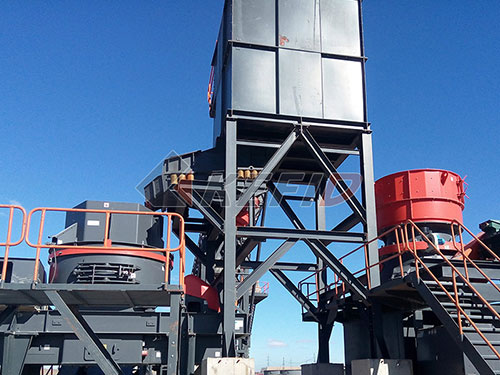
First, they possess deep application knowledge. Leading OEM factories employ metallurgists, mechanical engineers, and field service technicians who understand the unique challenges of gold ore processing. They can recommend the optimal crusher type, chamber configuration, liner profile, and drive system based on ore characterization data. Second, OEM factories maintain rigorous quality control. Critical components such as eccentric shafts, main frames, bearings, and hydraulic systems are manufactured to exact tolerances and subjected to non-destructive testing. Third, OEM factories provide integrated solutions. They can supply a single crusher or a complete crushing station, including feeders, screens, conveyors, and dust suppression systems. Fourth, they offer global support networks with spare parts availability and trained service personnel, which is essential for remote gold mines.
Key Equipment Types in Bulk Gold Ore Crushing Circuits
Bulk gold ore crushing typically involves a multi-stage process: primary crushing, secondary crushing, and sometimes tertiary crushing. Each stage employs different equipment, and OEM factories specialize in manufacturing these machines with gold-specific enhancements.
Primary Crushers
Primary crushing reduces ROM ore from up to 1,500 mm to approximately 100–300 mm. The most common primary crushers for gold ore are gyratory crushers and jaw crushers. Gyratory crushers are preferred for high-capacity operations (e.g., >1,000 t/h) because they offer continuous crushing action, high throughput, and lower operating costs per ton. OEM factories manufacture gyratory crushers with wear-resistant manganese liners, hydraulic adjustment systems, and advanced control systems that monitor power draw and closed-side setting (CSS). Jaw crushers, on the other hand, are suitable for smaller operations or where the ore is extremely hard and slabby. Modern jaw crushers from OEM factories feature toggle plate protection, hydraulic wedge adjustment, and optimized crushing chambers for high reduction ratios.
Secondary and Tertiary Crushers
Secondary crushing reduces ore from 100–300 mm to 20–50 mm, while tertiary crushing produces a finer product (10–20 mm or less). Cone crushers dominate these stages due to their high reduction ratios, excellent shape control, and ability to handle abrasive ores. OEM factories produce cone crushers with several advanced features: hydraulic clearing and adjustment, automatic tramp release, liner wear monitoring, and chamber optimization for different ore types. For high-tonnage gold operations, high-pressure grinding rolls (HPGR) are increasingly used as tertiary crushers. HPGRs offer energy-efficient comminution, reduce grinding circuit power consumption, and generate micro-cracks that improve gold liberation. OEM factories that manufacture HPGRs focus on roll surface materials, hydraulic pressure control, and edge protection to ensure long service life.
Ancillary Equipment
A complete bulk gold ore crushing circuit also includes apron feeders, vibrating grizzly feeders, scalping screens, belt conveyors, and dust collectors. OEM factories often supply these components as part of an integrated package, ensuring compatibility and optimized performance. For example, an apron feeder designed by the same OEM as the primary crusher will have matched capacity and discharge trajectory, reducing transfer chute wear and spillage.
Selection Criteria for Bulk Gold Ore Crushing Equipment
Selecting the right crushing equipment from an OEM factory requires a systematic approach. The following factors are critical:
Ore Characterization: Hardness (Bond work index), abrasiveness (Ai), moisture content, bulk density, and clay content must be determined through laboratory testing. These data inform crusher type, size, and liner material selection.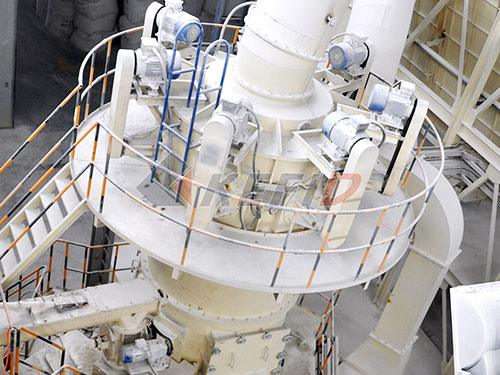
Capacity Requirements: The required throughput (tonnes per hour) determines the crusher size and number of units. OEM factories can perform simulations to predict performance under different feed conditions.
Product Size Distribution: The target product size (e.g., P80 of 12 mm) influences the number of crushing stages and the type of crushers used.
Availability and Reliability: Gold mines operate continuously, so equipment must have high mechanical availability (typically >95%). OEM factories design for ease of maintenance, with features such as hydraulic opening for quick liner changes and modular components for fast replacement.
Energy Efficiency: Comminution accounts for a significant portion of a gold mine’s energy consumption. OEM factories increasingly focus on energy-efficient designs, such as variable frequency drives, optimized crushing chambers, and HPGR technology.
Total Cost of Ownership: This includes capital cost, installation cost, energy cost, maintenance cost, and downtime cost. OEM factories can provide lifecycle cost analyses to help mines make informed decisions.
Environmental Compliance: Dust, noise, and vibration must be controlled. OEM factories integrate dust suppression systems, acoustic enclosures, and vibration isolation mounts into their designs.
Operational Considerations and Maintenance
Even the most robust OEM-manufactured crushing equipment requires proper operation and maintenance to achieve design performance. Key operational considerations include:
Feed Control: Uniform feed distribution prevents crusher overload and extends liner life. OEM factories often supply feed chutes with adjustable deflectors and level sensors.
Liner Management: Crusher liners wear over time, affecting product size and throughput. OEM factories provide liner wear profiles and recommend optimal change-out intervals based on ore abrasiveness.
Lubrication and Hydraulics: Proper lubrication of bearings and gears is essential. OEM factories specify lubricants, filtration levels, and maintenance schedules. Hydraulic systems for setting adjustment and tramp release must be kept clean and properly pressurized.
Condition Monitoring: Modern OEM crushers are equipped with sensors for vibration, temperature, power draw, and oil pressure. These data feed into predictive maintenance platforms that alert operators to impending failures.
Training and Support: OEM factories offer operator and maintenance training, either on-site or at their facilities. They also provide remote diagnostics and field service support.
The Strategic Advantage of Partnering with an OEM Factory
For gold mining companies, partnering with a reputable OEM factory for bulk ore crushing equipment offers strategic advantages beyond the initial purchase. First, OEM factories invest in research and development, continuously improving crusher designs for higher throughput, lower energy consumption, and longer wear life. Second, they offer genuine spare parts that are guaranteed to fit and perform, avoiding the risks associated with counterfeit or reverse-engineered parts. Third, they provide upgrade paths—for example, retrofitting an older cone crusher with a new automation system or converting a jaw crusher to a hydraulic wedge adjustment system. Fourth, OEM factories can collaborate with mine engineers to optimize the entire comminution circuit, not just individual machines. This holistic approach often yields significant gains in energy efficiency and gold recovery.
Challenges Facing OEM Factories
Despite their advantages, OEM factories face several challenges. Global supply chain disruptions can affect the availability of raw materials such as specialty steels and bearings. Skilled labor shortages in manufacturing regions can impact production schedules. Additionally, the mining industry’s cyclical nature leads to fluctuating demand for new equipment, requiring OEM factories to maintain flexible manufacturing capacity. To remain competitive, leading OEM factories are investing in automation, digital twin technology, and additive manufacturing (3D printing) for complex components. They are also expanding their service offerings, such as performance-based contracts and equipment-as-a-service models.
Future Trends in Bulk Gold Ore Crushing
Several trends are shaping the future of bulk gold ore crushing equipment and OEM manufacturing:
Digitalization and Automation: OEM factories are integrating IoT sensors, machine learning, and digital twins into their crushers. These technologies enable real-time optimization of crusher settings, predictive maintenance, and remote operation.
Energy Efficiency and Decarbonization: The mining industry is under pressure to reduce its carbon footprint. OEM factories are developing more efficient crushers, electrified drives, and energy recovery systems. HPGR and stirred media detritors (SMDs) are gaining traction as energy-efficient alternatives to conventional crushers and ball mills.
Modular and Mobile Crushing Solutions: For remote or small-scale gold deposits, OEM factories are offering modular crushing plants that can be transported and assembled quickly. Mobile crushing stations, track-mounted or wheel-mounted, provide flexibility for contract mining or temporary operations.
Advanced Materials: OEM factories are developing new wear-resistant alloys, ceramic composites, and polymer liners that extend liner life and reduce maintenance costs. These materials are particularly valuable for highly abrasive gold ores.
Sustainability and Circular Economy: OEM factories are designing equipment for easier recycling and remanufacturing. They are also offering retrofit programs to upgrade older crushers with modern, more efficient components.
Conclusion
Bulk gold ore crushing is a capital-intensive, energy-intensive, and maintenance-intensive process. The selection of crushing equipment from a qualified OEM factory is a strategic decision that affects the entire life of a gold mine. OEM factories bring together design expertise, manufacturing quality, application knowledge, and global support to deliver crushing solutions that maximize throughput, minimize downtime, and reduce total cost of ownership. As gold ores become more complex and mining operations face increasing pressure to improve efficiency and sustainability, the role of OEM factories will only grow in importance. Mining companies that partner with leading OEM factories—and that engage them early in the project planning stage—will be best positioned to achieve their production and profitability goals. For any bulk gold ore crushing project, the OEM factory is not just a vendor; it is a long-term partner in operational excellence.
If you have any questions about our products, please feel free to contact us. We take all inquiries and suggestions very seriously.