
Bespoke Stone Quarry Crushing Plant: A Comprehensive Technical Overview
In the global construction and infrastructure development sectors, the demand for high-quality aggregates is insatiable. Stone quarry crushing plants serve as the backbone of this supply chain, transforming raw rock extracted from the earth into precisely graded materials for concrete, asphalt, road base, and railway ballast. While standardized crushing plants are widely available, the concept of a bespoke stone quarry crushing plant has gained significant traction among operators seeking to optimize efficiency, reduce operational costs, and meet stringent environmental and product quality standards. This article provides a detailed, professional examination of what constitutes a bespoke stone quarry crushing plant, its design principles, key components, operational advantages, and the critical factors that drive its customization.
1. Defining the Bespoke Approach
A bespoke stone quarry crushing plant is not a one-size-fits-all solution. Instead, it is a meticulously engineered system tailored to the specific geological characteristics of a given quarry, the desired end-product specifications, the site’s topography, and the client’s production targets. Unlike modular or standard plants, which are often designed for generic applications, a bespoke plant integrates custom-designed machinery, layout configurations, and process flows to maximize throughput while minimizing waste and energy consumption.
The customization process begins with a comprehensive site audit and material testing. Geologists and process engineers analyze the rock’s compressive strength, abrasiveness (measured by the Los Angeles abrasion test), moisture content, and mineral composition. For instance, a quarry producing high-silica granite will require different crushing chamber geometries and wear-resistant materials compared to a limestone quarry. Similarly, the presence of clay or other deleterious materials may necessitate additional washing or screening stages. This data-driven approach ensures that every component—from the primary jaw crusher to the final vibrating screens—is selected and configured for optimal performance.
2. Core Design Principles and Process Flow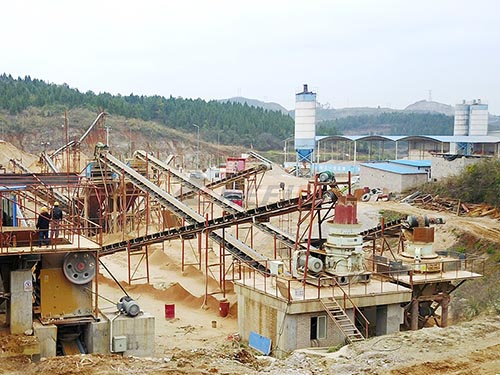
A bespoke crushing plant typically follows a multi-stage reduction process, but the exact sequence and equipment selection are highly variable. The fundamental stages include:
Primary Crushing: This stage reduces run-of-quarry (ROQ) material, which can range from 500 mm to over 1,200 mm in size, to a manageable 150–300 mm. For hard, abrasive rocks, a jaw crusher or gyratory crusher is preferred. In a bespoke design, the feed opening, eccentric throw, and closed-side setting (CSS) are optimized based on the material’s fragmentation characteristics from blasting.
Secondary Crushing: The secondary stage further reduces material to 40–100 mm. Cone crushers are the standard choice for hard rock, while impact crushers may be used for softer, less abrasive materials. Bespoke plants often incorporate hydraulic adjustment systems and automated setting controls to maintain consistent product gradation despite wear.
Tertiary and Quaternary Crushing: For high-specification aggregates (e.g., concrete sand or railway ballast), additional crushing stages are required. Vertical shaft impact (VSI) crushers are commonly employed for shaping and producing cubical particles. In a bespoke plant, the rotor configuration, cascade ratio, and speed are fine-tuned to achieve the desired particle shape and fines content.
Screening and Classification: Vibrating screens, often in multiple decks, separate material into different size fractions. Bespoke designs may include banana screens, high-frequency screens, or even air classifiers for precise fines removal. The screen media (wire mesh, polyurethane, or rubber) is selected based on the material’s abrasiveness and moisture content.
Material Handling and Stockpiling: Conveyor belt speeds, widths, and transfer points are engineered to minimize spillage, dust generation, and degradation of material. Bespoke plants often incorporate telescopic stackers or radial conveyors for efficient stockpile management.
3. Key Components and Customization Options
The success of a bespoke plant hinges on the careful selection and integration of its components. Below are critical elements that are frequently customized:
Feed Hopper and Feeder: The hopper capacity and geometry must accommodate the loading equipment (e.g., wheel loaders or dump trucks) while preventing bridging. Apron feeders or vibrating grizzly feeders are chosen based on material stickiness and size. In cold climates, heated hopper liners may be specified.
Crushing Chambers: For cone crushers, the chamber profile (e.g., coarse, medium, or fine) is matched to the feed size and desired product. Bespoke plants may use multi-cylinder hydraulic cone crushers with automatic tramp release and clearing systems to handle uncrushable materials.
Wear Parts: The choice of manganese steel, chrome alloy, or ceramic inserts depends on the abrasiveness of the rock. In extreme cases, custom wear profiles are designed to extend liner life and reduce downtime.
Dust Suppression and Enclosure: Environmental regulations often dictate the level of dust control. Bespoke plants may incorporate water spray systems, misting cannons, or fully enclosed structures with baghouse filters. The placement of dust collection points is optimized to capture emissions at transfer points and crusher discharge.
Control Systems: Modern bespoke plants are equipped with programmable logic controllers (PLCs) and supervisory control and data acquisition (SCADA) systems. These allow for real-time monitoring of crusher power draw, bearing temperatures, oil flow, and vibration levels. Custom algorithms can automatically adjust crusher settings to maintain product quality.
4. Operational Advantages of a Bespoke Plant
Investing in a bespoke stone quarry crushing plant offers several distinct advantages over standard configurations:
Higher Efficiency: By matching equipment to the specific material properties, a bespoke plant reduces recirculation loads and energy consumption per ton of product. For example, a properly designed cone crusher circuit can achieve a reduction ratio of 4:1 to 6:1 without overloading the motor.
Superior Product Quality: Customized screening and crushing stages ensure consistent particle shape, gradation, and cleanliness. This is particularly important for high-value applications such as asphalt aggregates, where flakiness and elongation indices must meet strict specifications.
Reduced Downtime: Bespoke plants are designed with maintenance in mind. Features such as hydraulic toggle plates, quick-change screen decks, and centralized lubrication systems minimize the time required for routine servicing.
Scalability and Flexibility: A well-designed bespoke plant can be expanded or modified as market demands change. For instance, additional crushing stages or mobile units can be integrated without major reengineering.
Lower Total Cost of Ownership (TCO): Although the initial capital expenditure may be higher, the long-term savings in energy, wear parts, and labor often result in a lower TCO over the plant’s lifecycle.
5. Challenges and Considerations
Despite the benefits, bespoke plants are not without challenges. The design and fabrication process is time-intensive, often requiring 6 to 12 months from concept to commissioning. This can be a disadvantage for operators needing immediate production capacity. Additionally, the reliance on custom components may lead to longer lead times for replacement parts.
Another critical consideration is the skill level of the operating team. A bespoke plant’s advanced control systems and complex process flows require trained personnel who understand the nuances of the equipment. Without proper training, the plant’s potential may not be fully realized.
6. Case Study: A Hypothetical Bespoke Plant for Hard Rock Quarry
To illustrate the concept, consider a hypothetical quarry in a mountainous region extracting diorite, a hard, abrasive igneous rock. The client requires 500 tons per hour of 0–5 mm sand, 5–10 mm chips, and 10–20 mm aggregates for a major highway project. A standard plant might struggle with high wear rates and poor particle shape.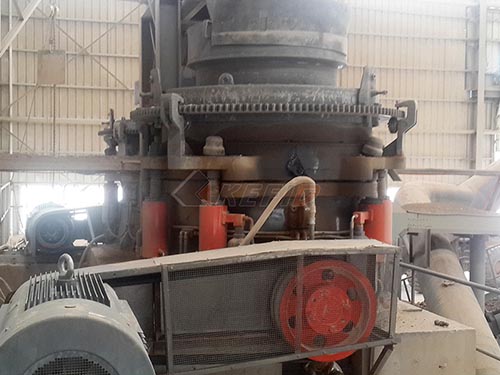
A bespoke solution would begin with a primary jaw crusher with a deep, symmetrical crushing chamber and a hydraulic CSS adjustment to handle the diorite’s high compressive strength (250 MPa). The secondary stage would employ a heavy-duty cone crusher with a coarse chamber and a manganese alloy with 18% manganese content for extended wear life. For the tertiary stage, a VSI crusher with a closed rotor and anvil ring configuration would be used to produce cubical sand. The screening plant would feature banana screens with polyurethane panels to resist abrasion and reduce blinding. A PLC-based control system would monitor crusher power and adjust feed rates to maintain consistent throughput.
The result would be a plant that achieves 95% uptime, produces aggregates with a flakiness index below 15%, and consumes 15% less energy per ton compared to a standard alternative.
7. Conclusion
A bespoke stone quarry crushing plant represents the pinnacle of engineering customization in the aggregates industry. It is a strategic investment that aligns the crushing process with the unique demands of the quarry, the material, and the market. While the upfront costs and design complexity are higher, the operational benefits—enhanced efficiency, product quality, and longevity—often justify the investment for serious operators. As the construction industry continues to demand higher specifications and stricter environmental compliance, the role of bespoke plants will only grow in importance. For quarry owners seeking a competitive edge, partnering with experienced engineers to design a truly tailored solution is not just an option; it is a necessity.
If you have any questions about our products, please feel free to contact us. We take all inquiries and suggestions very seriously.