Title: 250–300 TPH Stone Crushing Plant Factories: Factory Pricing, Configuration, and Procurement Considerations
Introduction
The 250–300 tons-per-hour (TPH) stone crushing plant segment represents one of the most commercially significant categories in the aggregate processing equipment market. Plants in this capacity range are widely deployed in quarrying, road and highway construction, concrete batching, and infrastructure projects where a balance between high output and manageable capital expenditure is required. For buyers sourcing directly from factories, understanding what “factory price” actually encompasses—and what differentiates one 250–300 TPH plant from another—is essential to making a sound procurement decision. This article provides an objective technical and commercial overview of 250–300 TPH stone crushing plant factories, their typical configurations, pricing structures, and the factors that influence both cost and performance.
Why the 250–300 TPH Range Is a Market Sweet Spot
Capacity ranges in crushing plants are not arbitrary; they correspond to real project economics. A 250–300 TPH plant sits above small-scale operations (typically 50–150 TPH) that suit local contractors and below large stationary installations (400–1000+ TPH) that serve major quarries and long-term aggregate supply contracts. The mid-range offers several advantages:
- Project scale alignment: It matches the output requirements of medium-sized quarries, commercial aggregate suppliers, and infrastructure contractors working on multi-year road or rail projects.
- Capital efficiency: Per-ton capital cost typically declines as capacity increases, but the 250–300 TPH range avoids the heavy civil works, extensive automation, and permitting complexity associated with very large plants.
- Flexibility: These plants can be configured as stationary, semi-mobile, or modular systems, allowing operators to adapt to site conditions and future relocation needs.
- Feed size tolerance: With proper primary crushing selection, 250–300 TPH plants can accept run-of-mine feed from 500–1000 mm, making them suitable for primary, secondary, or combined crushing duties.
Typical Process Configuration
A well-engineered 250–300 TPH stone crushing plant generally follows a multi-stage flow designed around the feed material’s hardness, abrasiveness, and required product gradation. Common configurations include:
- Primary Crushing: A jaw crusher (e.g., PE-900×1200 or similar) or, for softer materials, an impact crusher handles the initial size reduction. Jaw crushers are preferred for hard, abrasive rock such as granite and basalt; impact crushers suit limestone and less abrasive feed.
- Secondary Crushing: A cone crusher (for hard rock) or impact crusher (for softer stone) reduces material to approximately 0–80 mm, depending on the target product.
- Tertiary/Finishing Stage (optional): A fine cone crusher or VSI (vertical shaft impactor) produces manufactured sand or precisely graded aggregates.
- Screening: Multi-deck vibrating screens (typically 2–4 decks) classify material into final product sizes (e.g., 0–5 mm, 5–10 mm, 10–20 mm, 20–40 mm).
- Conveying and Stockpiling: Belt conveyors transfer material between stages and to stockpile conveyors.
- Auxiliary Systems: Feed hopper, vibrating feeder, dust suppression or collection systems, magnetic separator (for rebar removal in recycling applications), and electrical control panels.
Factory-built plants in this range are often offered as standardized modular packages, which reduces engineering lead time and cost compared with fully custom designs.
What “Factory Price” Means—and What It Does Not
The term “factory price” is widely used in marketing but varies considerably in meaning. Buyers should clarify the following: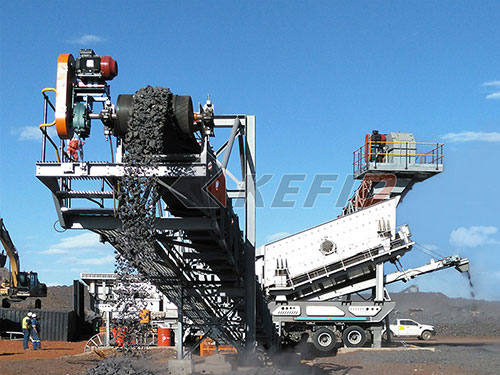
- Scope of supply: Does the quoted price include the complete plant (crushers, screens, feeders, conveyors, structures, motors, control system), or only the main crushing equipment? Conveyors and steel structures can represent 20–35% of total plant cost and are frequently excluded from headline prices.
- Ex-works vs. delivered: Factory price typically means ex-works (FOB factory), excluding freight, insurance, customs duties, and site installation.
- Installation and commissioning: Erection, wiring, and commissioning are usually quoted separately and can add 10–20% to project cost, depending on site location and labor rates.
- Spare parts and wear liners: Initial spare parts packages and wear parts (jaw plates, cone liners, screen meshes, belt) are sometimes included and sometimes not.
- Documentation and compliance: Electrical standards (IEC, CE, UL), structural design codes, and certification requirements affect price and should be specified in the inquiry.
A transparent factory quotation should itemize equipment by component, state the scope boundaries clearly, and specify performance guarantees (capacity, product gradation, power consumption) along with the test conditions under which those guarantees apply.
Price Ranges and Cost Drivers
Published and indicative factory pricing for 250–300 TPH stone crushing plants varies widely—typically from roughly USD 150,000 to USD 600,000 or more for the core equipment package, depending on configuration and origin. Key cost drivers include:
- Material hardness and abrasiveness: Hard rock (granite, basalt, river stone) requires jaw + cone configurations with higher wear-resistant metallurgy, increasing cost relative to impact-based plants for limestone.
- Number of crushing stages: Two-stage plants are less expensive than three-stage plants with VSI for sand production.
- Automation level: PLC-based centralized control, remote monitoring, and automatic lubrication systems add cost but improve uptime and reduce labor requirements.
- Structural design: Heavy-duty skid-mounted or modular steel structures with walkways, guardrails, and platforms cost more than minimal-frame installations but improve safety and maintainability.
- Screen area and conveyor length: Larger screening area and longer conveyors (for stockpile capacity) increase price.
- Manufacturing origin and quality tier: Factories in different regions offer different price-quality positions; buyers should evaluate fabrication quality, component brands (bearings, motors, gearboxes), and after-sales capability rather than price alone.
Evaluating a Factory: Beyond the Quotation
When comparing 250–300 TPH plant factories, objective evaluation should extend beyond price:
- Engineering capability: Does the factory provide customized flow design based on the buyer’s material test data (bond work index, abrasion index, moisture content)?
- Fabrication quality: Weld quality, machining tolerances, and surface treatment (shot blasting and painting) are visible indicators of manufacturing standards.
- Component sourcing: Reputable bearing, motor, and reducer brands reduce failure risk; buyers should request a component list.
- Reference installations: Verifiable operating references in similar applications and capacity ranges are the strongest evidence of reliability.
- After-sales support: Spare parts availability, technical documentation, remote troubleshooting, and response time commitments matter over the plant’s 10–20 year service life.
- Performance guarantees: Capacity and product-quality guarantees, with defined test procedures and remedies, protect the buyer’s investment.
Conclusion
The 250–300 TPH stone crushing plant represents a mature, well-defined equipment category with numerous factory suppliers competing globally. “Factory price” is a useful starting point for budgeting, but informed procurement requires clarifying scope, specifying performance requirements, and evaluating suppliers on engineering, fabrication quality, references, and support—not price alone. Buyers who invest in detailed technical specification and supplier due diligence consistently achieve better total cost of ownership than those who select on headline price. For projects of this scale, the difference between a well-configured plant and a poorly specified one is measured not only in capital cost but in years of operating reliability and product quality.
