
Title: The Strategic Role of the 250–300 TPH Stone Crushing Plant Distributor in R&D and Market Development
Abstract
In the aggregate and mining equipment sector, the 250–300 tonnes-per-hour (TPH) stone crushing plant represents a critical mid-to-large-scale configuration. While manufacturers design and fabricate the machinery, the distributor occupies a pivotal position at the interface between production and application. This article examines the evolving role of the 250–300 TPH stone crushing plant distributor, with particular emphasis on research and development (R&D) contributions. It argues that modern distributors are no longer mere logistics intermediaries; they function as field-based R&D partners who translate operational data into design improvements, customize plant configurations for regional geological conditions, and drive incremental innovation in automation, wear-part metallurgy, and modular plant architecture. The discussion covers market positioning, technical customization, data feedback loops, service-oriented R&D, and the challenges facing distributors in an increasingly competitive and digitalized equipment landscape.
1. Introduction
The 250–300 TPH stone crushing plant is a workhorse configuration in the aggregates industry. Typically comprising a primary jaw or impact crusher, a secondary cone or impact crusher, vibrating screens, feeders, and belt conveyors, such a plant is sized to serve medium-to-large quarries, infrastructure contractors, and commercial aggregate producers. The capital expenditure is substantial, and the operational demands are rigorous: continuous duty cycles, variable feed material characteristics, and stringent product gradation requirements.
In this context, the distributor—the entity that imports, sells, commissions, and supports the equipment—plays a role that extends far beyond order processing. Manufacturers increasingly rely on distributors to gather field intelligence, validate design assumptions, and co-develop solutions for specific markets. This article explores how the 250–300 TPH stone crushing plant distributor engages in R&D, both formally and informally, and why this function is essential to product competitiveness and customer satisfaction.
2. Market Positioning and the Distributor’s Technical Mandate
A distributor handling 250–300 TPH plants typically operates in markets where aggregate demand is driven by road construction, railway ballast, concrete production, and large-scale building projects. The customers are sophisticated: they evaluate throughput, product shape, energy consumption, and total cost of ownership. Consequently, the distributor must employ engineering personnel capable of conducting site assessments, mass-flow calculations, and layout planning.
This technical mandate naturally draws distributors into R&D. When a distributor specifies a plant for a customer, it must often adapt the manufacturer’s standard offering to local conditions—for example, high-altitude operation, abrasive basaltic feed, or restricted site footprints. These adaptations generate engineering knowledge that flows back to the manufacturer. In many cases, distributors maintain their own design teams to produce layout drawings, structural steel modifications, and electrical schematics. This localized engineering is a form of applied R&D, even if it is not always labeled as such.
3. Field Data as an R&D Asset
The most valuable R&D contribution of a distributor is field data. A 250–300 TPH plant generates continuous operational data: throughput rates, crusher power draw, screen efficiency, belt wear rates, downtime events, and maintenance intervals. Distributors with robust service operations collect these data through telematics, service reports, and customer feedback.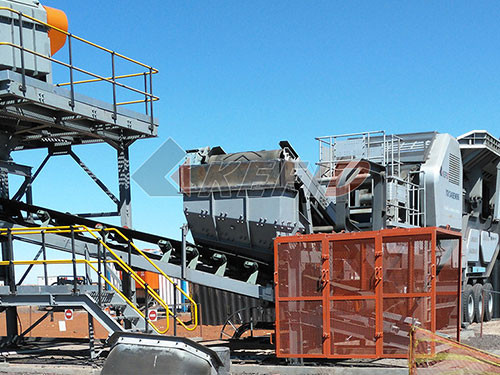
This data serves two R&D purposes. First, it validates or challenges manufacturer design assumptions. For instance, if a distributor in a humid tropical market reports frequent clogging in a standard chute design, the manufacturer can redesign the chute geometry or add liners. Second, the data enables predictive maintenance models. Distributors increasingly use accumulated failure data to develop condition-monitoring algorithms, which constitute a form of service R&D that enhances plant availability.
4. Customization and Modular Design Inputs
No two quarries are identical. A distributor selling 250–300 TPH plants must frequently request customization: different crusher chamber profiles for coarse versus fine feed, alternative screen media for wet or sticky material, and modular structures for rapid relocation. Each customization request is a small R&D project. Over time, patterns emerge. Distributors that systematically document customization requests can identify opportunities for modular design—for example, a standardized range of feed modules, screening modules, and stockpile conveyor modules that can be combined in various ways.
This modular philosophy is increasingly important in urban quarrying and contract crushing, where plants must be dismantled and relocated within weeks. Distributors who understand these logistical constraints contribute directly to the manufacturer’s product roadmap by advocating for quick-connect hydraulics, pre-wired control panels, and container-friendly structural sections.
5. Wear-Part Metallurgy and Local Material Science
Wear parts—jaw plates, cone liners, blow bars, screen meshes—are a major cost driver in 250–300 TPH operations. Distributors often test alternative alloys and liner profiles in collaboration with local foundries and the manufacturer’s metallurgical team. This testing is genuine R&D: it involves controlled trials, wear measurement, cost-per-tonne analysis, and failure mode examination.
In regions where abrasive feed materials are common, distributors may develop localized wear-part inventories and recommend specific alloy compositions. The feedback loop to the manufacturer helps refine global wear-part offerings. Some distributors go further, establishing wear-testing partnerships with universities or technical institutes, thereby contributing to material science research relevant to crushing applications.
6. Digitalization and Service R&D
The digital transformation of crushing plants has opened new R&D avenues for distributors. Many distributors now offer remote monitoring packages, fleet management dashboards, and mobile applications that track plant performance. Developing these digital tools requires software development, data integration, and user-interface design—activities that constitute a distinct R&D stream.
Moreover, distributors use digital twins and simulation software to model plant performance before installation. By simulating material flow through a 250–300 TPH circuit, distributors can optimize crusher settings and screen configurations, reducing commissioning time and improving first-year productivity. This simulation capability is a competitive differentiator and a direct R&D contribution to project delivery.
7. Training, Knowledge Transfer, and Human Capital R&D
A 250–300 TPH plant requires skilled operators and maintenance technicians. Distributors invest in training programs that cover startup procedures, safety protocols, lubrication schedules, and troubleshooting. While training is often viewed as a service function, it has an R&D dimension: training needs reveal design weaknesses. If operators consistently struggle with a particular control sequence or maintenance access point, the distributor can document these pain points and propose design improvements.
Furthermore, distributor engineers who commission and service plants accumulate tacit knowledge that is difficult to replicate. Capturing this knowledge in standardized commissioning checklists, troubleshooting guides, and best-practice manuals is a form of knowledge R&D that benefits the entire supply chain.
8. Challenges and Strategic Considerations
Distributors engaged in R&D face several challenges. First, intellectual property boundaries must be managed carefully; customization work performed by a distributor may raise questions about ownership of design improvements. Clear contractual frameworks are essential. Second, the cost of R&D can be difficult to justify for a distributor whose primary revenue comes from equipment sales and parts. Manufacturers may need to co-invest in distributor R&D through technical support agreements, joint testing programs, or shared data platforms.
Third, market pressure from low-cost competitors can discourage investment in customization and service innovation. Distributors must articulate the value proposition of R&D-driven support—higher uptime, lower cost per tonne, and longer equipment life—to justify premium positioning.
9. Conclusion
The 250–300 TPH stone crushing plant distributor is far more than a sales channel. Through field data collection, customization engineering, wear-part testing, digital tool development, and knowledge capture, distributors perform R&D functions that directly influence plant design, reliability, and operational economics. Manufacturers that recognize and formalize this role—through co-development agreements, data-sharing protocols, and joint innovation programs—stand to gain a significant competitive advantage. As the aggregates industry moves toward greater automation, sustainability, and lifecycle cost optimization, the distributor’s R&D contribution will become even more central to the success of 250–300 TPH crushing operations.
If you have any questions about our products, please feel free to contact us. We take all inquiries and suggestions very seriously.