
White Label Crushing and Screening Equipment: A Comprehensive Technical Datasheet and Market Analysis
Introduction
In the modern aggregates, mining, and recycling industries, the demand for efficient, reliable, and cost-effective material processing solutions has never been higher. Crushing and screening equipment—the backbone of any quarry, mine, or construction waste recycling operation—must deliver consistent throughput, precise particle size distribution, and minimal downtime. However, the capital expenditure required for proprietary, brand-name machinery is often prohibitive for mid-sized contractors and emerging markets. This is where the concept of white label crushing and screening equipment has gained significant traction.
White label equipment refers to machinery manufactured by an original equipment manufacturer (OEM) but sold under another company’s brand name. Unlike counterfeit or grey-market products, white label units are fully engineered, tested, and warrantied by the underlying manufacturer, yet they allow the reseller to offer a customized brand identity, localized support, and tailored service packages. This datasheet provides a professional, objective, and detailed technical overview of white label crushing and screening systems, including their architecture, key performance parameters, customization options, quality assurance protocols, and comparative advantages over branded alternatives.
1. Scope and Definition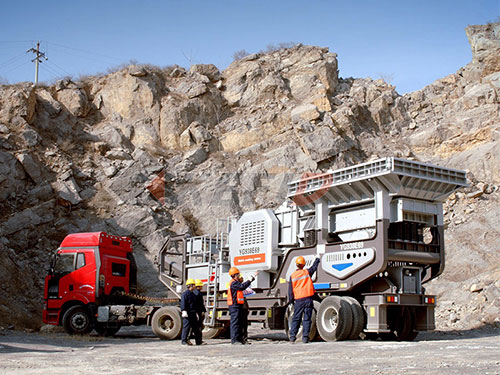
White label crushing and screening equipment encompasses a broad range of stationary, semi-mobile, and fully mobile units. These include:
The white label model allows the reseller to specify the paint color, logo, control system interface language, and even minor mechanical modifications (e.g., bolt-on wear parts) without altering the core engineering. The underlying OEM retains responsibility for structural integrity, metallurgy, and safety compliance.
2. Core Technical Specifications (Representative Datasheet Values)
The following are typical performance parameters for white label equipment, based on industry-standard OEM designs. Actual values vary by model and configuration.
2.1 Primary Jaw Crusher (Example: 1,200 x 750 mm)
| Parameter | Value |
|---|---|
| Feed Opening | 1,200 mm x 750 mm |
| Max Feed Size | 1,000 mm (depending on material density) |
| CSS Range (Closed Side Setting) | 75 – 200 mm |
| Throughput (at CSS 100 mm) | 250 – 350 tph (metric tons per hour) |
| Motor Power | 110 – 160 kW |
| Crusher Weight (without motor) | 28,500 kg |
| Eccentric Shaft Speed | 220 – 280 rpm |
| Hydraulic CSS Adjustment | Optional (standard on premium white label) |
| Wear Parts Material | Manganese steel (Mn 18%, Cr 2%) |
2.2 Secondary Cone Crusher (Example: 1,300 mm head diameter)
| Parameter | Value |
|---|---|
| Head Diameter | 1,300 mm |
| Max Feed Size | 220 mm |
| CSS Range | 6 – 45 mm |
| Throughput (at CSS 16 mm) | 180 – 250 tph |
| Motor Power | 200 – 250 kW |
| Eccentric Throw | 18 – 32 mm |
| Hydraulic Relief System | Standard (accumulator-based) |
| Tramp Iron Protection | Automatic reset, pressure sensor |
2.3 Horizontal Vibrating Screen (Example: 2,400 x 6,000 mm, triple deck)
| Parameter | Value |
|---|---|
| Screen Area per Deck | 14.4 m² |
| Number of Decks | 3 |
| Inclination Angle | 15° – 20° (adjustable) |
| Amplitude | 8 – 12 mm |
| Vibrator Frequency | 750 – 900 rpm |
| Motor Power | 2 x 22 kW (dual drive) |
| Screening Efficiency | > 92% (at 50% feed loading) |
| Max Feed Size | 150 mm |
| Support Structure | Heavy-duty coil springs or air bags |
2.4 Mobile Impact Crusher (White Label, Track-Mounted)
| Parameter | Value |
|---|---|
| Crusher Type | HSI, rotor diameter 1,100 mm |
| Rotor Width | 1,200 mm |
| Max Feed Edge | 500 mm (reinforced concrete) |
| Throughput | Up to 400 tph |
| Engine Power (Diesel) | 330 kW (Tier 4 Final / Stage V compliant) |
| Main Discharge Conveyor | 1,200 mm wide, discharge height 3,800 mm |
| Magnet Separator | Optional, overband type, 1,500 mm width |
| Total Weight | 48,000 kg |
| Transport Dimensions (L x W x H) | 15.5 m x 3.0 m x 3.4 m |
3. Engineering and Design Principles
White label equipment is not a “generic” or “no-name” product. It is engineered to the same rigorous standards as the OEM’s branded line. Key design principles include:
4. Customization and Branding Options
The primary value proposition of white label equipment is the ability to differentiate in the market without investing in R&D. Customization options include:
5. Quality Assurance and Testing Protocol
Every white label unit undergoes a standardized factory acceptance test (FAT) before shipment. The test protocol includes:
6. Comparative Analysis: White Label vs. Branded vs. Local Fabrication
| Criteria | White Label (OEM-backed) | Branded (e.g., Metso, Sandvik) | Local Fabrication |
|---|---|---|---|
| Initial Cost | 15–25% lower than branded | Highest | Lowest (but variable) |
| Engineering Reliability | High (proven OEM design) | Very High | Low to Medium |
| Lead Time | 8–12 weeks | 12–20 weeks | 4–8 weeks |
| Warranty | 12–24 months | 24–36 months | 6–12 months |
| Spare Parts Availability | Good (OEM supply chain) | Excellent | Poor |
| Resale Value | Medium | High | Low |
| Customization Flexibility | High (branding, minor mods) | Low (fixed models) | Very High (but risky) |
| Technical Support | Provided by reseller, backed by OEM | Direct from OEM | Limited |
7. Application-Specific Considerations
7.1 Hard Rock Quarrying (Granite, Basalt)
For abrasive materials, white label cone crushers with a 22% manganese liner and a minimum eccentric throw are recommended. The screening system should use polyurethane mesh (instead of wire) to extend wear life by 3–5 times. The reseller should specify a hydraulic CSS adjustment to compensate for liner wear without manual shimming.
7.2 Construction & Demolition (C&D) Recycling
Impact crushers (HSI) are preferred for their ability to handle rebar and embedded steel. White label units should include a magnetic separator, a water spray system for dust suppression, and a heavy-duty vibrating feeder with a grizzly section to bypass fines. The crusher’s rotor must be protected with a wear-resistant ceramic coating on the blow bars.
7.3 Mobile Contract Crushing
Track-mounted white label plants are ideal for contractors who move between sites. Key specifications include a diesel-hydraulic drive (for independent operation), a radio remote control, and a quick-release hopper for transport. The reseller should ensure the unit’s transport height is below 3.5 m to avoid special permits.
8. Total Cost of Ownership (TCO) Analysis
A professional procurement decision requires a TCO model over a 5-year period. For a typical 300 tph white label crushing and screening plant (including one jaw, one cone, and two screens), the TCO breakdown is:
White label equipment reduces the capital cost component by 15–25% compared to branded units. However, the reseller must maintain a robust spare parts inventory to avoid extended downtime, as the OEM’s direct service network may not be as responsive for white label units.
9. Regulatory and Compliance Notes
10. Conclusion and Selection Criteria
White label crushing and screening equipment offers a pragmatic middle ground between expensive global brands and unreliable local fabrication. For resellers, it provides a fast route to market with a differentiated product. For end-users, it delivers proven engineering at a lower acquisition cost, provided the reseller has a credible service network.
Final recommendations for procurement:
In summary, white label equipment is not a compromise—it is a strategic choice. When executed with proper due diligence, it delivers operational excellence, financial efficiency, and brand equity for the reseller, while providing the end-user with a robust, high-performance asset that meets the most demanding crushing and screening applications.
If you have any questions about our products, please feel free to contact us. We take all inquiries and suggestions very seriously.