
In the competitive world of aggregate production, mineral processing, and large-scale construction projects, the White Label 250-300 TPH (Tonnes Per Hour) Stone Crushing Plant represents a significant investment and a critical piece of operational infrastructure. The term “White Label” typically refers to a product or system manufactured by one company but sold under another company’s brand. In this context, it signifies a crushing plant designed and built by an original equipment manufacturer (OEM) that can be branded and customized by a distributor or large end-user. The certification of such a plant is not a singular document but a multifaceted assurance of quality, safety, compliance, and performance. This article delves into the intricate details of what certification entails for a plant of this capacity, exploring its components, importance, and the standards governing its lifecycle.
A 250-300 TPH stone crushing plant is a medium-to-large-scale setup capable of processing hard rocks like granite, basalt, or limestone into various aggregate sizes (e.g., 0-5mm, 5-10mm, 10-20mm, etc.). A typical configuration might include:
The “White Label” aspect means the entire system is engineered and assembled with the flexibility for the purchasing entity to apply its own branding, control interface design, and sometimes select specific component suppliers.
For such industrial machinery, certification is not one piece of paper but a portfolio of documents and compliances that verify different aspects. Key certifications include:
This is arguably the most critical certification. The CE mark indicates conformity with health, safety, and environmental protection standards for products sold within the European Economic Area. For a crushing plant:
These are process-based certifications held by the manufacturing company that build trust in their quality management systems:
A reputable white label provider will supply certificates for critical sub-assemblies:
Before disassembly for shipping,the complete plant or its major modules undergo a FAT at the OEM’s facility. This is a witnessed test where key performance parameters are verified:
This is a commercial certificationof performance.The OEM guarantees that once erected on-siteand fed with specified material,the plant will achieve:
Safety Assurance: Industrial crushing involves massive forces,vibrations,and moving parts.Certification(especially CE) providesa systematic frameworkfor hazard identificationand mitigationprotectingoperatorsand maintenance personnelfrom life-threatening risks.
Risk Mitigationfor Investors/Buyers: A certifiedplant reduces financialand operational risk.It minimizesdowntime due toequipment failure,safety incidentsor non-compliancewith local regulationswhich could leadto finesor work stoppages.
Market Access& Regulatory Compliance: Most countrieshave stringent importand operational regulationsfor heavy machinery.CEor equivalent nationalcertifications(e.g.,GOST-Rfor Russia,NOMfor Mexico)are often mandatoryfor customs clearanceand obtainingan operating licensefrom local authorities.
Quality& Reliability Verification: ISO certificatesand componentcertificates provide traceability.They assurethe buyerthat high-qualitymaterialsand controlledprocesseswere usedextendingthe plant’s lifespan andreducingtotal costof ownershipthrough lower maintenance costs.
Resale Value& Project Financing: A well-documented,certifiedplant hasa higher residualvalue.Financial institutionsare more likelyto provide favorable financingtermsfor projectsthat utilizestandard-compliantequipmentwith clearproofof compliance.
2.Manufacturing Phase: Qualitycontrol inspectorsverify materialsusing suppliedcertificates,weld quality,dimensional accuracy,and surface treatmentsagainstthe approved drawings.All inspectionsare documented.
3.Assembly& FAT Phase:The integratedsystemis tested,andthe comprehensiveTechnical Fileis finalized.This fileincludesdesign calculations,lubrication schedules,wiring diagrams,and manuals.The Declarationof Conformityis issuedupon successfulFAT.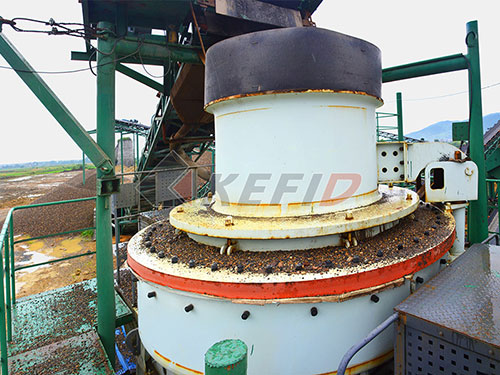
4.Shipment& Erection:Certificationdocumentsaccompanythe shipmentto assistwith customs.Clear sitefoundationdrawingsensure safeinstallationby certifiederection teams.
5.Commissioning& PAT:The final stagewherethe plantis testedwith actualmaterial.A successfulPAT leads tothe issuanceofthe finalperformancecertificateandinvoicesign-offoften markingthe startofthe warrantyperiod.
The certificate fora WhiteLabel250-300TPHStoneCrushingPlantis far morethan apaperon the wall.Itisthe tangibleculminationofa rigorousengineering,maufacturing,and qualityassuranceprocessencompassingCEmarkingfor safety,I SOstandardsformanagement systems,and detailedcomponentdocumentation.For any seriousbuyer—be itan aggregatesproducer,a largeconstructionfirmora globaldistributor—insistingona fully certifiedplantis paramount.Itisthe foundationforsafeoperationregulatorycompliancepredictableperformanceanda solidreturnon amulti-milliondollarinvestment.In an industrywhere downtimecosts thousandsof dollarsper hour,the valueof certificationliesnot justin marketaccessbutin ensuringuninterruptedreliableproductionforthe decade-longlifespanof themachine
If you have any questions about our products, please feel free to contact us. We take all inquiries and suggestions very seriously.