Sustainable Stone Crusher Plant Company: Redefining the Future of Aggregate Production through Environmental Stewardship and Operational Excellence
Introduction
The global construction industry, a cornerstone of economic development, is fundamentally reliant on the availability of high-quality aggregates—crushed stone, sand, and gravel. Stone crusher plants, the industrial facilities that produce these essential materials, have historically been associated with significant environmental challenges: dust emissions, noise pollution, high energy consumption, water depletion, and landscape degradation. However, a paradigm shift is underway. The emergence of the Sustainable Stone Crusher Plant Company represents a transformative approach that integrates environmental responsibility, social accountability, and economic viability into every facet of aggregate production. This article provides a comprehensive, objective, and professional examination of what constitutes a sustainable stone crusher plant company, the technologies and practices it employs, the regulatory and market drivers behind its rise, and the measurable benefits it delivers to stakeholders and the planet.
Defining Sustainability in the Context of Stone Crushing
Sustainability, in the context of a stone crusher plant, extends far beyond mere compliance with environmental regulations. It is a holistic operational philosophy that seeks to minimize negative externalities while maximizing resource efficiency and long-term value creation. A truly sustainable stone crusher plant company operates on three interconnected pillars:
- Environmental Stewardship: This involves reducing the carbon footprint, conserving natural resources (water, energy, and raw materials), preventing air and water pollution, rehabilitating mined land, and protecting local biodiversity.
- Social Responsibility: This encompasses ensuring the health and safety of workers and nearby communities, providing fair wages and training, engaging in transparent community dialogue, and contributing to local infrastructure and development.
- Economic Viability: A sustainable company must be profitable. However, it achieves profitability not through cost-cutting at the expense of the environment or society, but through operational efficiency, waste reduction, premium product differentiation, and long-term risk mitigation.
Core Technologies and Practices of a Sustainable Stone Crusher Plant
A sustainable stone crusher plant company distinguishes itself through the adoption of advanced technologies and rigorous operational protocols. These are not optional add-ons but integral components of the plant’s design and daily management.
1. Dust Suppression and Air Quality Management
Dust (particulate matter, PM10 and PM2.5) is the most visible and health-damaging emission from crushing operations. Sustainable plants employ a multi-layered approach:
- Enclosed Conveyor Systems: All material transfer points are fully enclosed to prevent fugitive dust.
- High-Pressure Water Spray Systems: Strategically placed nozzles at crusher inlets, discharge points, and stockpile areas use fine water mist to agglomerate dust particles. Advanced systems use recycled water and automated sensors to optimize spray volume based on material moisture and wind conditions.
- Dust Collection and Filtration: Baghouse filters or wet scrubbers are installed at major emission sources, capturing up to 99.9% of fine particulates before air is released.
- Wind Barriers and Vegetation: Perimeter windbreaks and green belts of native trees and shrubs are planted to trap dust and reduce noise propagation.
2. Water Conservation and Closed-Loop Systems
Water is critical for dust suppression and washing aggregates. Unsustainable plants often draw from local aquifers or rivers, causing depletion. A sustainable company implements:
- Closed-Loop Water Recycling: All process water is collected in settling ponds or clarifiers, where solids are removed. The clarified water is then recirculated back into the plant. Make-up water is minimized to only compensate for evaporation and moisture retained in the final product.
- Rainwater Harvesting: Large-scale collection systems capture runoff from roofs and paved areas, storing it for use during dry periods.
- Zero Liquid Discharge (ZLD): In advanced setups, the plant achieves ZLD, meaning no wastewater is discharged into the environment. The sludge from water treatment is dewatered and often used as a by-product for brick making or land reclamation.
3. Energy Efficiency and Renewable Energy Integration
Crushing and screening are energy-intensive processes. A sustainable plant aggressively pursues energy optimization:
- High-Efficiency Motors and Drives: All crushers, screens, and conveyors are powered by IE4 or IE5 class electric motors with variable frequency drives (VFDs). VFDs allow motors to run at optimal speeds based on load, reducing energy consumption by 20-40% compared to fixed-speed operation.
- Advanced Crushing Technology: Modern cone crushers and impact crushers are designed to produce more product with less energy per ton. Features like automated setting adjustment and load-sensing hydraulics prevent over-crushing and reduce wear.
- Solar and Wind Power: Large roof areas of stockpile sheds and maintenance buildings are covered with photovoltaic panels. Some plants integrate small wind turbines or purchase renewable energy certificates (RECs) to offset grid electricity consumption.
- Waste Heat Recovery: In plants with asphalt or drying capabilities, waste heat from the process can be captured for pre-heating materials or generating steam.
4. Waste Minimization and Circular Economy Principles
A sustainable stone crusher plant company views waste as a misplaced resource:
- Zero-Waste Quarrying: Overburden (soil and rock removed to access the stone) is stockpiled for later use in land rehabilitation. Fines (very small particles) that were once discarded are now processed into manufactured sand, a valuable alternative to natural river sand.
- Recycling of Construction and Demolition (C&D) Waste: Many sustainable plants have dedicated lines to process concrete, asphalt, and masonry waste from demolition sites. This reduces the demand for virgin stone and diverts waste from landfills.
- By-Product Utilization: Crusher dust, a fine residue, is used in the production of bricks, paving blocks, and as a soil stabilizer. Sludge from water treatment is pressed into filter cakes and sold to the cement industry.
5. Noise and Vibration Control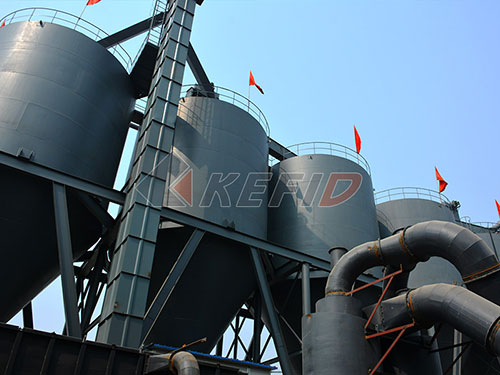
- Acoustic Enclosures: Crushers and screens are housed in sound-absorbing buildings or fitted with acoustic hoods.
- Rubber Linings: Chutes and hoppers are lined with rubber instead of steel to dampen impact noise.
- Operational Scheduling: High-noise activities are scheduled during daytime hours, and blasting (if used) is conducted with precise timing and minimal charge weights to reduce ground vibration.
6. Land Rehabilitation and Biodiversity Enhancement
A sustainable company does not abandon the quarry after extraction. It develops a comprehensive rehabilitation plan from day one:
- Progressive Rehabilitation: As one section of the quarry is exhausted, it is immediately backfilled, contoured, and replanted with native species, even while other sections are active.
- Creating Post-Mining Land Uses: Former quarries are transformed into reservoirs for water storage, recreational lakes, wildlife habitats, or agricultural terraces.
- Biodiversity Monitoring: Regular ecological surveys ensure that rehabilitation efforts are successful and that local flora and fauna are protected.
Regulatory and Market Drivers
The shift toward sustainability is not purely altruistic; it is driven by powerful external forces.
- Stringent Environmental Regulations: Governments worldwide are tightening emission standards for particulate matter, noise, and water discharge. Non-compliance can result in heavy fines, plant shutdowns, or revocation of mining leases. A sustainable plant is inherently compliant and avoids these risks.
- Green Building Certifications: Major construction projects increasingly require materials from certified sustainable sources. LEED (Leadership in Energy and Environmental Design) and BREEAM (Building Research Establishment Environmental Assessment Method) credits are awarded for using recycled aggregates or materials from plants with verified environmental management systems (e.g., ISO 14001).
- Corporate Social Responsibility (CSR) Demands: Large infrastructure developers and concrete producers are under pressure from investors and the public to green their supply chains. They prefer to partner with sustainable stone crusher plant companies that can provide transparent environmental product declarations (EPDs).
- Cost Savings and Operational Efficiency: While initial capital investment in sustainable technology can be high, the long-term operational savings are substantial. Reduced energy and water bills, lower waste disposal costs, and less frequent maintenance due to better equipment protection lead to a lower total cost of ownership.
Challenges and Barriers to Adoption
Despite the clear benefits, the transition to a fully sustainable stone crusher plant is not without challenges:
- High Capital Expenditure (CAPEX): Retrofitting an existing plant with dust collectors, water recycling systems, and solar panels requires significant upfront investment. Small and medium-sized enterprises (SMEs) may struggle to access financing.
- Technical Expertise: Operating advanced automation, water treatment systems, and renewable energy installations requires a skilled workforce. Training and retaining such talent can be difficult in remote areas.
- Market Perception and Price Sensitivity: In some markets, customers prioritize the lowest price over sustainability. A sustainable plant may produce slightly more expensive aggregate, and convincing buyers to pay a premium for “green” stone can be challenging.
- Regulatory Inconsistency: In developing nations, environmental laws may be poorly enforced, creating an uneven playing field where unsustainable plants undercut sustainable ones on price.
Case Study: A Model Sustainable Stone Crusher Plant Company
Consider a hypothetical but representative company, “EcoAggregates Ltd.” operating in a region with moderate rainfall and a growing construction sector. The company’s plant is designed from the ground up for sustainability:
- Quarrying: Uses electric excavators and haul trucks instead of diesel. Blasting is replaced by hydraulic rock breakers to eliminate ground vibration and fly rock.
- Crushing: A three-stage closed-circuit crushing system with cone crushers and vertical shaft impactors (VSI) produces high-quality cubical aggregates and manufactured sand. All crushers are equipped with VFDs and automated load control.
- Dust Control: A combination of baghouse filters at the crushers and a fine mist system at all transfer points keeps PM10 levels below 50 µg/m³ at the plant boundary.
- Water: A 10,000 m³ rainwater harvesting pond and a thickener-based water recycling system achieve 95% water reuse. Sludge is dewatered and sold to a brick manufacturer.
- Energy: A 2 MW solar farm on the plant’s roof and adjacent land provides 60% of the plant’s electricity needs. The remaining power is sourced from a wind farm via a power purchase agreement (PPA).
- Waste: 100% of overburden is used for progressive rehabilitation. C&D waste from local demolition projects accounts for 30% of the plant’s feedstock.
- Community: The company runs a free health clinic for nearby villages, provides scholarships for local students, and employs 80% of its workforce from the surrounding area.
EcoAggregates Ltd. sells its products at a 5-10% premium, but its customers—large infrastructure contractors and green building developers—are willing to pay for the certified low-carbon, water-neutral, and socially responsible aggregate. The company’s operating profit margin is 15% higher than the industry average due to lower energy and water costs.
The Future of Sustainable Stone Crushing
The trajectory is clear: the stone crushing industry is moving toward a future where sustainability is not a differentiator but a baseline requirement. Key trends to watch include:
- Digitalization and AI: Predictive maintenance using IoT sensors and AI algorithms will further reduce downtime and energy waste. Digital twins of the plant will allow operators to simulate and optimize processes in real-time.
- Carbon Capture: Pilot projects are exploring the use of carbon capture technology to sequester CO2 from the crushing process or from the air, potentially turning the plant into a carbon-negative operation.
- Electrification of Mobile Equipment: Battery-powered excavators, loaders, and haul trucks will become more common, eliminating diesel emissions entirely.
- Blockchain for Supply Chain Transparency: Blockchain technology will enable customers to trace the origin of every ton of aggregate, verifying its sustainable credentials from quarry to construction site.
Conclusion
A Sustainable Stone Crusher Plant Company is far more than a business that crushes rocks. It is a sophisticated industrial operation that balances the relentless demand for construction materials with the imperative to protect the environment and uplift communities. Through the adoption of closed-loop water systems, renewable energy, advanced dust control, waste valorization, and progressive land rehabilitation, these companies demonstrate that profitability and sustainability are not mutually exclusive. They are, in fact, mutually reinforcing. As regulatory pressures mount, customer expectations rise, and the global community confronts the realities of climate change and resource scarcity, the sustainable stone crusher plant company is not just a niche player—it is the blueprint for the entire industry’s future. The stone that builds our cities, roads, and bridges can, and must, be produced in a way that does not destroy the world it is meant to construct.
