
Sustainable Impact Crushers Customization: Engineering for the Circular Economy
The global aggregates, mining, and construction & demolition (C&D) recycling industries are undergoing a paradigm shift. No longer is the primary objective simply to reduce rock to a specified size; the modern mandate is to do so with minimal carbon footprint, maximum energy efficiency, and full lifecycle accountability. At the heart of this transformation lies the impact crusher—a machine historically associated with high energy consumption and wear. However, the convergence of advanced metallurgy, digital simulation, and modular design has birthed a new discipline: sustainable impact crusher customization. This is not merely about offering different rotor speeds or chamber profiles. It is a holistic engineering approach that aligns machine geometry, material selection, and operational parameters with the principles of the circular economy, reducing embodied carbon, operational emissions, and downstream waste.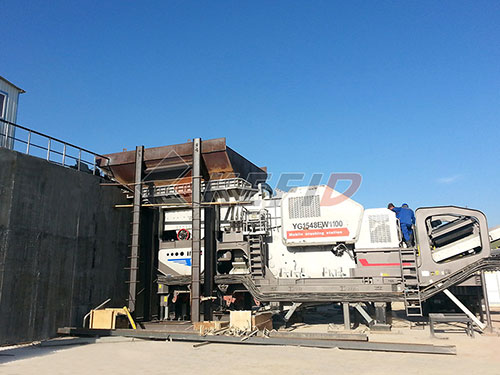
Defining Sustainability in the Context of Impact Crushing
To understand customization for sustainability, one must first deconstruct what “sustainability” means for a heavy-duty crushing asset. It is a tripartite concept:
Generic, off-the-shelf impact crushers are designed for a statistical average of feed conditions. This “one-size-fits-all” approach inherently wastes energy: it over-crushes soft material and under-performs on hard material, leading to excessive recirculation loads. Sustainable customization eliminates this compromise by tailoring the crusher’s physics to the specific lithology and end-use application.
The Core Customization Vectors
Customization for sustainability is not cosmetic; it is parametric. The following engineering vectors are adjusted in a systematic, simulation-driven process:
1. Rotor Geometry and Inertia Optimization
The rotor is the kinetic energy reservoir of the crusher. A standard rotor may have a fixed moment of inertia, but sustainable customization varies this based on feed characteristics. For processing highly abrasive but softer materials (e.g., reclaimed asphalt pavement or limestone), a lighter rotor with a higher specific speed (peripheral velocity) can be specified. This reduces the parasitic mass that must be accelerated and decelerated, lowering starting torque and energy draw. Conversely, for granitic or basalt feeds, a heavier, high-inertia rotor is customized with a specific arrangement of the blow bar seats to maximize the transfer of stored kinetic energy into fracture energy, minimizing the “slip” that causes inefficient rubbing and excessive heat generation. Advanced Finite Element Analysis (FEA) allows engineers to hollow out non-stress-bearing sections of the rotor, reducing total rotating mass by up to 15% without compromising structural integrity—a direct reduction in energy consumption per revolution.
2. Wear Part Metallurgy and Topology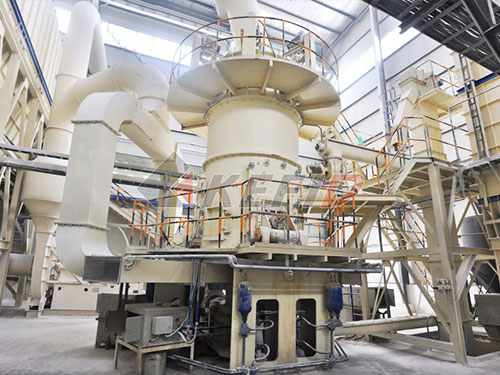
The blow bars and impact aprons are the sacrificial elements. Sustainable customization moves beyond standard manganese or chrome steels. Using computational wear modeling (e.g., Discrete Element Method – DEM), manufacturers can predict the exact wear profile for a specific feed. This allows for asymmetric blow bar designs—where the leading edge is clad with a ceramic composite (e.g., Zirconia-toughened alumina) for impact resistance, while the trailing edge uses a high-chrome iron for abrasion resistance. This selective cladding reduces the total weight of high-embedded-carbon materials used. Furthermore, customization now includes reversible and indexable blow bar geometries. Instead of discarding a bar at 50% wear, the customized design allows for a 180-degree rotation and a lateral shift, effectively utilizing 90% of the bar’s mass before replacement. This directly reduces the frequency of new part manufacturing and the associated Scope 3 supply chain emissions.
3. Chamber Configuration and Cascade Control
The crushing chamber—the gap between the rotor and the curtain (impact plate)—is where sustainability is won or lost. A fixed chamber cannot adapt to feed moisture or clay content. Customization introduces multi-stage, independently adjustable impact aprons. Through hydraulic actuation and PLC control, the crusher’s settings can be modified in real-time to maintain a “choke-fed” condition. This is critical for sustainability because a choked crusher operates at peak volumetric efficiency, reducing the “free-flight” collisions that waste energy without breaking rock. Moreover, customized cascade zones—internal recirculation ledges—can be added to the upper chamber. These force partially crushed material to impact itself (rock-on-rock) before hitting the metal aprons. This reduces metal wear and produces a more cubical product, which is a key sustainability metric for downstream concrete production, as it reduces the cement paste required to bind aggregates.
4. Closed-Circuit Integration and Smart Drives
A sustainable crusher cannot exist in isolation. Customization extends to the entire crushing train. For instance, a customized impact crusher for a C&D recycling plant is designed with a specific tramp iron relief system that is faster and has a wider opening stroke than a standard quarry model. This prevents downtime from rebar entanglement. More importantly, the crusher’s drive train is customized for variable frequency drive (VFD) operation. A VFD allows the rotor speed to be tuned to the exact feed rate and hardness detected by upstream sensors. Instead of running at a constant 600 RPM, the crusher may operate at 450 RPM for softer material, reducing energy consumption by up to 30% and significantly lowering noise pollution—a social sustainability factor often overlooked.
The Role of Digital Twins in Sustainable Customization
The “customization” process itself has become sustainable through the use of digital twin technology. Historically, prototyping a new rotor or chamber configuration required physical manufacturing, testing, and scrapping of failed designs. Today, a digital twin of the crusher is created using DEM and Computational Fluid Dynamics (CFD). Engineers input the specific feed particle size distribution, abrasiveness (e.g., Bond Abrasion Index), and moisture content. The simulation runs thousands of iterations to optimize the rotor tip speed, the angle of the impact aprons, and the spacing of the grinding path. This virtual commissioning ensures that the physical machine delivered to the site is already 95% optimized for its intended material, eliminating the “trial and error” phase that wastes energy and produces off-spec material (which must be re-crushed).
Case Study: Customization for Glassphalt and RAP
Consider a customized impact crusher designed for a municipal recycling facility processing 50% Reclaimed Asphalt Pavement (RAP) and 50% waste glass. A standard crusher would crush the glass into fine, dangerous dust and leave the RAP binder intact, causing clogging. A sustainable customization involves:
This customization results in a product that can be used directly in new road base, eliminating the need to send glass to landfill and RAP to downcycling as fill. The energy saved is not just in the crusher, but in the entire logistics chain of virgin aggregate extraction.
Economic and Environmental Lifecycle Assessment
The business case for sustainable customization is compelling. While the initial capital expenditure (CAPEX) for a customized unit may be 10-15% higher than a standard model, the Total Cost of Ownership (TCO) over a 10-year lifecycle is significantly lower. The reduction in specific energy consumption (e.g., from 0.25 kWh/t to 0.18 kWh/t) on a 500 tph plant operating 6,000 hours per year translates to a saving of over 2,100 MWh annually—enough to power 200 homes. Simultaneously, the extended wear life (from 300 hours to 450 hours for blow bars) reduces downtime and replacement part costs. From a carbon accounting perspective, this customization can reduce the CO₂e per tonne of crushed material by up to 20%, a critical metric for contractors bidding on green infrastructure projects that require Environmental Product Declarations (EPDs).
Challenges and the Path Forward
Despite its benefits, sustainable customization faces barriers. The primary challenge is the lead time. A fully customized crusher requires 8-12 weeks of engineering and simulation, whereas a standard unit is available off-the-shelf. To mitigate this, leading manufacturers are adopting modular customization—pre-engineered “building blocks” (e.g., three different rotor types, five different apron geometries) that can be rapidly configured for specific applications. Another challenge is the need for operator training. A customized machine with VFD and adaptive settings requires a skilled operator to maximize its potential. Therefore, sustainable customization must be paired with digital training simulators and remote telemetry support.
Conclusion
Sustainable impact crusher customization is the definitive answer to the industry’s dual challenge of productivity and environmental stewardship. It rejects the obsolete philosophy of brute-force crushing in favor of intelligent, application-specific engineering. By optimizing rotor inertia, tailoring wear part metallurgy, and integrating smart drive controls, these machines do not just crush rock—they manage energy. They transform waste streams into valuable secondary aggregates, extend the life of critical components, and reduce the carbon intensity of the built environment. As global regulations tighten on embodied carbon and landfill diversion, the customized impact crusher is not a luxury; it is the new standard for any operation that claims to build sustainably. The future of crushing is not heavier—it is smarter, leaner, and uniquely adapted to the material it serves.
If you have any questions about our products, please feel free to contact us. We take all inquiries and suggestions very seriously.