
Sourcing Iron Ore Crushing Plant Makers: A Strategic Guide for Global Buyers
Introduction
Iron ore remains the backbone of global steel production, and the efficient processing of raw ore into sized, saleable product depends heavily on the crushing circuit. For mining companies, EPC contractors, and industrial investors, sourcing the right iron ore crushing plant maker is not merely a procurement decision—it is a long-term strategic commitment that influences capital expenditure, operational availability, product quality, and ultimately profitability. This article provides a professional, objective examination of the iron ore crushing plant manufacturing landscape, the technical criteria that should guide supplier selection, the major sourcing regions, and the practical steps for evaluating and qualifying manufacturers.
1. Understanding the Role of the Crushing Plant in Iron Ore Processing
Iron ore crushing is the first stage of comminution and typically involves primary, secondary, and sometimes tertiary crushing to reduce run-of-mine (ROM) material from lump sizes exceeding 1,000 mm down to products suitable for grinding, screening, or direct shipping. The crushing plant must therefore be engineered around several ore-specific variables: hardness (often expressed via Bond Work Index or compressive strength), abrasiveness, moisture content, clay content, and the required product size distribution.
Because iron ore is highly abrasive—particularly hematite and magnetite ores with high silica content—the wear characteristics of crushing equipment are a decisive factor in total cost of ownership. A plant that appears inexpensive at the quotation stage may generate excessive liner consumption, unplanned downtime, and high spare-parts costs over a ten- to twenty-year mine life. Consequently, sourcing decisions should weigh lifecycle cost heavily against initial capital cost.
2. Types of Crushing Equipment Offered by Manufacturers
Most reputable iron ore crushing plant makers supply integrated circuits rather than individual machines, but the core equipment configurations generally fall into the following categories:
Leading manufacturers increasingly provide modular and mobile crushing plants, which reduce site civil works, shorten construction schedules, and offer flexibility for satellite ore bodies or contract crushing operations.
3. Key Technical and Commercial Selection Criteria
When shortlisting iron ore crushing plant makers, buyers should evaluate suppliers against a structured set of criteria:
3.1 Engineering and Process Design Capability
The supplier should demonstrate the ability to perform full process design, including feed characterization, simulation (e.g., using JKSimMet or similar software), equipment sizing, and mass balance calculations. A manufacturer that merely catalogs machines without process engineering support is unlikely to deliver an optimized circuit.
3.2 Manufacturing Quality and Certifications
Facilities certified to ISO 9001, ISO 14001, and ISO 45001 provide baseline assurance of quality management, environmental compliance, and occupational safety. Buyers should also verify foundry and fabrication capabilities, heat-treatment processes, and non-destructive testing (NDT) procedures for critical components such as crusher frames, shafts, and eccentric assemblies.
3.3 Wear Parts and Metallurgy
The choice of manganese steel grades (e.g., Mn13, Mn18, Mn22), chromium alloys, or composite materials directly affects liner life. Suppliers should provide wear-life guarantees or performance data from comparable iron ore applications. The availability and cost of replacement liners over the plant’s life should be modeled explicitly.
3.4 Automation and Control Systems
Modern crushing plants benefit from PLC-based control, hydraulic adjustment, tramp-release systems, and remote monitoring. Suppliers offering integrated SCADA and predictive maintenance capabilities can reduce downtime and improve operational stability.
3.5 After-Sales Support and Spare Parts Logistics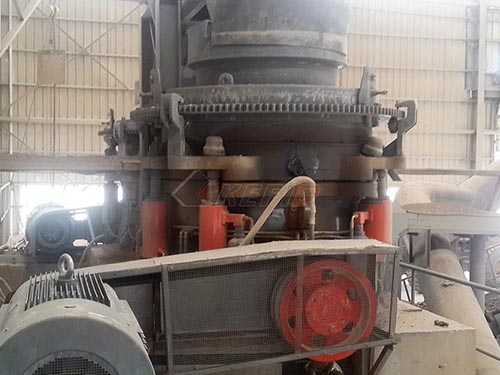
Response time for field service, availability of critical spares, and the existence of regional warehouses are often more important than the equipment price itself. Buyers should request documented service level agreements (SLAs) and references from customers in similar geographic and climatic conditions.
3.6 Financial Stability and Track Record
Manufacturers with a proven installed base in iron ore—ideally in multiple countries—present lower execution risk. Financial statements, project references, and site visit opportunities should be part of the due diligence process.
4. Major Sourcing Regions and Their Characteristics
The global supply of iron ore crushing plants is concentrated in a few key manufacturing regions, each with distinct strengths:
A diversified sourcing strategy—for example, pairing a European primary crusher with Chinese secondary and tertiary equipment—is sometimes adopted to balance capital cost against reliability, though this introduces integration and single-point-of-responsibility challenges.
5. The Sourcing Process: From RFQ to Commissioning
A disciplined sourcing process should include the following stages:
6. Common Pitfalls and Risk Mitigation
Buyers frequently encounter several pitfalls: selecting on lowest initial price without modeling wear and energy costs; accepting vague performance guarantees; underestimating spare-parts lead times; and failing to verify a supplier’s actual manufacturing capability versus its trading or assembly role. Mitigation measures include third-party inspection, escrow arrangements for advance payments, and contractual performance bonds.
7. Future Trends in Crushing Plant Sourcing
Several trends are reshaping the market. The push toward decarbonization is driving interest in energy-efficient comminution circuits, including high-pressure grinding rolls (HPGR) and stirred mills, which may displace conventional tertiary crushing in some flowsheets. Digitalization—remote monitoring, digital twins, and AI-based predictive maintenance—is becoming a differentiator among manufacturers. Additionally, the growth of modular and relocatable plants supports smaller, distributed ore bodies and contract crushing models.
Conclusion
Sourcing iron ore crushing plant makers is a multidimensional exercise that extends far beyond comparing price lists. It requires a clear understanding of ore characteristics, rigorous technical evaluation, verification of manufacturing quality, and careful assessment of after-sales support. By adopting a structured sourcing methodology and weighing lifecycle cost against initial capital outlay, buyers can secure crushing solutions that deliver reliable throughput, controlled operating costs, and long-term value across the life of the mine. In a market with diverse suppliers across Asia, Europe, and the Americas, the disciplined buyer is best positioned to capture both technical and commercial advantages.
If you have any questions about our products, please feel free to contact us. We take all inquiries and suggestions very seriously.