
Stone Quarry Crushing Plant Manufacturing Price: A Comprehensive Analysis
The stone quarry crushing plant is a critical component in the construction, mining, and infrastructure development sectors. It serves as the primary mechanism for converting raw rock extracted from quarries into aggregate materials of various sizes, which are essential for concrete production, road building, and other civil engineering projects. The manufacturing price of such a plant is a multifaceted subject, influenced by a wide array of technical, economic, and logistical factors. This article provides a detailed, professional, and objective examination of the costs associated with manufacturing a stone quarry crushing plant, breaking down the key determinants, cost components, and market dynamics that shape the final price.
A stone quarry crushing plant is an industrial facility designed to process large volumes of mined rock into usable aggregates. The typical process involves several stages: primary crushing, secondary crushing, screening, and sometimes tertiary crushing or washing. The equipment lineup commonly includes jaw crushers, cone crushers, impact crushers, vibrating feeders, screens, conveyors, and control systems. The scale of these plants can vary dramatically, from small mobile units with a capacity of 50 tons per hour to massive stationary installations capable of processing over 1,000 tons per hour.
The manufacturing price of such a plant is not a fixed number; it is a function of the plant’s design, capacity, automation level, and the quality of components used. Understanding these variables is essential for buyers, investors, and engineers who need to budget for new projects or expansions.
The single most significant factor influencing the manufacturing price is the plant’s designed capacity, typically measured in tons per hour (TPH). A small-scale plant with a capacity of 50–100 TPH may cost between $100,000 and $500,000, while a medium-capacity plant (200–400 TPH) can range from $500,000 to $2 million. Large-scale plants exceeding 500 TPH often command prices from $2 million to over $10 million, depending on complexity.
Higher capacity requires larger crushers, more robust screens, longer conveyors, and more powerful motors. For example, a primary jaw crusher for a 100 TPH plant might weigh 10 tons, while one for a 1,000 TPH plant could weigh over 100 tons, significantly increasing material and fabrication costs.
The choice of crushers directly impacts the price. Jaw crushers are commonly used for primary crushing and are relatively cost-effective. Cone crushers, used for secondary and tertiary crushing, are more expensive due to their complex design and precision manufacturing. Impact crushers, which are effective for softer materials, fall in between. Additionally, specialized equipment like vertical shaft impact (VSI) crushers for producing manufactured sand adds to the cost.
For instance, a single high-quality cone crusher from a reputable manufacturer can cost $200,000 to $800,000, while a jaw crusher of similar capacity might be $100,000 to $400,000. The total equipment cost multiplies as more stages are added.
Modern crushing plants often incorporate advanced automation systems for monitoring, control, and optimization. These systems include programmable logic controllers (PLCs), sensors, variable frequency drives (VFDs), and remote monitoring capabilities. Automation improves efficiency, reduces labor costs, and enhances safety, but it also adds 10% to 30% to the total manufacturing price. A basic manual plant may be cheaper upfront but could incur higher operational costs over time.
The durability and reliability of a crushing plant depend on the quality of its components. High-grade steel for crusher frames, wear-resistant liners (e.g., manganese steel), and premium bearings and motors increase the manufacturing cost but extend the plant’s lifespan and reduce maintenance. Cheaper alternatives, such as lower-grade steel or substandard electrical components, can reduce the initial price by 15%–25% but often lead to higher downtime and replacement costs.
Stationary plants are fixed installations, typically built on concrete foundations, and are designed for long-term, high-volume operations. They are more expensive to manufacture due to the need for structural steelwork, foundations, and permanent electrical installations. Mobile or semi-mobile plants, mounted on tracks or wheels, offer flexibility and lower site preparation costs but have higher per-unit manufacturing costs due to the chassis, hydraulic systems, and mobility features. A mobile plant of similar capacity can be 20%–40% more expensive than a stationary equivalent.
Quarry conditions vary widely—rock hardness, abrasiveness, moisture content, and desired product specifications all influence plant design. For example, processing hard granite requires heavier-duty crushers and more wear parts than processing limestone. Additionally, environmental regulations may necessitate dust suppression systems, noise enclosures, or water recycling units, all of which add to the manufacturing price. Custom engineering and design services can increase costs by 10%–50% compared to standard, off-the-shelf solutions.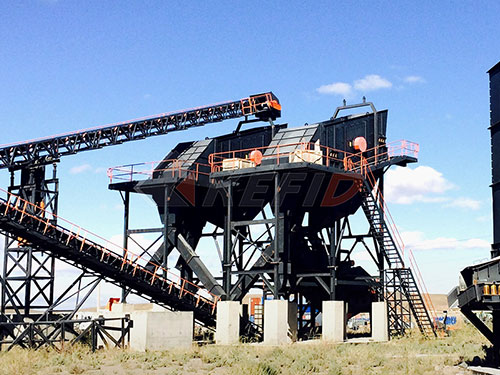
To understand the manufacturing price, it is useful to break it down into major cost categories:
The manufacturing price also varies by region due to labor costs, raw material availability, and local market competition.
Global economic factors, such as steel prices, currency exchange rates, and shipping costs, also play a role. For example, a 20% increase in steel prices can raise the manufacturing cost of a large plant by 10%–15%.
Buyers should be aware that the manufacturing price is only part of the total investment. Other costs include:
The following are approximate price ranges for new stone quarry crushing plants (manufacturing cost only, excluding installation and site work):
The manufacturing price of a stone quarry crushing plant is a complex figure that cannot be reduced to a single number. It is determined by capacity, equipment type, automation level, material quality, and regional manufacturing costs. Buyers must conduct a thorough needs assessment, considering not only the initial price but also long-term operational costs, maintenance requirements, and productivity goals. Engaging with multiple reputable manufacturers, requesting detailed quotations, and evaluating total cost of ownership are essential steps in making an informed investment. As the global demand for aggregates continues to grow, understanding these cost dynamics will remain crucial for stakeholders in the quarrying and construction industries.
If you have any questions about our products, please feel free to contact us. We take all inquiries and suggestions very seriously.