
Title: Stone Quarry Crushing Plant Manufacturing: Achieving the Best Price Without Compromising Quality
Introduction
In the global aggregates and mining industry, the demand for efficient, durable, and cost-effective stone quarry crushing plants has never been higher. As infrastructure projects, road construction, and concrete production continue to expand, quarry operators and investors are constantly searching for the optimal balance between capital expenditure and operational performance. The phrase “best price” in the context of a stone quarry crushing plant manufacturing does not simply refer to the lowest initial purchase cost. Rather, it encompasses a holistic evaluation of manufacturing quality, total cost of ownership, throughput capacity, energy efficiency, and long-term reliability. This article provides a detailed examination of the factors that influence the manufacturing and pricing of stone quarry crushing plants, and how buyers can identify the best value proposition in a competitive market.
Understanding the Stone Quarry Crushing Plant
A stone quarry crushing plant is a complex system designed to reduce large rocks into smaller rocks, gravel, sand, or rock dust. The typical plant consists of several key components: a feeding system (vibrating feeders), primary crushers (jaw crushers or gyratory crushers), secondary and tertiary crushers (cone crushers, impact crushers, or hammer crushers), screening equipment (vibrating screens), belt conveyors, and control systems. The configuration of these components depends on the raw material properties (hardness, abrasiveness, moisture content) and the desired final product specifications.
Manufacturing such a plant requires expertise in mechanical engineering, metallurgy, automation, and material handling. Leading manufacturers invest heavily in research and development to optimize crusher chamber geometry, wear part metallurgy, and drive systems. The manufacturing process itself—from steel plate cutting and welding to machining and assembly—directly affects the plant’s durability and performance. Therefore, the “best price” must be evaluated against these manufacturing standards.
Key Factors Influencing the Manufacturing Cost and Price
Raw Material and Component Quality: The cost of a crushing plant is heavily influenced by the grade of steel used in the crusher frames, the type of bearings, the quality of wear parts (mantles, bowl liners, blow bars), and the reliability of electrical components. Manufacturers that use high-chrome alloy castings or manganese steel with optimized heat treatment can command higher prices but offer longer wear life, reducing downtime and replacement costs.
Manufacturing Scale and Automation: Large-scale manufacturers with automated welding robots, CNC machining centers, and modular assembly lines can achieve economies of scale. This efficiency translates into lower per-unit production costs, allowing them to offer competitive prices without sacrificing precision. Conversely, small workshops may offer lower headline prices but often lack consistency and after-sales support.
Design and Engineering: The engineering design determines the plant’s throughput, reduction ratio, and energy consumption. A well-designed crushing chamber can increase capacity by 15–20% while reducing power draw. Manufacturers that invest in simulation software (e.g., discrete element modeling) and field testing can produce plants that deliver higher return on investment. The best price is therefore linked to engineering excellence.
Customization vs. Standardization: Standard, off-the-shelf crushing plants are generally cheaper because they are produced in batches. Customized plants tailored to specific quarry conditions (e.g., high moisture, abrasive rock, limited space) require additional design and manufacturing time, increasing the price. However, a customized plant often achieves better overall efficiency, which can offset the higher initial cost.
Logistics and Transportation: Crushing plants are heavy and bulky. Manufacturing location relative to the quarry site affects shipping costs, import duties, and installation expenses. Manufacturers in regions with lower labor and energy costs may offer lower prices, but buyers must consider the total delivered cost, including tariffs and freight.
After-Sales Service and Spare Parts: A manufacturer that provides readily available spare parts, technical training, and on-site service may charge a premium. However, this premium often represents the best price in the long run, as unplanned downtime can cost a quarry tens of thousands of dollars per day.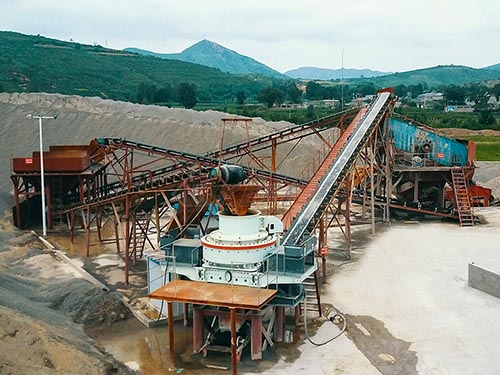
How to Evaluate the “Best Price”
To identify the best price for a stone quarry crushing plant, buyers should perform a total cost of ownership (TCO) analysis. TCO includes:
A plant with a higher initial price but lower energy consumption per ton, longer wear life, and higher availability may have a significantly lower TCO than a cheaper alternative. For example, a jaw crusher with a larger feed opening and a steeper toggle angle may cost 10% more but can process 20% more material per hour, reducing the cost per ton.
Manufacturing Best Practices for Cost-Effective Plants
Leading manufacturers employ several strategies to deliver the best price without compromising quality:
Case Study: Comparative Analysis
Consider two manufacturers offering a 200 tph granite crushing plant. Manufacturer A quotes $450,000 with a standard jaw crusher and cone crusher, using locally sourced wear parts. Manufacturer B quotes $520,000 with a high-performance jaw crusher, a hydraulic cone crusher, and premium wear parts. Over five years, Manufacturer A’s plant consumes $180,000 in wear parts and $120,000 in energy, while Manufacturer B’s plant consumes $90,000 in wear parts and $95,000 in energy. Manufacturer A also experiences 15 days of unplanned downtime per year, costing $8,000 per day in lost production. Manufacturer B experiences 5 days per year. The TCO for A is $450k + $180k + $120k + (15×5×$8k) = $1,350,000. For B: $520k + $90k + $95k + (5×5×$8k) = $905,000. Despite the higher initial price, Manufacturer B offers the best price in real terms.
Conclusion
The pursuit of the best price for a stone quarry crushing plant manufacturing is not a race to the bottom. It is a strategic decision that balances upfront investment with long-term operational efficiency, reliability, and support. Buyers should prioritize manufacturers that demonstrate robust engineering, high-quality materials, proven manufacturing processes, and comprehensive after-sales service. By conducting a thorough TCO analysis and considering factors such as energy efficiency, wear life, and downtime, quarry operators can secure a crushing plant that delivers the lowest cost per ton over its entire service life. In an industry where margins are tight and competition is fierce, the best price is ultimately the one that maximizes profitability and sustainability.
If you have any questions about our products, please feel free to contact us. We take all inquiries and suggestions very seriously.