
Stone Crusher Plant Makers: A Comprehensive Analysis of Global Manufacturers, Capabilities, and Sample Configurations
The global construction, mining, and infrastructure sectors rely heavily on the efficient production of crushed stone, sand, and gravel. At the heart of this production lies the stone crusher plant—a complex assembly of machinery designed to reduce large rocks into smaller, usable aggregates. The selection of a plant maker is a critical decision that influences project cost, operational efficiency, product quality, and long-term maintenance. This article provides a detailed, professional, and objective examination of stone crusher plant makers, focusing on their capabilities, typical plant configurations, and sample layouts. The discussion is structured to offer insights for project managers, procurement specialists, and engineers evaluating potential suppliers.
1. The Landscape of Stone Crusher Plant Makers
The market for stone crusher plant makers is diverse, ranging from global heavy equipment conglomerates to specialized regional fabricators. These manufacturers can be broadly categorized into three tiers:
Tier 1: Global Multinationals (e.g., Metso Outotec, Sandvik, Terex, Thyssenkrupp)
These companies offer comprehensive solutions, from primary jaw crushers to tertiary cone crushers and screens. Their plants are characterized by high automation, advanced control systems (e.g., IC™ automation by Metso), and robust aftermarket support. They typically serve large-scale mining and mega-infrastructure projects (e.g., dam construction, highway networks). Their equipment is engineered for high throughput (500–2000+ tons per hour) and extreme durability, often with a premium price tag.
Tier 2: Regional Leaders (e.g., Astec Industries, KPI-JCI, McLanahan, in North America; SBM, Kleemann (Wirtgen Group), in Europe; and Nawa Engineers, Puzzolana, in India)
These manufacturers focus on specific geographic markets or application niches. They offer a balance between advanced technology and cost-effectiveness. For example, Indian manufacturers like Puzzolana are known for producing reliable plants for the domestic and African markets, often with simpler maintenance requirements. European makers like Kleemann emphasize mobile and semi-mobile solutions with high mobility and low environmental impact.
Tier 3: Local and Custom Fabricators (e.g., Chinese manufacturers like Shanghai Shibang Machinery (SBM), Zhengzhou Yifan Machinery, and numerous small-to-medium enterprises in Turkey, Iran, and Southeast Asia)
This tier is the most price-competitive. Chinese manufacturers, in particular, dominate the mid-range market globally. They offer a wide range of standard and semi-custom plants, often with lower initial capital expenditure (CAPEX). However, quality control, spare parts availability, and after-sales service can vary significantly. Turkish manufacturers (e.g., FABO, MEKA) have gained a strong reputation for mobile plants in the Middle East and Africa.
2. Core Components and Sample Configurations
A stone crusher plant is not a single machine but a system of interconnected units. The configuration depends on the raw material (hardness, abrasiveness, moisture content), desired product specifications (size, shape, gradation), and production capacity. Below are three representative sample configurations from different makers.
Sample Configuration A: Large-Scale Stationary Plant (Tier 1 Maker – Metso Outotec)
Application: Hard rock quarry (granite, basalt) for concrete aggregate production; capacity: 800 tph.
Sample Configuration B: Mid-Size Mobile Plant (Tier 2 Maker – Kleemann, Wirtgen Group)
Application: Recycling of construction demolition waste (CDW) and limestone quarry; capacity: 250 tph.
Sample Configuration C: Small-to-Medium Fixed Plant (Tier 3 Maker – SBM (Shanghai Shibang Machinery))
Application: River gravel or limestone; capacity: 100–150 tph.
3. Critical Evaluation Criteria for Plant Makers
When comparing stone crusher plant makers, professionals should evaluate the following factors objectively:
Throughput and Product Quality:
Tier 1 makers guarantee consistent product gradation and cubical shape (essential for high-strength concrete). Tier 3 makers may produce more flaky or elongated particles, especially with impact crushers. Request test reports from the maker’s pilot plant.
Automation and Control:
Advanced automation (e.g., Metso’s IC, Sandvik’s ASRi) optimizes crusher settings in real-time, reducing downtime and energy consumption. Tier 2 and 3 makers often offer basic PLC control but lack predictive maintenance features.
Wear Life and Operating Costs:
High-quality manganese steel and alloy liners from Tier 1 makers can last 30–50% longer than generic Chinese parts. However, the cost per ton of wear parts must be calculated. For example, a Tier 1 cone crusher may have a wear cost of $0.05–$0.08 per ton, while a Tier 3 unit might be $0.10–$0.15 per ton due to faster wear.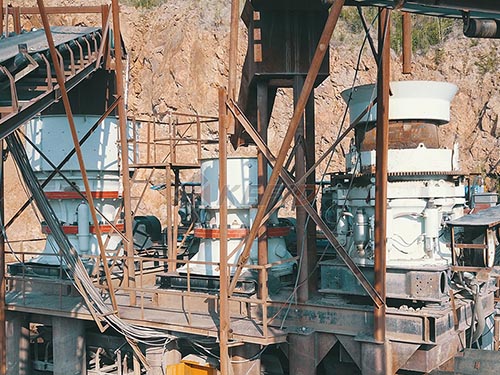
After-Sales Support:
Tier 1 makers have global networks of service engineers and warehouses. Tier 3 makers often rely on local distributors, which may have limited stock. For remote projects, this can lead to extended downtime.
Environmental Compliance:
Modern plants must meet dust and noise regulations. Tier 1 and 2 makers offer integrated dust suppression (water mist, bag filters) and soundproof enclosures. Tier 3 plants may require retrofitting to meet strict environmental standards.
4. Sample Plant Layout and Design Considerations
A typical 200 tph stationary plant (from a Tier 2 maker like Puzzolana) might be laid out as follows:
Key Design Considerations:
5. Conclusion: Matching Makers to Project Needs
The choice of a stone crusher plant maker is a strategic decision. For a large, long-term mining operation with high quality demands, a Tier 1 maker (Metso, Sandvik) is justified despite higher upfront costs. For a mid-size contractor in a developing region, a Tier 2 maker (Kleemann, Puzzolana) offers a good balance of reliability and cost. For small-scale projects or tight budgets, a Tier 3 maker (SBM, Yifan) can be viable, provided that the buyer invests in proper installation, operator training, and a stock of critical spare parts.
Ultimately, the “best” maker is not the one with the highest brand recognition, but the one that aligns with the specific technical requirements, operational environment, and financial constraints of the project. A thorough evaluation of sample configurations, wear cost analysis, and site visits to existing installations are essential steps before making a final decision. The global stone crusher plant market continues to evolve, with increasing emphasis on digitalization, energy efficiency, and sustainability—trends that will further differentiate makers in the coming years.
If you have any questions about our products, please feel free to contact us. We take all inquiries and suggestions very seriously.