
Title: Comprehensive Analysis of the Jc5000 Jaw Crusher: Design, Performance, and Applications in the Mining and Aggregate Industries
Introduction
The Jc5000 jaw crusher represents a significant advancement in primary crushing technology, designed to meet the rigorous demands of the mining, quarrying, and aggregate production sectors. As a heavy-duty machine engineered for high-capacity reduction of hard rock and ores, the Jc5000 has garnered attention for its robust construction, operational efficiency, and adaptability to various material types. This article provides an in-depth examination of the Jc5000 jaw crusher producer sample, focusing on its mechanical design, key performance parameters, operational advantages, maintenance requirements, and typical applications. The objective is to offer a professional and objective assessment suitable for industry professionals seeking to evaluate this equipment for their operations.
1. Mechanical Design and Structural Integrity
The Jc5000 jaw crusher is built around a rigid frame that withstands extreme compressive forces during crushing. The frame is typically fabricated from high-strength steel plates with reinforced sections at critical stress points. This design minimizes deflection under load, ensuring consistent crushing performance over extended periods.
1.1 Crushing Chamber Geometry
The chamber geometry of the Jc5000 is optimized for deep crushing action with a large feed opening (typically 1200 mm x 900 mm or similar dimensions depending on manufacturer specifications). The crushing chamber features a symmetrical V-shaped cavity that allows material to be drawn downward by gravity while being progressively reduced by compressive forces between the fixed jaw plate (stationary) and the moving jaw plate (swinging). The angle between these plates—known as the nip angle—is carefully calculated to prevent slippage while maximizing throughput.
1.2 Jaw Plate Configuration
The jaw plates are manufactured from high-manganese steel (e.g., Mn14Cr2 or Mn18Cr2) or other wear-resistant alloys. These materials offer excellent work-hardening properties: as they are subjected to repeated impact and compression, their surface hardness increases significantly (from approximately 200 HB to over 400 HB), extending service life. The plates are reversible or interchangeable to maximize utilization before replacement.
1.3 Eccentric Shaft Assembly
At the heart of the Jc5000 lies a forged eccentric shaft supported by heavy-duty spherical roller bearings. This shaft converts rotational motion from an electric motor (or diesel engine) into reciprocating motion of the moving jaw. The eccentric throw—typically ranging from 20 mm to 40 mm—determines the stroke length at different points along the chamber. A larger throw enhances capacity but increases wear; thus manufacturers often offer adjustable eccentric configurations.
1.4 Flywheel Design
Two large flywheels are mounted on either end of the eccentric shaft to store kinetic energy during idle strokes and release it during crushing strokes. This design smooths out power demand fluctuations and reduces peak torque requirements on the motor drive system.
2. Performance Parameters
The performance of any jaw crusher is quantified by several key metrics: throughput capacity (tons per hour), reduction ratio (feed size : product size), power consumption (kWh/ton), and product gradation.
2.1 Throughput Capacity
Under optimal conditions—feeding dry granite with a bulk density of approximately 1.6 t/m³—the Jc5000 can achieve capacities ranging from 150 t/h up to 350 t/h depending on closed side setting (CSS). For example:
These values assume continuous feeding with minimal fines content (<10% passing 5 mm).
2.2 Reduction Ratio
The typical reduction ratio for primary jaw crushers ranges from 4:1 to 8:1 depending on material hardness and feed distribution . For hard abrasive ores like quartzite or basalt , ratios closer to 4:1 are common ; softer materials like limestone allow ratios up to 6:1 . The Jc5000 achieves these ratios through careful selection of toggle plate geometry .
2 .3 Power Consumption
Motor power ratings for this model typically fall between 160 kW –250 kW. Specific energy consumption varies between 0 .5–1 .5 kWh/ton, influenced by feed moisture content , abrasiveness , target product size , etc .
3 . Operational Advantages
Compared with older generation models or competing brands , several distinct advantages emerge :
4 . Maintenance Requirements
Proper maintenance extends service life beyond 30 ,000 operating hours. Key tasks include :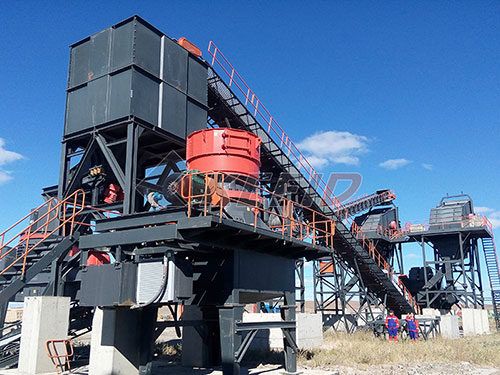
| Component | Inspection Interval | Action Required |
|---|---|---|
| Jaw Plates | Every shift | Check wear pattern ; rotate/replace when profile depth <60% original |
| Bearings | Weekly | Monitor temperature (<70°C); regrease every 50 hours |
| Toggle Plate | Monthly | Verify no cracks ; replace if deformed >3mm |
| Flywheel Keys | Quarterly | Tighten bolts ; check keyway wear |
Annual overhaul should include replacement of all seals , inspection of eccentric shaft journals via ultrasonic testing , verification of frame alignment using laser measurement tools .
5 . Applications Across Industries
Due its versatility across multiple material types :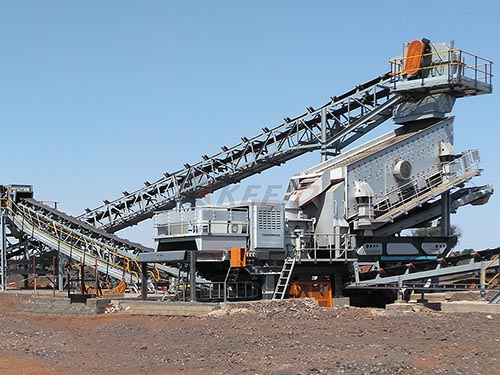
Case Study Example : A copper mine in Chile replaced two older gyratory units with single JC5000 achieving same throughput (+300tph ) while reducing energy costs by nearly18% due improved liner profile design .
6 . Limitations & Considerations
Despite strengths , certain constraints apply :
For optimal results pre-screening fines (-100mm ) before feeding improves capacity significantly (+15–25%).
Conclusion
The JC5000 jaw crusher producer sample demonstrates engineering excellence tailored toward demanding primary reduction tasks across mining & construction industries worldwide . Its combination rugged construction high throughput flexibility makes suitable choice operators seeking reliable long-term solution despite moderate maintenance overheads associated traditional compression-type breakers . Prospective buyers should evaluate site-specific parameters such feed characteristics target gradation budget constraints before finalizing purchase decision consulting manufacturer technical representatives detailed simulation data tailored their unique operational conditions .
If you have any questions about our products, please feel free to contact us. We take all inquiries and suggestions very seriously.