
Title: Stone Crusher Plant Fabricators Prices: A Comprehensive Analysis of Cost Drivers, Market Trends, and Strategic Procurement
Introduction
In the aggregate, mining, and construction industries, the stone crusher plant serves as the foundational equipment for producing crushed stone, sand, and gravel. For project developers, quarry operators, and infrastructure contractors, understanding the pricing landscape of stone crusher plant fabricators is not merely a matter of budget allocation—it is a strategic imperative that directly impacts operational efficiency, project timelines, and long-term profitability. The global market for crushing equipment is characterized by a wide spectrum of prices, ranging from tens of thousands to several million dollars, influenced by a complex interplay of technical specifications, fabrication quality, geographic location, and after-sales support. This article provides a detailed, objective examination of the factors that determine stone crusher plant fabricators’ prices, current market benchmarks, and best practices for evaluating cost versus value.
1. Defining the Stone Crusher Plant and Its Fabrication Scope
A stone crusher plant is an integrated system designed to reduce large rocks into smaller rocks, gravel, or rock dust. It typically comprises several key components: a primary crusher (jaw or gyratory), secondary and tertiary crushers (cone, impact, or VSI), vibrating feeders, screens, belt conveyors, control systems, and structural steel frameworks. “Fabricators” in this context refer to companies that design, engineer, manufacture, and often assemble these plants—either as stationary installations or mobile/tracked units.
The price quoted by a fabricator is not for a single machine but for a tailored solution. Consequently, two plants with similar throughput capacities can differ in price by 300% or more depending on configuration, automation level, and material specifications. Understanding this scope is the first step in decoding pricing.
2. Key Cost Drivers in Stone Crusher Plant Fabrication
2.1 Throughput Capacity and Feed Size
The most significant price determinant is the plant’s rated capacity, measured in tonnes per hour (TPH). A 50 TPH plant may cost $80,000–$150,000, while a 500 TPH plant can exceed $1.5 million. Larger capacities require heavier-duty crushers, larger motors, reinforced structural steel, and more extensive conveyor systems. Similarly, the maximum feed size dictates the primary crusher’s size and power, directly affecting cost.
2.2 Crusher Type and Technology
Jaw crushers are generally the most cost-effective for primary crushing but may require secondary units for finer output. Cone crushers, particularly hydraulic or multi-cylinder models, offer superior reduction ratios and automation but carry a 30–50% price premium over equivalent jaw crushers. Impact crushers (HSI) are preferred for softer materials and offer high reduction ratios but have higher wear part costs. VSI crushers for sand manufacturing are among the most expensive per unit capacity. The choice of technology—whether conventional, hydraulic, or fully automated with PLC/SCADA—adds layers of cost.
2.3 Material Specifications and Fabrication Quality
Fabricators use varying grades of steel. A plant constructed from Q235 carbon steel will cost less than one using Q345 or high-tensile, abrasion-resistant steels (e.g., Hardox or equivalent) in wear zones. The thickness of plates, the quality of welds (manual vs. robotic), and the use of cast vs. fabricated components all influence price. Premium fabricators often employ finite element analysis (FEA) to optimize structures, reducing weight without compromising strength—a value-added cost.
2.4 Automation and Control Systems
A basic plant with manual push-button controls is significantly cheaper than one equipped with a centralized control room, variable frequency drives (VFDs), real-time monitoring, and automated fault diagnosis. Automation reduces labor costs and downtime but can add 15–25% to the initial price. For high-capacity operations, the return on investment often justifies this premium.
2.5 Mobility and Installation Type
Mobile and tracked crushing plants command higher prices than stationary ones due to the integration of chassis, tracks, and onboard power units. A mobile jaw crusher plant may cost $300,000–$800,000, whereas a stationary equivalent might be $150,000–$400,000. Modular plants, which balance portability and capacity, fall in between.
2.6 After-Sales Support and Warranty
Fabricators that offer comprehensive after-sales services—spare parts availability, on-site commissioning, operator training, and extended warranties—typically price their plants 10–20% higher than those offering bare equipment. However, for remote or high-stakes operations, this premium is often justified by reduced downtime.
3. Current Market Price Ranges by Plant Type and Capacity
Based on industry surveys and fabricator quotations (as of 2024–2025), the following indicative price ranges apply for new equipment, FOB (free on board) from major manufacturing hubs such as China, India, Turkey, and Europe. Note that these are broad estimates; actual quotes vary with specifications.
European and North American fabricators typically price 30–60% higher than Asian counterparts for comparable capacity, reflecting labor costs, regulatory compliance, and brand reputation. However, Asian fabricators have closed the quality gap in recent years, offering competitive alternatives.
4. Regional Variations in Fabricator Pricing
5. Hidden Costs and Total Cost of Ownership (TCO)
The purchase price is only the tip of the iceberg. Objective procurement must consider TCO, which includes:
Thus, a higher-priced plant from a reputable fabricator may have a lower TCO over 5–10 years.
6. How to Evaluate Fabricator Quotes Objectively
When comparing prices from different stone crusher plant fabricators, buyers should: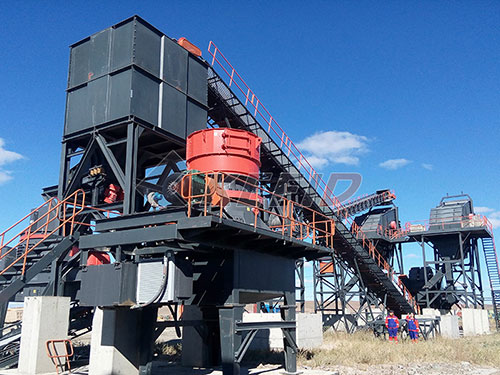
7. Market Trends Affecting Prices
Several trends are shaping fabricator pricing in 2025 and beyond:
8. Conclusion
The pricing of stone crusher plant fabricators is a multifaceted equation involving capacity, technology, materials, automation, region, and support. There is no single “fair price”—only the price that delivers the required performance at the lowest total cost of ownership. Objective buyers must move beyond sticker price and evaluate fabricators on engineering capability, build quality, references, and service infrastructure. While Asian fabricators offer compelling value, European and North American fabricators provide assurance in critical applications. Ultimately, the most expensive plant is the one that fails to meet production targets or incurs excessive downtime. By conducting rigorous due diligence and insisting on transparency in quotations, procurement teams can secure a stone crusher plant that balances capital outlay with decades of reliable, profitable operation.
As the industry evolves toward smarter, greener, and more automated solutions, fabricator prices will continue to reflect not just steel and labor, but the intangible value of innovation, reliability, and partnership.
If you have any questions about our products, please feel free to contact us. We take all inquiries and suggestions very seriously.