Title: Stone Crusher Plant Dealers Customization: Tailoring Solutions for Diverse Crushing Needs
Introduction
In the global mining, construction, and aggregate industries, the stone crusher plant stands as a fundamental asset for material processing. However, the one-size-fits-all approach rarely meets the operational, geological, and economic demands of different projects. This is where the concept of “Stone Crusher Plant Dealers Customization” becomes critical. Dealers who offer customized solutions do not merely sell machinery; they engineer integrated systems that align with specific raw material characteristics, production targets, site constraints, and regulatory standards. This article provides a professional, objective, and comprehensive examination of how dealers customize stone crusher plants, the factors driving customization, the technical aspects involved, and the value it delivers to end-users.
1. The Rationale Behind Customization
Stone crushing operations vary dramatically across regions and applications. A limestone quarry in a flat desert environment requires a fundamentally different plant configuration than a granite quarry in a mountainous region. Similarly, a contractor producing road base aggregates has different needs than a cement manufacturer requiring fine powder. Standardized plants often lead to inefficiencies such as excessive energy consumption, suboptimal product quality, frequent downtime, or high wear costs. Customization addresses these issues by optimizing the plant for:
- Material Properties: Hardness (e.g., Mohs scale), abrasiveness, moisture content, and feed size distribution dictate the choice of crushers (jaw, cone, impact, or gyratory), screen decks, and conveyor speeds.
- Production Capacity: Throughput requirements (tons per hour) influence the sizing of primary, secondary, and tertiary crushers, as well as the capacity of feeders, screens, and stockpiles.
- End-Product Specifications: The required gradation curves, particle shape (cubical vs. flaky), and cleanliness (dust content) determine the selection of crushing stages, screening configurations, and washing systems.
- Site Constraints: Limited space, terrain slope, access roads, and environmental regulations (noise, dust, water usage) necessitate modular, mobile, or semi-mobile designs.
- Economic Factors: Capital expenditure (CAPEX) and operational expenditure (OPEX) targets drive decisions on automation level, energy efficiency, and maintenance accessibility.
2. The Role of Dealers in Customization
Stone crusher plant dealers are not mere intermediaries; they are technical partners who bridge the gap between manufacturers and end-users. Their customization services typically encompass:
- Site Assessment and Feasibility Study: Dealers conduct geological surveys, test material samples (e.g., abrasion index, compressive strength), and evaluate site topography. This data forms the basis for plant design.
- Process Flow Design: Based on the assessment, dealers propose a flow sheet that sequences crushing, screening, conveying, and stockpiling stages. For example, a two-stage plant (jaw + cone) may suffice for medium-hard stone, while a three-stage plant (jaw + cone + VSI) is needed for high-quality cubical aggregates.
- Equipment Selection and Sizing: Dealers select specific crusher models, screen types (vibrating, trommel, or grizzly), and feeder types (apron, vibrating, or belt) that match the material and capacity. They also calculate motor power, belt widths, and chute angles to prevent bottlenecks.
- Modular and Mobile Solutions: For projects requiring relocation, dealers customize mobile plants (track-mounted or wheeled) or modular plants that can be disassembled and reassembled. This is common in road construction or temporary mining operations.
- Automation and Control Systems: Dealers integrate PLC-based control panels, remote monitoring, and automated adjustment of crusher settings (e.g., CSS, speed) to optimize production and reduce human error.
- After-Sales Support: Customization extends to spare parts inventory management, maintenance schedules, and operator training tailored to the specific plant configuration.
3. Technical Dimensions of Customization
3.1 Primary Crushing Stage
The primary crusher is the heart of the plant. Dealers customize this stage based on feed size and material hardness. For example:
- Jaw Crushers: Preferred for hard, abrasive rocks (e.g., granite, basalt). Dealers may adjust the toggle plate angle, jaw profile, and flywheel design to handle specific feed sizes (up to 1.5 meters) and reduce slabby product.
- Impact Crushers: Suitable for softer, less abrasive materials (e.g., limestone, dolomite). Customization includes rotor configuration, hammer type (chrome or manganese), and breaker plate settings to control product shape.
- Gyratory Crushers: Used in high-capacity mines. Dealers customize the mantle and concave profiles to match the ore’s fragmentation characteristics.
3.2 Secondary and Tertiary Crushing
For finer reduction, dealers select between cone crushers (for hard rock) and impact crushers (for shaping). Customization includes:
- Cone Crusher Chamber Design: Different chamber profiles (e.g., coarse, medium, fine) are chosen based on the desired product size. Dealers also adjust eccentric throw and closed side setting (CSS) to balance throughput and particle shape.
- Vertical Shaft Impact (VSI) Crushers: Used for producing cubical aggregates. Dealers customize rotor speed, cascade ratio, and anvil configuration to achieve specific shape and fines content.
3.3 Screening and Classification
Screens are customized in terms of: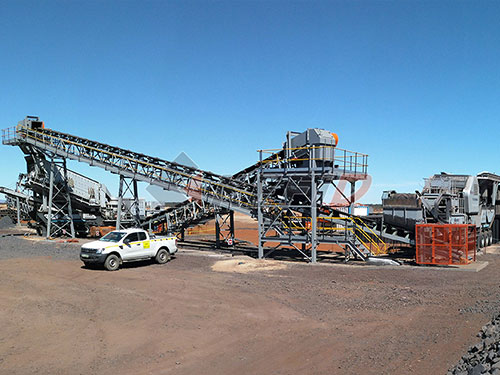
- Deck Configuration: Single, double, or triple decks based on the number of product fractions required.
- Screen Media: Woven wire, polyurethane, or rubber panels are selected based on material abrasiveness and moisture. For sticky materials, self-cleaning media (e.g., harp screens) are recommended.
- Vibration Mechanism: Linear or circular motion, stroke length, and frequency are adjusted to optimize screening efficiency.
3.4 Conveying and Material Handling
Dealers customize conveyor lengths, belt widths, and idler spacing to match plant layout. For steep inclines, they may specify cleated belts or pipe conveyors to prevent spillage. Dust suppression systems (water sprays, misting, or baghouses) are integrated based on environmental regulations.
3.5 Washing and Dewatering
In applications requiring clean aggregates (e.g., concrete production), dealers add washing systems such as log washers, screw classifiers, or hydrocyclones. Customization includes water recirculation systems to reduce consumption and settling ponds for sludge management.
4. Industry-Specific Customization Examples
- Road Construction: Dealers customize plants to produce multiple gradations (e.g., 0-5mm, 5-10mm, 10-20mm) with high cubicity. Mobile plants are often preferred for highway projects to move with the construction front.
- Cement Industry: Plants are customized for fine crushing of limestone and clay. Roller crushers or hammer mills with drying systems may be integrated to handle high moisture content.
- Recycling (Concrete & Asphalt): Dealers design plants with magnetic separators, air classifiers, and impact crushers to process demolition waste. Customization focuses on removing rebar and contaminants.
- Mining (Hard Rock): Customization emphasizes durability, high throughput, and remote monitoring. Dealers may specify heavy-duty jaw crushers, large cone crushers, and automated lubrication systems.
5. Challenges in Customization
Despite its benefits, customization presents challenges:
- Lead Time: Custom designs require engineering, fabrication, and testing, which can extend delivery schedules.
- Cost: Tailored solutions often have higher upfront costs compared to standard plants. However, long-term OPEX savings can offset this.
- Complexity: Highly customized plants may require specialized maintenance skills and spare parts that are not readily available.
- Integration Risks: Poorly designed customizations can lead to mismatched components, causing bottlenecks or safety hazards.
6. The Value Proposition of Customized Plants
- Operational Efficiency: A plant designed for the specific material and capacity reduces energy consumption per ton and maximizes uptime.
- Product Quality: Customized screening and crushing stages ensure consistent gradation and shape, meeting stringent specifications.
- Longevity: Properly sized and configured components experience less wear and tear, extending equipment life.
- Regulatory Compliance: Customized dust and noise control systems help operators meet environmental standards.
- Return on Investment (ROI): Despite higher initial cost, the optimized production and reduced downtime yield faster payback.
7. How to Select a Dealer for Customization
When choosing a dealer for customized stone crusher plants, consider:
- Technical Expertise: Does the dealer have in-house engineers with experience in process design and material testing?
- Manufacturer Partnerships: Dealers with strong ties to reputable manufacturers (e.g., Metso, Sandvik, Terex, or local brands) can offer genuine OEM parts and support.
- Track Record: Request case studies of previous customizations in similar applications.
- After-Sales Service: Ensure the dealer provides installation supervision, commissioning, and training.
- Warranty and Support: Customized components should carry warranties, and the dealer should have a responsive service network.
8. Future Trends in Customization
- Digital Twins: Dealers are increasingly using 3D modeling and simulation software to design and test custom plants virtually before fabrication.
- IoT Integration: Custom plants now often include sensors for real-time monitoring of crusher load, bearing temperature, and screen efficiency, enabling predictive maintenance.
- Sustainability: Customization is shifting toward energy-efficient motors, solar-powered conveyors, and closed-loop water systems to reduce environmental footprint.
- Modularity: Even custom plants are being designed with standardized modules to allow future upgrades or reconfiguration.
Conclusion
Stone crusher plant dealers customization is not a luxury but a necessity for achieving optimal performance in diverse and demanding applications. By tailoring every aspect of the plant—from primary crushing to final screening—dealers enable operators to maximize productivity, minimize costs, and meet exacting quality standards. The process requires deep technical knowledge, rigorous site analysis, and a collaborative approach between dealer and client. As the industry evolves toward greater automation and sustainability, the role of customization will only grow, making it a key differentiator for dealers who can deliver not just machinery, but complete, fit-for-purpose solutions. For any serious aggregate producer, investing in a customized plant through a competent dealer is a strategic decision that pays dividends over the entire lifecycle of the operation.
