
Stone Crusher Machine Suppliers Brochure: A Comprehensive Guide to Selection, Technology, and Global Sourcing
Introduction
In the modern construction, mining, and aggregate production industries, the stone crusher machine stands as the fundamental workhorse that transforms raw rock into usable construction material. From highway sub-bases to railway ballast, from concrete aggregates to manufactured sand, the crushing process is the first and most critical step in the value chain of any infrastructure project. However, the machinery itself is only as reliable as the supplier behind it. A stone crusher machine supplier brochure is not merely a marketing document; it is a technical dossier, a warranty of performance, and a roadmap for long-term operational efficiency. This article provides an in-depth, professional, and objective analysis of what constitutes a credible stone crusher machine supplier, the key technical specifications to evaluate, the types of crushers available, and the critical factors that differentiate world-class suppliers from mere resellers.
1. The Role of the Supplier in the Crushing Ecosystem
A stone crusher machine supplier is more than a point of sale. The supplier acts as an engineering consultant, a logistics coordinator, a spare-parts warehouse, and a post-sale service provider. In a typical greenfield quarry or mining project, the selection of a crusher supplier occurs during the feasibility study phase, where the supplier’s engineers must analyze the feed material (e.g., granite, basalt, limestone, river gravel), the required output gradation, the moisture content, and the abrasiveness index. A professional supplier will not simply quote a standard machine; they will propose a complete crushing circuit—primary, secondary, and tertiary stages—with appropriate screens, conveyors, and dust suppression systems.
The credibility of a supplier is often measured by their ability to provide a process flow diagram and a mass balance calculation before any equipment is manufactured. This engineering-first approach distinguishes a genuine manufacturer from a trading company that merely imports and resells generic machines. Therefore, when reviewing a stone crusher machine supplier brochure, the first section to scrutinize is not the product photos but the “Engineering Capabilities” and “Project References” sections.
2. Core Types of Stone Crushers and Their Applications
A comprehensive supplier brochure should clearly delineate the different machine categories, as each serves a distinct purpose. The following are the primary types:
2.1 Jaw Crushers (Primary Crushing)
Jaw crushers are the most ubiquitous primary crushers. They operate on a compressive principle, where a fixed jaw and a moving jaw create a V-shaped chamber. The feed size can range from 500 mm to 1,500 mm, and the reduction ratio is typically 4:1 to 6:1. For hard, abrasive rocks like granite and quartzite, a jaw crusher with a deep, symmetrical crushing chamber and a high swing jaw inertia is preferred. Suppliers should specify the eccentric shaft bearing size, the toggle plate angle, and the manganese steel composition of the jaw plates. A reputable brochure will list the CSS (Closed Side Setting) range and the corresponding throughput in tonnes per hour (tph) for different material densities.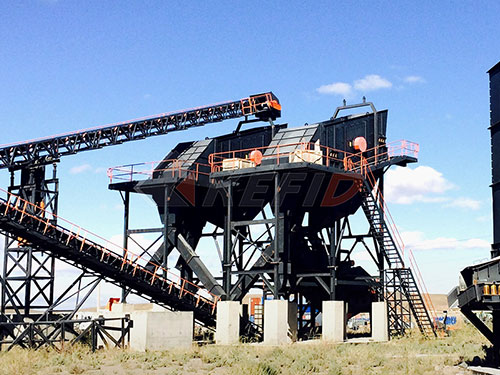
2.2 Cone Crushers (Secondary and Tertiary Crushing)
Cone crushers are used for finer reduction stages. They utilize a rotating mantle within a concave bowl, providing both compression and shearing forces. Modern cone crushers feature hydraulic adjustment systems, automatic tramp iron release, and cavity clearing mechanisms. The key performance parameters are the stroke, the eccentric throw, and the crushing chamber profile (e.g., standard, short head, or fine). A high-quality supplier brochure will include a capacity chart that correlates the CSS with the motor power (typically 90 kW to 630 kW) and the product gradation curve. For aggregate producers, the ability to produce a cubical product is critical; therefore, the supplier must demonstrate the crusher’s flakiness index performance.
2.3 Impact Crushers (Horizontal Shaft Impact – HSI, and Vertical Shaft Impact – VSI)
Impact crushers are ideal for softer to medium-hard materials (limestone, dolomite, recycled concrete) and for producing high-quality manufactured sand. HSI crushers use high-speed rotors with blow bars to fracture the material upon impact against stationary aprons. VSI crushers, on the other hand, use a rotor to accelerate material and throw it against a stone-lined crushing chamber, achieving excellent particle shape. When evaluating a supplier, pay attention to the rotor diameter, the tip speed (measured in meters per second), and the wear part lifetime (in hours). A professional brochure will not overpromise on wear life; instead, it will provide a range based on the feed material’s abrasiveness (e.g., 300–500 hours for hard basalt, 1,000+ hours for soft limestone).
2.4 Mobile and Semi-Mobile Crushing Plants
For projects requiring flexibility—such as road construction, demolition recycling, or temporary quarry operations—mobile crushers mounted on tracked or wheeled chassis are indispensable. A supplier brochure must specify the transport dimensions, the total operating weight, the engine power (diesel or electric), and the onboard screening unit options. The critical advantage of mobile units is the elimination of fixed civil works and the reduction of haulage costs. However, the supplier must also provide data on the hydraulic lifting system for the crusher unit and the remote control diagnostics capability.
3. Critical Technical Specifications to Evaluate in a Brochure
A professional buyer must read beyond the glossy images. The following technical data points are non-negotiable in any credible stone crusher machine supplier brochure:
3.1 Throughput Capacity (tph)
This is the most quoted but often the most misleading figure. Suppliers may state “maximum capacity” under ideal conditions (e.g., dry feed, correct bulk density, continuous feed). A trustworthy brochure will provide a capacity matrix that shows throughput at different CSS settings, motor loads, and feed gradations. For example, a 1200 x 900 jaw crusher may produce 200 tph at a 150 mm CSS but only 120 tph at a 75 mm CSS. The buyer must cross-reference this with the actual production requirements.
3.2 Motor Power and Energy Efficiency
The installed motor power (in kW) directly correlates with the crushing force and the energy consumption. A supplier that offers a “high-efficiency” machine should provide the specific energy consumption (kWh per tonne of crushed material). Modern crushers use frequency inverters and load-sensing hydraulics to reduce idle energy waste. A brochure that includes an energy audit or a comparison chart against older models demonstrates engineering maturity.
3.3 Wear Parts and Maintenance Accessibility
The cost of wear parts (jaw plates, cone liners, blow bars, impact plates) often exceeds the initial purchase price of the machine over its lifetime. A detailed brochure will list the alloy composition (e.g., Manganese 18% with chromium 2%), the weight of each wear part, and the estimated replacement interval. Additionally, the design must allow for quick replacement. Features such as hydraulic toggle adjustment for jaw crushers, or top-service access for cone crushers, significantly reduce downtime. The supplier should also state the global availability of spare parts—ideally within 48 hours for critical components.
3.4 Automation and Control Systems
Modern crushing plants are increasingly automated. A state-of-the-art brochure will describe the PLC (Programmable Logic Controller) system, the HMI (Human-Machine Interface) touchscreen, and the remote monitoring capabilities via IoT (Internet of Things). Automation features include automatic gap adjustment, overload protection, and real-time data logging of production rates. A supplier that offers a proprietary control system (rather than off-the-shelf components) provides a distinct advantage in troubleshooting and software updates.
3.5 Safety and Environmental Compliance
Regulatory compliance is a major selection criterion. The brochure must mention CE certification, ISO 9001 quality management, and ISO 14001 environmental management. Specific safety features include emergency stop buttons, safety interlocks on inspection doors, dust suppression nozzles, and noise reduction enclosures. For operations in environmentally sensitive areas, the supplier should offer water spray systems and enclosed conveyor transfer points to minimize fugitive dust.
4. Evaluating Supplier Credibility: Beyond the Brochure
While the brochure is the initial filter, a professional buyer must conduct a deeper due diligence process. The following factors are indicative of a reliable supplier:
4.1 Manufacturing Facility and In-House Production
Does the supplier actually manufacture the crushers, or do they outsource? A genuine manufacturer will have a heavy fabrication facility with large-capacity CNC machining centers, heat treatment furnaces for wear parts, and a dedicated assembly bay. Visiting the factory is recommended. A supplier that casts their own frames and machines their own shafts demonstrates vertical integration, which leads to better quality control and shorter lead times.
4.2 After-Sales Service Network
A crusher is a capital asset with a lifespan of 15–20 years. The supplier must have a local service network or a dedicated global service team. The brochure should list service response times, warranty terms (typically 12–24 months for mechanical components), and training programs for the buyer’s operators and maintenance staff. Some top-tier suppliers offer performance-based contracts where they guarantee uptime and throughput in exchange for a monthly fee.
4.3 Spare Parts Logistics
The availability of genuine spare parts is the single most critical factor in preventing prolonged downtime. A supplier with regional warehouses (e.g., in the Middle East, Southeast Asia, or Africa) can deliver critical parts within 24–72 hours. The brochure should include a spare parts catalog with part numbers and a recommended stock list for the first year of operation.
4.4 References and Case Studies
A credible supplier will provide references from similar projects—same rock type, same capacity range, and same geographic region. The brochure should include client testimonials, project photos, and performance data (e.g., actual tons crushed per hour, actual wear life achieved). The buyer should independently contact these references to verify the claims.
5. Cost Considerations: Total Cost of Ownership (TCO)
The initial purchase price is only a fraction of the total cost. A professional supplier brochure should help the buyer calculate the Total Cost of Ownership over a 10-year period. The TCO includes:
For example, a cheaper crusher with a 10% lower efficiency may consume an additional 50 kW of power, which at 0.10 USD/kWh and 6,000 operating hours per year, adds USD 30,000 annually to the operating cost. Over 10 years, that is USD 300,000—often more than the initial price difference. A high-quality brochure will provide energy consumption curves and wear cost per tonne to facilitate this analysis.
6. The Importance of Customization and Modular Design
No two quarries are identical. A professional supplier offers customized solutions—such as a modified feed hopper for sticky clay, a reinforced frame for high-altitude operation, or a special coating for corrosive environments. Modular design is another hallmark of quality. A modular crusher allows for future upgrades (e.g., adding a third crushing stage) without replacing the entire plant. The brochure should describe the modularity index—how easily the crusher can be integrated with existing conveyors, screens, and stockpiles.
7. Emerging Trends in Stone Crushing Technology
A forward-looking supplier brochure will also highlight innovations that improve efficiency and sustainability:
8. Conclusion: How to Use This Brochure Effectively
A stone crusher machine supplier brochure is a powerful tool when used correctly. It is not a substitute for engineering judgment, but it is a structured repository of data that enables a professional buyer to shortlist suppliers, compare technical specifications, and initiate detailed technical discussions. The best approach is to request the brochure, then follow up with a Request for Quotation (RFQ) that includes your specific material characteristics, desired output, and site constraints. A reputable supplier will respond with a tailored proposal that references the brochure’s data but adapts it to your project.
In summary, the key takeaways for any procurement manager or project engineer are:
By applying these criteria, the stone crusher machine supplier brochure transforms from a marketing artifact into a strategic procurement document. The right supplier will not only deliver a machine but will become a long-term partner in the success of your crushing operation. Whether you are crushing 100 tph for a local road project or 2,000 tph for a mega mining operation, the principles of rigorous evaluation remain the same. Choose wisely, and the crusher will reward you with decades of reliable service.
If you have any questions about our products, please feel free to contact us. We take all inquiries and suggestions very seriously.