Title: Quarry Ballast Crushing Equipment: The Role of Private Label Manufacturers in Research and Development
Introduction
The global railway and infrastructure sectors rely heavily on high-quality ballast—the coarse, angular aggregate that provides stability, drainage, and load distribution for railway tracks. The production of this essential material is a demanding process that requires robust, efficient, and durable crushing equipment. In this context, the concept of a “Private Label Manufacturer” (PLM) with dedicated Research and Development (R&D) capabilities has emerged as a critical strategic partner for quarry operators, engineering firms, and equipment distributors. This article provides a professional and objective examination of the quarry ballast crushing equipment market, focusing on the specific value proposition, technical challenges, and R&D imperatives for private label manufacturers.
1. Understanding the Quarry Ballast Crushing Process
Ballast production is not a generic aggregate crushing operation. It demands specific particle shape (cubical, with sharp edges), size gradation (typically 30-50 mm or 50-70 mm depending on standards), and mechanical strength (e.g., Los Angeles Abrasion value, Aggregate Crushing Value). The crushing process must therefore be carefully controlled.
The typical flow sheet involves:
- Primary Crushing: Jaw crushers or gyratory crushers reduce run-of-quarry material (often up to 1 meter in diameter) to a manageable size (150-300 mm).
- Secondary Crushing: Cone crushers or impact crushers further reduce the material to 40-80 mm.
- Tertiary Crushing & Shaping: This is the most critical stage for ballast. Vertical Shaft Impact (VSI) crushers or specialized cone crushers (e.g., those with a “coarse” chamber) are used to achieve the required cubical shape and to eliminate flat or elongated particles. Screening at each stage ensures strict adherence to gradation specifications.
The equipment must withstand extreme wear from abrasive rock types (granite, basalt, quartzite) and high throughput demands (often 200-800 tonnes per hour). This is where the expertise of a specialized manufacturer becomes indispensable.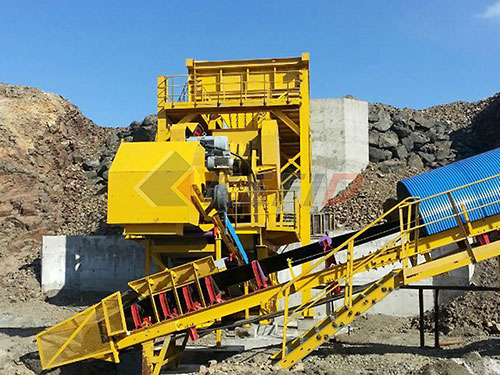
2. The Private Label Manufacturer (PLM) Model in Crushing Equipment
A private label manufacturer in this context is a company that designs, engineers, and manufactures crushing equipment that is then branded and sold by another company (the “brand owner” or “distributor”). This model is distinct from Original Equipment Manufacturing (OEM) in that the PLM often owns the intellectual property (IP) for the design, while the brand owner controls marketing, sales, and after-sales service.
Key characteristics of a successful PLM for ballast crushing:
- Technical Competence: Deep understanding of rock mechanics, metallurgy, and hydraulic systems.
- Production Flexibility: Ability to produce a wide range of machines (jaw, cone, impact, VSI, screens, feeders) to create complete crushing plants.
- Quality Control: Adherence to international standards (ISO 9001, CE, ASME) and rigorous testing protocols.
- Confidentiality and IP Protection: A robust legal framework to protect the brand owner’s proprietary designs and market positioning.
3. The Critical Role of R&D in Ballast Crushing Equipment
For a private label manufacturer to be a viable long-term partner, it must invest heavily in R&D. The ballast crushing market is not static; it faces evolving challenges that demand continuous innovation.
3.1. Wear Life and Metallurgy
Ballast rock is highly abrasive. The cost of wear parts (mantles, concaves, blow bars, jaw plates) can account for 30-50% of the total cost of ownership. R&D focuses on:
- Advanced Alloys: Developing manganese steel (e.g., 14% Mn, 18% Mn with chromium and molybdenum additions) and chrome-iron alloys with optimized hardness and toughness.
- Heat Treatment: Precise control of quenching and tempering processes to maximize wear resistance without brittleness.
- Composite Liners: Combining high-wear ceramic inserts with ductile steel backing to extend service life by 2-3 times in high-impact zones.
3.2. Crushing Chamber Geometry and Particle Shape
The ability to consistently produce cubical ballast is a key differentiator. R&D in this area includes:
- Computational Fluid Dynamics (CFD) and Discrete Element Method (DEM) simulations: Modeling the flow of rock through the crusher to optimize chamber design, reduce recirculation loads, and minimize flat/elongated particle generation.
- Eccentric Throw and Stroke Optimization: For cone crushers, fine-tuning the eccentric speed and stroke to match the specific feed characteristics of ballast material.
- VSI Rotor Design: Developing multi-port rotors and optimized anvil configurations to maximize the rock-on-rock crushing action that produces the best shape.
3.3. Automation and Digitalization
Modern quarries demand high uptime and consistent product quality. R&D is driving:
- Automated Setting Adjustment (ASRi): Systems that automatically adjust the crusher’s closed side setting (CSS) to compensate for wear, maintaining a consistent product gradation.
- Load Monitoring and Control: Real-time monitoring of motor power, hydraulic pressure, and feed rate to prevent overloading and optimize throughput.
- Predictive Maintenance: Using vibration analysis, oil condition monitoring, and temperature sensors to predict component failure before it occurs, reducing unplanned downtime.
- Remote Diagnostics: Enabling the brand owner or end-user to access crusher data remotely for troubleshooting and performance optimization.
3.4. Energy Efficiency and Sustainability
With rising energy costs and environmental regulations, R&D is focused on:
- Hydraulic System Efficiency: Using variable-displacement pumps and load-sensing hydraulics to reduce parasitic losses.
- Electric Drive Systems: Replacing diesel-hydraulic systems with fully electric or hybrid drives for lower emissions and operating costs.
- Recycling and Circularity: Designing crushers that can also process recycled railway ballast (which often contains concrete and steel contamination) without damage.
3.5. Safety and Ease of Maintenance
Quarry operations are hazardous. R&D efforts include:
- Hydraulic Tramp Release Systems: Allowing uncrushable material (e.g., steel bars, drill bits) to pass through without damaging the crusher.
- Quick-Change Wear Parts: Designing modular liners and hydraulic tools that reduce the time and labor required for liner changes from 8 hours to 2 hours.
- Remote Monitoring and Lockout/Tagout Systems: Ensuring that maintenance can be performed safely with zero energy states.
4. Advantages of Partnering with a Private Label Manufacturer with Strong R&D
For a brand owner (e.g., a regional equipment distributor or a large quarry operator), partnering with a PLM that has dedicated R&D offers several strategic advantages:
- Access to Cutting-Edge Technology: Without the need to invest in their own R&D facilities, the brand owner can offer their customers the latest innovations in wear life, automation, and energy efficiency.
- Customization: A PLM with strong R&D can develop bespoke solutions for specific rock types (e.g., a special chamber profile for crushing highly abrasive granite ballast) or specific regional standards (e.g., Indian Railway ballast specifications vs. AREMA standards in North America).
- Cost Efficiency: The PLM can achieve economies of scale in manufacturing and R&D, passing on cost savings to the brand owner.
- Faster Time-to-Market: A dedicated R&D team can rapidly prototype and test new designs, allowing the brand owner to respond quickly to market demands.
- Risk Mitigation: The PLM assumes the technical risk of design and performance, while the brand owner focuses on sales and service.
5. Challenges and Considerations
Despite the benefits, the PLM model is not without challenges:
- Quality Consistency: The brand owner must rigorously audit the PLM’s quality control processes to ensure that every machine meets the promised specifications.
- Intellectual Property Management: Clear contracts must define ownership of any jointly developed IP. A PLM with a strong R&D team may be more protective of its proprietary designs.
- Supply Chain Dependency: The brand owner becomes dependent on a single manufacturing source. A robust PLM should have multiple production lines and a resilient supply chain for raw materials and components.
- After-Sales Support: The brand owner must ensure that the PLM provides adequate technical documentation, spare parts availability, and training for service technicians.
6. Future Trends in Ballast Crushing Equipment R&D
Looking ahead, the R&D focus for private label manufacturers will likely include:
- Artificial Intelligence (AI) for Process Optimization: Using machine learning algorithms to predict optimal crusher settings based on real-time feed characteristics.
- Modular and Mobile Plants: Designing fully mobile or semi-mobile ballast crushing plants that can be relocated as the quarry face advances.
- Zero-Waste Crushing: Developing systems that can convert all quarry fines (0-5 mm) into usable products (e.g., concrete sand or road base) to eliminate waste stockpiles.
- Advanced Materials: Exploring the use of nano-ceramic coatings and 3D-printed wear parts for extreme applications.
Conclusion
The production of high-quality railway ballast is a technically demanding process that requires specialized crushing equipment. A private label manufacturer with a dedicated and robust R&D capability is not merely a supplier; it is a strategic partner that enables brand owners to compete on technology, performance, and total cost of ownership. By investing in metallurgy, chamber design, automation, and sustainability, these manufacturers drive the innovation that keeps the world’s railways safe, efficient, and reliable. For any company looking to enter or expand in the ballast crushing market, selecting a PLM with proven R&D expertise is the single most critical decision. The future of the industry will be defined by those who can combine the flexibility of private labeling with the relentless pursuit of engineering excellence.
