
Iron Ore Crushing Plant OEM Factory Brochure: Comprehensive Technical Overview and Operational Excellence
Introduction
The global iron ore industry forms the backbone of modern infrastructure, steel production, and industrial development. At the heart of this industry lies the critical process of crushing, which transforms raw, extracted iron ore into manageable, high-grade feedstock for downstream beneficiation and smelting. An Original Equipment Manufacturer (OEM) factory specializing in iron ore crushing plants is not merely a supplier of machinery; it is a partner in engineering, reliability, and efficiency. This brochure provides a detailed, professional, and objective examination of the design, manufacturing, operational parameters, and value proposition of a state-of-the-art iron ore crushing plant produced by a leading OEM factory.
1. The Strategic Importance of OEM Expertise in Iron Ore Crushing
Iron ore, typically extracted with a grade ranging from 20% to 65% Fe (iron content), requires significant size reduction to liberate valuable minerals from gangue. The crushing process is the first and most energy-intensive stage in the mineral processing chain. An OEM factory brings decades of metallurgical, mechanical, and process engineering experience to design plants that are not only robust but also optimized for specific ore characteristics—hardness, abrasiveness, moisture content, and feed size distribution.
Choosing an OEM partner over generic equipment suppliers ensures:
2. Core Components of an Iron Ore Crushing Plant
A typical OEM-designed iron ore crushing plant consists of a multi-stage process, usually comprising primary, secondary, and tertiary crushing stages, often integrated with screening and stockpiling systems. Below is a detailed breakdown of each major component.
2.1 Primary Crushing Station
The primary crusher receives run-of-mine (ROM) ore, which can have boulders exceeding 1.5 meters in diameter. The most common primary crusher for iron ore is the gyratory crusher or the jaw crusher.
The OEM factory designs the primary station with heavy-duty feeders (apron feeders or vibrating grizzly feeders) to handle impact and ensure uniform feed distribution. Dust enclosures and water spray systems are integrated to meet environmental standards.
2.2 Secondary and Tertiary Crushing
After primary crushing, the ore (typically 150–300 mm) is conveyed to secondary and tertiary stages. Here, cone crushers dominate due to their ability to produce a well-graded, cubical product.
Advanced OEM designs incorporate hydraulic adjustment systems (Hydroset or similar) to quickly change closed-side settings (CSS) without downtime, and automatic tramp iron relief to protect the crusher from uncrushable materials.
2.3 Screening and Classification
Vibrating screens are critical for closed-circuit crushing. The OEM factory supplies multi-deck inclined screens or horizontal screens with high G-force (4–6 G) to efficiently separate fines.
2.4 Conveying and Stockpiling
Belt conveyors are designed with heavy-duty idlers, impact beds at loading points, and skirt boards to prevent spillage. The OEM factory provides overland conveyors for long-distance transport and stacking conveyors for stockpile management. Dust control measures include covered galleries and misting systems.
3. Engineering Design and Customization
An OEM factory does not offer a one-size-fits-all solution. The design process begins with a detailed ore characterization study:
Based on these parameters, the OEM engineering team performs simulation modeling using software such as JKSimMet or Bruno to optimize circuit configuration. For example:
4. Automation and Control Systems
Modern OEM iron ore crushing plants are equipped with Distributed Control Systems (DCS) or Programmable Logic Controllers (PLC) with Human-Machine Interface (HMI) screens. Key features include:
5. Quality Assurance and Manufacturing Standards
The OEM factory adheres to rigorous quality control protocols. Every component, from crusher shafts to screen mesh, undergoes:
Certifications such as ISO 9001:2015 (Quality Management), ISO 14001 (Environmental Management), and OHSAS 18001 (Occupational Health and Safety) are standard for reputable OEM factories.
6. Operational Efficiency and Sustainability
6.1 Energy Efficiency
Crushing accounts for 1–3% of global electricity consumption. OEM factories design plants with energy-saving features:
6.2 Environmental Stewardship
7. After-Sales Service and Spare Parts
An OEM factory’s value extends far beyond the initial sale. Comprehensive after-sales support includes:
8. Case Study: OEM Plant Performance Metrics
To illustrate, consider a hypothetical 2,000 TPH iron ore crushing plant designed by a leading OEM factory for a mine in Western Australia. The ore has a Bond Work Index of 14 kWh/t and an abrasion index of 0.6 g/t.
This plant achieved a 15% reduction in liner wear compared to previous designs due to optimized chamber geometry and improved feed distribution.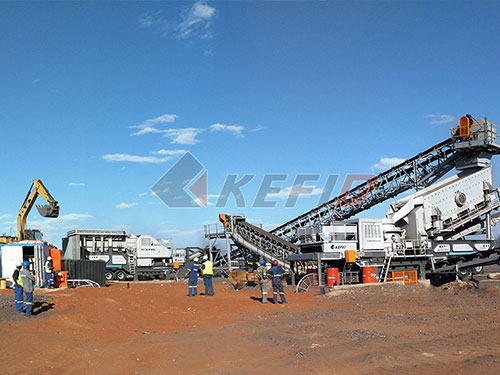
9. Conclusion: Why Choose an OEM Factory?
Investing in an iron ore crushing plant from a dedicated OEM factory is a strategic decision that yields long-term dividends. The combination of customized engineering, robust manufacturing, advanced automation, and comprehensive lifecycle support ensures that the plant operates at peak efficiency, with minimal downtime and lower total cost of ownership. Whether the requirement is a greenfield project or an expansion of an existing facility, the OEM partner provides the technical depth and operational reliability essential for success in the competitive iron ore market.
For further technical specifications, layout drawings, or a consultation with our engineering team, please contact our factory directly. We are committed to delivering crushing solutions that meet the highest standards of productivity, safety, and sustainability.
This brochure is intended for informational purposes. Specifications and designs are subject to change based on project-specific requirements. All equipment is manufactured in accordance with applicable international standards.
If you have any questions about our products, please feel free to contact us. We take all inquiries and suggestions very seriously.