
Here is a detailed, professional, and objective article on the topic of OEM Slag Crusher Plant Producers.
Title: The Role and Capabilities of OEM Slag Crusher Plant Producers in Modern Metallurgical Waste Management
Introduction
In the global landscape of metallurgy and heavy industry, the efficient management of by-products is not merely an environmental obligation but a significant economic opportunity. Among these by-products, slag—the glass-like residue generated during the smelting of ores and the refining of metals—represents both a disposal challenge and a valuable secondary resource. The transformation of this molten silicate mixture into usable aggregates, cementitious materials, or recyclable metallic fractions requires specialized, high-throughput machinery. This is where the role of the OEM (Original Equipment Manufacturer) Slag Crusher Plant Producer becomes indispensable.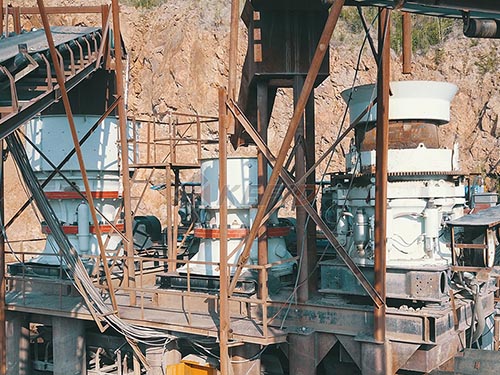
An OEM slag crusher plant producer is not simply a supplier of crushing equipment; they are the architects of complete, integrated processing systems designed specifically for the abrasive, dense, and heterogeneous nature of ferrous and non-ferrous slags. This article provides a comprehensive, objective analysis of these producers, examining their core competencies, the technological architecture of their plants, key market players, selection criteria, and the future trajectory of this specialized engineering sector.
Defining the OEM in the Slag Processing Context
The term “OEM” in this context signifies a company that designs, engineers, manufactures, and assembles the core machinery and the integrated plant layout under its own brand name. Unlike system integrators who may purchase components from various third-party vendors, a true OEM slag crusher plant producer holds the intellectual property for the critical components—namely the crushers, magnetic separators, and screening decks—and guarantees their performance as a unified system.
This distinction is critical for end-users, such as steel mills, foundries, and independent mineral processors. An OEM provides a single point of accountability for throughput, product specification, and after-sales service. They are responsible for the metallurgical compatibility of the wear parts, the structural integrity of the chassis, and the automation logic that governs the entire process. This level of vertical integration ensures that the plant is optimized for the specific slag type (e.g., blast furnace slag, basic oxygen furnace slag, electric arc furnace slag, or stainless steel slag), which varies significantly in density, abrasiveness, and metallic content.
Core Technological Architecture of an OEM Slag Plant
A professional OEM slag crusher plant is a multi-stage process engineered for maximum metal recovery and aggregate refinement. The typical architecture involves several distinct phases, each requiring specialized OEM-designed equipment.
Primary Crushing and Pre-Sorting: Raw slag, often delivered in large, irregular lumps weighing several tons, requires primary reduction. OEMs typically employ heavy-duty jaw crushers or impact crushers with reinforced rotors. Unlike conventional rock crushing, slag contains significant metallic iron, which can damage standard crushers. Therefore, OEMs design these primary units with hydraulic relief systems that allow uncrushable metallic chunks to pass through without catastrophic failure. Some advanced plants incorporate a “scalping” screen and an over-belt magnetic separator immediately after primary crushing to remove the largest ferrous pieces, preventing downstream wear.
Secondary and Tertiary Crushing: The material is further reduced in cone crushers or specialized vertical shaft impactors (VSIs). At this stage, the focus shifts to liberating the trapped metallic particles from the silicate matrix. OEMs utilize high-frequency, high-stroke screens to classify the material. The “oversize” is recirculated, while the “undersize” passes through a series of dense media separators or magnetic drums. The design of the crushing chamber in this stage is crucial; it must create sufficient shear and impact force to break the slag-to-metal bond without over-grinding the aggregate, which would increase fines and reduce yield.
Magnetic Separation and Metal Recovery: This is the economic heart of the plant. OEMs integrate multiple stages of magnetic separation, including:
Washing and De-Dusting: Slag often contains soluble salts and fine dust that must be removed to meet construction aggregate standards. OEM plants incorporate wet washing systems (log washers, hydrocyclones) or dry de-dusting systems (baghouse filters). The choice depends on water availability and environmental regulations. The producer must engineer these systems to handle the abrasive slurry without excessive wear.
Key Capabilities and Engineering Expertise
What distinguishes a leading OEM slag crusher plant producer from a generic crusher manufacturer is their domain-specific engineering expertise. This expertise manifests in several critical areas:
Wear Life Management: Slag is highly abrasive, often containing silica and alumina. OEMs invest heavily in metallurgical research to develop wear parts (jaws, cones, liners) that offer extended service life. They utilize high-chrome alloys, composite materials, and optimized heat treatment processes. The geometry of the crushing chamber is modeled using discrete element method (DEM) software to predict wear patterns and optimize throughput.
Automation and Control Systems: Modern OEM plants are fully automated. Programmable Logic Controllers (PLCs) monitor load conditions, adjust crusher settings in real-time, and manage the sequence of conveyors and screens. This automation minimizes human intervention in hazardous environments and maximizes energy efficiency. Advanced producers offer remote diagnostics and predictive maintenance modules, using IoT sensors to track bearing temperatures, vibration levels, and oil quality.
Modularity and Mobility: Given that slag dumps are often located at remote steel mill sites, many OEMs offer modular or semi-mobile plant designs. These plants are pre-engineered, factory-tested, and shipped in standard containers for rapid on-site assembly. This reduces civil engineering costs and allows the plant to be relocated as the slag pile depletes.
Global Landscape of OEM Producers
The market for OEM slag crusher plants is dominated by a mix of established heavy-equipment conglomerates and specialized niche players. While a comprehensive list is extensive, the following categories represent the industry leaders:
Indian Heavy Engineering Specialists: India has emerged as a global hub for slag processing technology, driven by its massive steel industry. Companies like M/s. Slag Processing Plant (SPP) and M/s. CPC Equipments have developed proprietary technologies for high-recovery slag processing. These firms are known for their cost-effective, robust designs that handle the high silica content typical of Indian iron ore slags. They offer complete turnkey solutions, from feasibility studies to commissioning.
European and North American Innovators: European producers, such as Hazemag and ThyssenKrupp, focus on high-capacity, high-efficiency systems with stringent environmental compliance. Their designs often incorporate advanced dust suppression and noise reduction technologies. In North America, Eagle Crusher and McLanahan offer specialized slag lines, focusing on rugged durability and ease of maintenance. These OEMs often lead in automation and digital twin technology, allowing clients to simulate plant operations before installation.
Chinese Manufacturing Giants: Companies like Shanghai Shibang Machinery (SBM) and Zhengzhou Yifan Machinery offer competitive pricing and rapid delivery. While historically viewed as producers of standard aggregate equipment, leading Chinese OEMs have developed specialized slag crusher lines with improved metal recovery systems. Their scale of production allows for significant economies of scale, making them attractive for large-scale, budget-conscious projects.
Selection Criteria for End-Users
Choosing the right OEM slag crusher plant producer is a strategic decision that impacts operational efficiency for decades. Objective evaluation should be based on the following criteria:
Economic and Environmental Impact
The work of OEM slag crusher plant producers has a profound impact on the circular economy. By processing slag, these plants prevent the accumulation of waste dumps that leach heavy metals into soil and groundwater. The recovered metallic fraction reduces the need for virgin iron ore mining. The processed slag aggregate is a superior product for road construction, concrete production, and cement manufacturing, offering high durability and skid resistance.
From an economic perspective, a modern slag plant can recover up to 90-95% of the metallic iron content present in the slag. For a steel mill producing 1 million tons of crude steel annually, this can translate to the recovery of tens of thousands of tons of metallic iron, representing millions of dollars in recovered value. The sale of processed slag aggregates provides an additional revenue stream, turning a cost center (waste disposal) into a profit center.
Future Trends and Innovations
The future of OEM slag crusher plant production is being shaped by sustainability and digitalization. Key trends include:
Conclusion
The OEM slag crusher plant producer is a critical enabler of sustainable metallurgy. They provide the specialized engineering, robust machinery, and integrated systems required to transform a problematic industrial by-product into valuable economic resources. The selection of an OEM is a high-stakes decision that requires rigorous technical evaluation, not just a review of brochure specifications. As global demand for steel and metals continues to rise, and as environmental regulations tighten, the expertise of these producers will become even more central to the operational and financial health of the metals industry. Their evolution from simple machine builders to sophisticated, technology-driven solution providers is a testament to the engineering ingenuity required to close the loop in industrial material flows. The modern slag plant is no longer a simple crushing operation; it is a precision metallurgical recovery facility, and the OEMs who build them are the unsung architects of the circular economy.
If you have any questions about our products, please feel free to contact us. We take all inquiries and suggestions very seriously.