
ODM Quarry Ballast Crushing Equipment: A Comprehensive Datasheet Overview
1. Introduction
In the demanding environment of quarrying and aggregate production, the efficient processing of raw stone into specification-grade ballast is a critical operational requirement. Original Design Manufacturing (ODM) services for quarry ballast crushing equipment provide quarry operators with the ability to procure machinery tailored to specific geological conditions, production targets, and regulatory standards. This datasheet outlines the technical specifications, design parameters, and operational characteristics typical of ODM-engineered ballast crushing systems, serving as a reference for procurement engineers, quarry managers, and project planners.
2. Scope and Application
ODM quarry ballast crushing equipment is designed for the primary, secondary, and tertiary reduction of hard rock, including granite, basalt, limestone, and dolomite, into railway ballast, construction aggregate, and sub-base materials. The equipment is engineered to meet international standards for ballast gradation, such as EN 13450 and AREMA specifications, ensuring that the final product meets the required particle size distribution, shape index, and mechanical strength criteria.
3. System Configuration
A typical ODM ballast crushing plant comprises the following integrated modules:
4. Technical Specifications
4.1 Primary Jaw Crusher
| Parameter | Specification |
|---|---|
| Feed Opening | 1,000 mm × 1,200 mm (customizable) |
| Maximum Feed Size | 900 mm |
| Capacity | 250–450 t/h (dependent on material characteristics) |
| CSS Range | 80–200 mm |
| Drive Power | 160–250 kW |
| Frame Construction | Welded steel with stress-relief annealing |
| Jaw Plates | Manganese steel (Mn18Cr2) or composite alloy |
4.2 Secondary Cone Crusher
| Parameter | Specification |
|---|---|
| Type | Hydraulic cone crusher (multi-cylinder) |
| Feed Opening | 300 mm |
| Capacity | 200–400 t/h |
| CSS Range | 20–50 mm |
| Drive Power | 200–315 kW |
| Cavity Type | Coarse, medium, or fine (interchangeable liners) |
| Control | Hydraulic CSS adjustment with automatic overload protection |
4.3 Tertiary VSI Crusher
| Parameter | Specification |
|---|---|
| Rotor Diameter | 1,000–1,200 mm |
| Maximum Feed Size | 50 mm |
| Capacity | 150–300 t/h |
| Drive Power | 200–400 kW |
| Rotor Speed | 1,200–1,800 rpm (variable frequency drive) |
| Anvil/Cascade Configuration | Rock-on-rock or rock-on-anvil (selectable) |
| Product Shape | Cubic, with shape index ≥ 0.85 |
4.4 Vibrating Screen
| Parameter | Specification |
|---|---|
| Decks | 3–4 |
| Screen Area | 18–36 m² |
| Stroke | 8–12 mm |
| Frequency | 850–1,000 rpm |
| Screen Media | Polyurethane or high-tensile steel mesh |
| Capacity | Matched to crusher throughput |
5. Performance Characteristics
5.1 Throughput and Gradation
ODM systems are configured to achieve a ballast output of 150–500 t/h, with the exact capacity determined by the material hardness, feed gradation, and target product specification. The screening circuit is designed to produce the following typical ballast fractions:
Gradation curves are validated through sieve analysis during commissioning, with adjustments to CSS and screen media available to meet client-specific requirements.
5.2 Product Quality
The ODM design philosophy emphasizes particle shape and mechanical integrity. VSI crushing in the tertiary stage ensures a cubical product with a flakiness index below 15% and a Los Angeles abrasion value consistent with ballast durability requirements. The system is capable of producing ballast meeting the requirements of EN 13450 for railway applications, including particle size distribution, oversize and undersize tolerances, and resistance to fragmentation.
5.3 Operational Efficiency
6. Design and Construction Features
6.1 Modular Framework
ODM equipment is supplied in modular skid-mounted or trailer-mounted configurations to facilitate rapid installation and relocation within the quarry. Structural steelwork is designed in accordance with ISO 12944 corrosion protection standards, with hot-dip galvanizing or high-build epoxy coatings available for aggressive environments.
6.2 Drive and Transmission
All crushers are equipped with heavy-duty electric motors rated for continuous duty (S1) and IP55 protection. V-belt or direct-coupled drive arrangements are selected based on torque requirements and maintenance accessibility. Variable frequency drives (VFDs) are available for feed control and optimization of crusher speed.
6.3 Dust and Noise Control
The ODM design incorporates enclosed transfer points, rubber curtains, and water spray nozzles at critical dust generation points. Baghouse filtration systems are available for controlled discharge points. Noise levels at the operator interface are maintained below 85 dB(A) through the use of acoustic enclosures and anti-vibration mounts.
6.4 Safety and Access
Guarding is provided in accordance with ISO 14120 and EN 953 standards. Access platforms, ladders, and handrails are designed to OSHA and EN ISO 14122 requirements. Emergency stop systems, zero-speed switches, and belt alignment sensors are integrated into the control architecture.
7. Control and Automation
The ODM control system is based on a Siemens S7-1500 or equivalent PLC platform, with the following functionality:
8. Installation and Commissioning
ODM suppliers provide engineering support for foundation design, electrical integration, and mechanical installation. Commissioning includes:
9. Maintenance and Serviceability
The equipment is designed for ease of maintenance with the following features:
Recommended spare parts lists and maintenance schedules are provided as part of the ODM documentation package.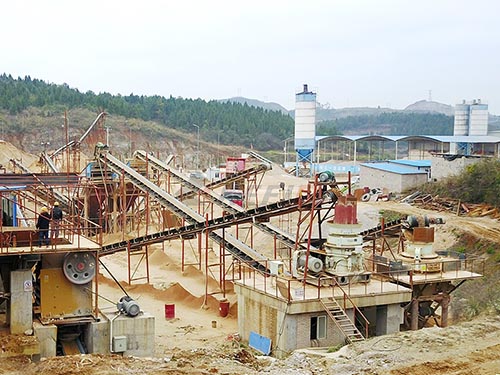
10. Compliance and Standards
ODM quarry ballast crushing equipment is designed and manufactured in compliance with the following standards:
11. Customization Options
As an ODM provider, the manufacturer offers the following customization options:
12. Conclusion
The ODM quarry ballast crushing equipment datasheet presented herein defines a robust, flexible, and compliant solution for the production of high-quality railway ballast and construction aggregate. By integrating proven crushing technologies with application-specific customization and modern automation, ODM systems deliver reliable performance, consistent product quality, and low total cost of ownership. Quarry operators and project developers are encouraged to engage with ODM engineering teams to develop a specification tailored to their specific site conditions and production objectives.
If you have any questions about our products, please feel free to contact us. We take all inquiries and suggestions very seriously.