Impact Crushers: The Strategic Advantage of Partnering with an ODM Manufacturer for Cost-Effective, High-Performance Solutions
In the competitive landscape of mineral processing, aggregate production, and recycling industries, the selection of comminution equipment is a decision that directly influences operational efficiency, product quality, and long-term capital expenditure. Among the various crushing technologies available, the impact crusher stands out for its versatility, high reduction ratio, and ability to produce cubical, well-graded end products. However, the procurement landscape has evolved significantly over the past decade. No longer is it sufficient to simply purchase a machine from a generic supplier. Today, discerning buyers are increasingly turning to Original Design Manufacturers (ODMs) to secure not only superior engineering but also significant cost advantages—often marketed under the umbrella of “discount” programs. This article provides a professional, objective, and detailed examination of impact crushers, the role of ODM manufacturers, and the strategic implications of pursuing discounted procurement without compromising on quality or performance.
Section 1: Understanding Impact Crushers – Technology and Application
Before delving into the manufacturing and procurement nuances, it is essential to establish a clear technical baseline. An impact crusher utilizes impact energy rather than pressure to reduce material. The core mechanism involves a high-speed rotor equipped with blow bars (or hammers) that hurl the feed material against stationary impact plates (or aprons). This collision, combined with inter-particle attrition, breaks the rock along natural cleavage lines, resulting in a product with a superior cubic shape and reduced flakiness.
There are two primary categories of impact crushers:
- Horizontal Shaft Impactors (HSI): These are the most common type, used primarily for secondary and tertiary crushing in limestone, concrete recycling, and soft-to-medium-hard aggregates. They offer a high reduction ratio (up to 30:1) and are highly efficient for producing fine aggregates.
- Vertical Shaft Impactors (VSI): These operate on a different principle, using a high-speed rotor to accelerate material and throw it against a stationary anvil or a rock bed. VSIs are the industry standard for producing high-quality manufactured sand, shaping aggregates, and processing highly abrasive materials.
Key performance metrics for any impact crusher include throughput capacity (tons per hour), power consumption (kWh/ton), wear part life (measured in hours or tons crushed), and the particle size distribution (PSD) of the output. Modern impact crushers also incorporate hydraulic adjustment systems, automatic overload protection, and advanced rotor designs to maximize uptime and minimize maintenance complexity.
Section 2: The ODM Manufacturer – Beyond Simple OEM Production
The term ODM (Original Design Manufacturer) is often confused with OEM (Original Equipment Manufacturer). While an OEM builds products to a buyer’s specification, an ODM designs and manufactures a product that is then often rebranded by the buyer. In the context of heavy machinery like impact crushers, an ODM is a company that possesses its own research and development (R&D) team, proprietary engineering drawings, and manufacturing facilities. They do not merely assemble components; they own the intellectual property (IP) behind the machine’s design.
Partnering with an ODM for impact crushers offers several distinct advantages over purchasing from a traditional brand-name manufacturer: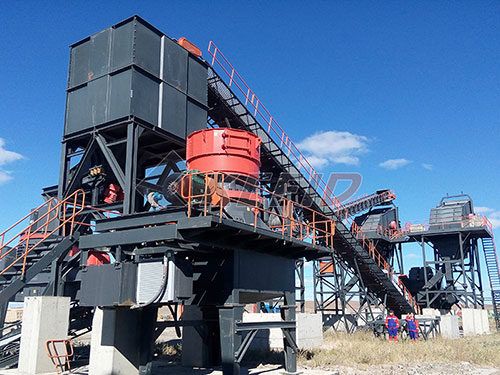
- Proprietary Engineering: The ODM has invested heavily in finite element analysis (FEA), computational fluid dynamics (CFD) for rotor airflow, and metallurgical research for wear parts. This means the crusher is not a generic copy but a purpose-built machine optimized for specific feed conditions.
- Customization Capability: Unlike a standard OEM catalog, an ODM can modify the crusher’s rotor diameter, width, speed, and chamber geometry to match the exact material characteristics (abrasiveness, moisture content, compressive strength) of the client’s site. This level of tailoring is rarely available from mass-market brands.
- Direct Supply Chain Control: An ODM controls its entire supply chain, from casting foundries to machining centers. This vertical integration allows for stricter quality control at every stage, from the raw steel to the final assembly, and enables faster response times for spare parts.
Section 3: The “Discount” Phenomenon – Analyzing the Cost Structure
The term “discount” in the context of ODM impact crushers is often misunderstood. It does not imply a reduction in material quality or engineering rigor. Instead, it reflects a fundamentally different cost structure compared to established global brands. To understand this, one must analyze the components of the final price:
- Elimination of Brand Premium: Major multinational brands allocate significant budgets to marketing, global distribution networks, and shareholder dividends. These costs are embedded in the machine’s price. An ODM, particularly one based in a manufacturing hub like China, India, or Southeast Asia, operates with a leaner corporate structure, passing these savings directly to the buyer.
- Economies of Scale in Component Production: ODMs often produce thousands of units per year across various models. This volume allows them to negotiate lower prices for high-grade steel (e.g., Hardox or equivalent), bearings (SKF, FAG, NSK), and electric motors (Siemens, ABB). The “discount” is a direct result of bulk purchasing power.
- Lower Labor and Overhead Costs: Manufacturing facilities in emerging economies benefit from lower labor costs and reduced regulatory overhead. However, this does not mean lower skill levels. Many ODM factories utilize automated robotic welding, CNC machining centers, and laser alignment tools, ensuring precision that rivals any Western factory.
- Strategic Pricing for Market Penetration: Many ODM manufacturers offer aggressive introductory discounts to secure long-term service contracts and spare parts revenue. The initial crusher purchase is often sold at a slim margin to lock in a 10-15 year relationship for wear parts (blow bars, liners, impact plates), which is where the real profitability lies for the manufacturer.
Section 4: Evaluating the Quality of a Discounted ODM Impact Crusher
The primary concern for any procurement manager is whether a discounted ODM crusher can match the reliability and performance of a premium brand. A professional evaluation must focus on several critical technical aspects:
- Rotor Construction: The rotor is the heart of the impact crusher. A high-quality ODM will use a solid, machined rotor body made from high-tensile steel, with wear-resistant inserts at the blow bar seats. Check for the use of stress-relieving treatments after welding to prevent cracking under cyclic loading.
- Wear Parts Metallurgy: The blow bars and impact plates must be manufactured from high-chromium iron (e.g., 18-26% Cr) or composite materials with ceramic inserts for abrasive applications. A reputable ODM will provide detailed chemical composition certificates and hardness test reports (typically 55-62 HRC for blow bars).
- Bearing and Seal Systems: Look for the use of double-row spherical roller bearings from Tier-1 suppliers. The bearing housing must be equipped with labyrinth seals and a positive pressure air system to prevent dust ingress, a common failure point in cheaper machines.
- Hydraulic and Electrical Systems: The crusher should feature a PLC-based control system with remote monitoring capabilities. Hydraulic cylinders for opening the crusher housing must be sized for the specific weight of the machine, with safety lock valves to prevent accidental closure during maintenance.
Section 5: The Financial and Operational Benefits of the ODM Discount Model
When a buyer opts for a discounted ODM impact crusher, the benefits extend beyond the initial invoice. The total cost of ownership (TCO) is a more accurate metric for evaluation.
- Capital Expenditure (CAPEX) Reduction: The upfront cost of an ODM crusher is typically 20-40% lower than an equivalent model from a global brand. This capital saving can be redirected towards upgrading the entire crushing plant, such as adding a pre-screening system or a more efficient dust collection unit.
- Spare Parts Availability and Cost: Since the ODM controls the design, they can supply genuine spare parts at a fraction of the cost of the original brand. Furthermore, many ODMs maintain strategic stockpiles of critical wear parts in regional warehouses, reducing lead times from 12 weeks to 2-3 weeks.
- Technical Support and After-Sales Service: Contrary to the misconception that ODMs lack support, many offer comprehensive services, including on-site commissioning, operator training, and remote diagnostics via IoT sensors. The “discount” often includes a free initial wear part kit, further reducing operational startup costs.
Section 6: Risks and Mitigation Strategies in ODM Procurement
It would be unprofessional to ignore the inherent risks of purchasing from an ODM, even with a discount. The primary risks include:
- Intellectual Property and Counterfeiting: Some ODMs may produce machines that infringe on existing patents. It is crucial to conduct a due diligence check on the manufacturer’s patent portfolio and ensure they have the legal right to sell the design in your jurisdiction.
- Quality Consistency: While the first unit may be excellent, consistency across multiple units can vary. Mitigation: Insist on a pre-shipment inspection by a third-party quality assurance firm (e.g., SGS, Bureau Veritas) and require a performance test with your actual feed material at the factory.
- After-Sales Responsiveness: If the ODM is located in a different time zone, emergency breakdown support may be delayed. Mitigation: Negotiate a service level agreement (SLA) that guarantees a response time and includes a local service partner or a stock of critical spare parts at your site.
Section 7: How to Identify a Legitimate Discounted ODM Manufacturer
To maximize the benefits of the ODM discount model, buyers must perform rigorous vendor vetting. The following criteria are non-negotiable:
- Certifications: Look for ISO 9001:2015 for quality management, ISO 14001 for environmental management, and CE certification for the European market.
- Reference Sites: Request a list of installed machines in your industry. Contact those operators directly to ask about uptime, wear life, and after-sales support. Do not rely solely on marketing brochures.
- Factory Audit: Visit the manufacturing facility. Assess the cleanliness, the age of the CNC machinery, the presence of a metallurgical laboratory, and the skill level of the welding team. A legitimate ODM will welcome this inspection.
- Transparent Pricing: A genuine discount is based on a transparent cost breakdown. If the manufacturer cannot explain why their price is lower (e.g., cheaper logistics, bulk steel purchase), it may be a red flag indicating the use of substandard components.
Section 8: The Future of Impact Crusher Procurement – A Strategic Shift
The trend towards ODM procurement with discount pricing is not a temporary market anomaly; it is a structural shift. As global infrastructure projects demand higher efficiency at lower budgets, the traditional “premium brand” model is being challenged. The most successful aggregate producers are those who treat their crusher not as a branded asset but as a functional tool. By decoupling the machine’s performance from its brand name, they unlock significant value.
Moreover, the rise of digital manufacturing and 3D printing for wear parts is further empowering ODMs. They can now offer rapid prototyping of custom blow bar geometries to optimize crushing efficiency for specific rock types, a service that was previously exclusive to high-end engineering firms.
Conclusion
In conclusion, the phrase “Impact Crushers ODM Manufacturer Discount” encapsulates a sophisticated procurement strategy that balances engineering excellence with financial prudence. A reputable ODM offers proprietary designs, advanced manufacturing capabilities, and a cost structure that provides a genuine 20-40% price advantage without sacrificing performance. The “discount” is not a mark of inferiority but a reflection of a leaner business model and the elimination of brand monopolies.
However, this path requires diligence. Buyers must conduct thorough technical evaluations, verify metallurgical standards, and audit manufacturing processes. When executed correctly, partnering with an ODM for a discounted impact crusher results in a superior return on investment, lower operating costs, and a competitive edge in the aggregate market. The key is to view the ODM not as a cheap alternative, but as a strategic engineering partner that offers high-performance crushing solutions at a fair, market-disruptive price. For any operation looking to expand capacity or modernize its plant, exploring the ODM route is no longer optional—it is a necessity for long-term sustainability.
