
The Luxury Stone Quarry Crushing Plant Supply Chain: An Integrated Analysis of Upstream Extraction, Processing, and Downstream Delivery
Introduction
The luxury stone industry—encompassing high-value materials such as marble, granite, onyx, quartzite, and exotic varieties—depends on a highly specialized and capital-intensive supply chain. At the heart of this chain lies the quarry crushing plant, a critical node that transforms raw extracted blocks and fragments into market-ready aggregate, chips, and calibrated stone products. Unlike conventional aggregate operations, luxury stone crushing plants must reconcile two often-competing objectives: maximizing recovery from extremely valuable raw material and preserving the aesthetic and structural integrity that defines luxury-grade stone. This article provides a detailed, objective examination of the luxury stone quarry crushing plant supply chain, analyzing its structure, operational characteristics, technological requirements, logistics, quality assurance mechanisms, and strategic challenges.
1. Supply Chain Structure and Configuration
The luxury stone supply chain can be modeled as a linear but tightly coupled system comprising five principal stages: (1) geological exploration and reserve assessment; (2) quarry extraction; (3) primary and secondary crushing and processing; (4) finishing, grading, and packaging; and (5) distribution and delivery to downstream customers, including architectural firms, fabricators, and luxury construction projects.
The crushing plant occupies a pivotal position between extraction and finishing. Its configuration varies according to the stone type and end-use. For instance, marble quarries producing blocks for slab production generate substantial offcuts and irregular fragments; these are routed to crushing circuits that produce marble chips, terrazzo feedstock, and fine calcium carbonate fillers. Granite and quartzite operations, by contrast, often integrate crushing directly into the production of dimension-compatible aggregates and engineered stone feedstock. In luxury applications, the crushing plant is therefore not merely a size-reduction facility but a value-recovery and material-optimization hub.
2. Upstream Integration: Quarry-to-Crusher Interface
The interface between quarry extraction and crushing is a defining feature of the luxury stone supply chain. Extraction typically employs diamond wire sawing, chain sawing, or controlled blasting, depending on the stone’s characteristics. The resulting run-of-quarry material includes large blocks, irregular slabs, and fragmented debris. A key operational decision is the allocation of material: blocks of sufficient quality and dimension are directed to slab or dimension-stone production, while lower-grade blocks, edge trimmings, and fragments are diverted to the crushing plant.
This allocation process requires rigorous material characterization at the quarry face. Geologists and production managers assess color consistency, veining patterns, structural soundness, and mineralogical composition. In luxury stone operations, even material destined for crushing must meet minimum aesthetic and purity thresholds, since crushed luxury stone products—such as decorative aggregates for high-end landscaping or feedstock for premium terrazzo—carry brand and quality expectations. Consequently, the quarry-to-crusher interface is governed by detailed material classification protocols, stockpile segregation strategies, and traceability systems that document the origin and characteristics of each batch.
3. Crushing Plant Design and Technological Requirements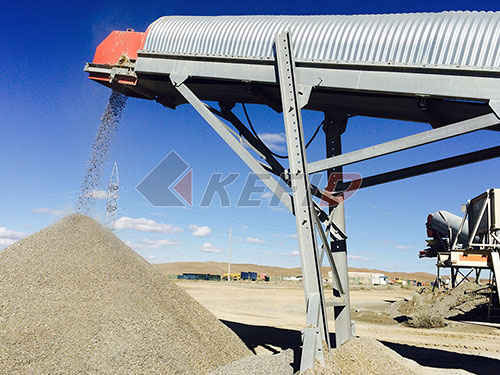
Luxury stone crushing plants differ from conventional aggregate plants in several respects. First, capacity is typically lower, reflecting the limited volume of high-value offcuts and the need for careful handling. Second, equipment selection emphasizes precision, minimal contamination, and the preservation of particle shape and color. Third, dust and noise control are stringent, given that many luxury quarries are located in sensitive environmental or touristic regions—particularly in Mediterranean marble districts such as Carrara, where operational permits impose strict environmental conditions.
A typical luxury stone crushing circuit includes:
Automation and digitalization are increasingly integrated. Programmable logic controllers (PLCs) manage crusher settings, while online particle-size analyzers and moisture sensors provide real-time feedback. Some advanced plants employ computer vision for color and texture sorting, enabling the separation of stone chips by aesthetic grade—a capability that is largely unique to the luxury segment.
4. Quality Assurance and Traceability
Quality assurance in the luxury stone crushing supply chain is multidimensional. Physical properties—compressive strength, water absorption, abrasion resistance, and particle-size distribution—must meet specification. Aesthetic properties—color homogeneity, veining consistency, and surface texture—are equally important for decorative applications. Traceability systems link each batch to its quarry location, extraction date, and processing parameters, supporting claims of origin and enabling rapid response to quality deviations.
Certification schemes also play a role. In European markets, CE marking under relevant harmonized standards applies to aggregates and stone products. Environmental certifications, such as ISO 14001, and chain-of-custody initiatives are increasingly requested by luxury clients seeking to demonstrate responsible sourcing. The crushing plant must therefore maintain documentation systems that integrate production data with compliance records.
5. Logistics and Downstream Distribution
Logistics in the luxury stone supply chain are shaped by the relatively low volume and high value of products. Crushed luxury stone products—decorative chips, terrazzo aggregates, and fine fillers—are typically packaged in bulk bags, paper sacks, or moisture-barrier containers to protect against contamination and color alteration. Transportation may involve road, rail, and sea freight, with intermodal solutions common for export-oriented operations.
Warehousing and inventory management require careful attention to segregation. Different stone types and color batches must be stored separately to prevent cross-contamination, and outdoor storage is minimized to avoid weathering and staining. Downstream customers include terrazzo manufacturers, engineered stone producers, landscape architects, and specialty construction contractors. Increasingly, luxury stone producers engage in direct-to-project supply arrangements, in which crushed and graded materials are delivered according to project-specific specifications and schedules.
6. Strategic Challenges and Risk Management
The luxury stone crushing supply chain faces several strategic challenges. Volatility in luxury construction demand affects the volume of offcuts available for crushing, creating fluctuations in feedstock supply. Environmental regulations, particularly in historic quarrying regions, constrain operating hours, dust emissions, and water use. Geopolitical and logistical disruptions can affect export flows. Moreover, the industry faces a skills challenge: operating advanced crushing and sorting equipment requires trained personnel who understand both mechanical processing and the aesthetic requirements of luxury stone.
Risk management strategies include diversification of product lines (e.g., developing new decorative aggregate products), investment in flexible plant configurations that can handle varying feedstock, and the establishment of long-term supply agreements with downstream customers. Digital traceability and quality documentation also serve as risk-mitigation tools by supporting compliance and brand protection.
Conclusion
The luxury stone quarry crushing plant supply chain is a specialized, integrated system in which extraction, processing, and distribution are linked by stringent quality requirements and environmental constraints. Its effectiveness depends on careful material allocation at the quarry face, precision-oriented crushing and screening technology, robust quality assurance and traceability, and disciplined logistics. As luxury construction markets evolve and environmental expectations intensify, the supply chain will likely continue to adopt digitalization, advanced sorting, and sustainable operating practices. For industry participants, a comprehensive understanding of this chain—from geological assessment to final delivery—is essential to maintaining competitiveness and preserving the value proposition of luxury stone.
If you have any questions about our products, please feel free to contact us. We take all inquiries and suggestions very seriously.