Iron Ore Crushing Plant Producers: Samples, Selection Criteria, and Industry Practice
Introduction
Iron ore is the primary raw material for global steel production, and before it can be charged into blast furnaces or direct reduction reactors, it must be reduced from run-of-mine (ROM) lump sizes—often exceeding one meter in diameter—to a controlled particle size distribution suitable for downstream processing. This size reduction is accomplished in iron ore crushing plants, which typically form the first stage of a beneficiation circuit. The producers of these plants constitute a specialized segment of the mining equipment industry, encompassing global engineering firms, regional fabricators, and original equipment manufacturers (OEMs) that supply complete crushing stations or modular units.
This article examines iron ore crushing plant producers through the lens of representative samples—that is, characteristic examples of plant configurations, equipment suppliers, and project references—while analyzing the technical, logistical, and commercial factors that distinguish one producer from another. It is intended for project engineers, procurement specialists, and investors seeking an objective overview of the market.
1. Defining the Iron Ore Crushing Plant
An iron ore crushing plant is an integrated facility that receives ROM ore from the mine and reduces it through one or more crushing stages—primary, secondary, and sometimes tertiary or quaternary—to achieve a target product size, commonly below 300 mm for primary crushing and below 25 mm for fine crushing ahead of grinding or screening.
Key components include:
- Feeders: Apron feeders, grizzly feeders, or vibrating pan feeders that regulate ore flow and bypass fines.
- Crushers: Gyratory crushers for high-capacity primary duty; jaw crushers for smaller or mobile operations; cone crushers (standard and short-head) for secondary and tertiary reduction; and high-pressure grinding rolls (HPGR) or sizers for specific ore types.
- Screens: Scalping screens, double-deck vibrating screens, and banana screens for classification and closed-circuit operation.
- Conveyors and transfer points: Belt conveyors, chutes, and dust suppression systems.
- Auxiliary systems: Dust collectors, metal detectors, magnets, and control systems.
Producers may supply individual equipment, complete crushing stations, or full turnkey plants including civil works, structural steel, and electrical instrumentation.
2. Sample Producer Categories
Iron ore crushing plant producers can be grouped into four broad categories, each with distinct sample characteristics.
2.1 Global Full-Line OEMs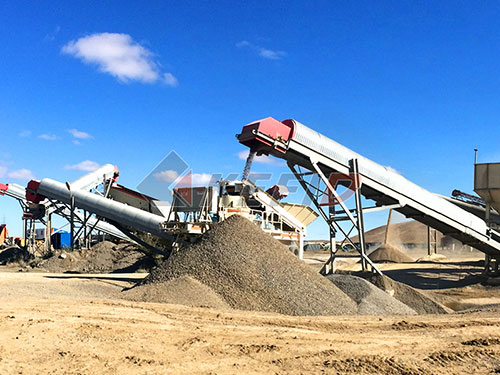
These are multinational corporations that manufacture a comprehensive range of crushers, screens, and feeders and also execute complete plant projects. Representative samples include:
- Metso (now Metso Outotec): Offers gyratory crushers (Superior MKIII), jaw crushers (C Series), cone crushers (Nordberg HP and MP series), and vibrating screens. The company has supplied primary crushing stations to major iron ore operations in Brazil, Australia, and Africa. A typical sample project might feature a 60-110 gyratory primary crusher with a 1,200 t/h capacity, followed by secondary MP800 cone crushers.
- Sandvik: Provides jaw crushers (CJ series), cone crushers (CH and CS series), and impact crushers. Sandvik’s modular crushing stations are often used in remote iron ore deposits. A sample configuration could be a CJ615 jaw crusher as primary, CH660 cone as secondary, and CS430 as tertiary, producing a −25 mm product.
- FLSmidth: Known for gyratory crushers, sizers, and HPGRs. FLSmidth has delivered primary crushing plants for iron ore in India and South America. A sample plant might use a KB 63-89 gyratory crusher with a 4,000 t/h throughput.
- Thyssenkrupp Industrial Solutions: Supplies gyratory crushers, jaw crushers, and complete crushing plants. A notable sample is the semi-mobile crushing plant at an Australian iron ore mine, using a BK 63-75 gyratory crusher and a heavy-duty apron feeder.
2.2 Regional and Specialized Fabricators
These producers focus on specific regions or equipment types, often offering cost-effective alternatives to global OEMs. Samples include:
- Zhongding Machine (China): Produces jaw crushers, cone crushers, and mobile crushing plants. A sample iron ore project might use a PE1200×1500 jaw crusher for primary crushing and a PY spring cone crusher for secondary crushing, with a capacity of 800 t/h.
- NMS Industries (China): Specializes in crushing and screening equipment, including gyratory crushers and jaw crushers. Sample installations in Chinese iron mines often feature a JC series jaw crusher and a CC series cone crusher.
- McLanahan (USA): Offers jaw crushers, cone crushers, and roll crushers, with a focus on rugged designs for abrasive ores. A sample iron ore application might use a Universal Jaw Crusher and a Cobra Cone Crusher.
- Terex MPS (USA): Provides modular jaw, cone, and impact crushing plants. A sample iron ore plant could be a MJ47 jaw module and an MC450X cone module.
2.3 Mobile and Semi-Mobile Plant Producers
For deposits with short mine life or difficult terrain, mobile and semi-mobile crushing plants are preferred. Samples include:
- Metso Lokotrack: Track-mounted jaw and cone crushers, such as the LT120 jaw plant and LT300HP cone plant. A sample iron ore application in a small-scale mine might use an LT120 for primary crushing and an LT300HP for secondary crushing.
- Sandvik QJ and QH series: Mobile jaw and cone crushers, often used in contractor-operated iron ore mines.
- Kleemann (Wirtgen Group): MOBICAT jaw crushers and MOBICONE cone crushers. A sample plant could be a MOBICAT MC 120 Z primary crusher and a MOBICONE MCO 11 secondary crusher.
2.4 Turnkey Project Integrators
These firms do not necessarily manufacture all equipment but integrate components from multiple vendors into a complete plant. Samples include:
- Outotec (now Metso Outotec): Provides full beneficiation plants, including crushing, grinding, and separation.
- Hatch: An engineering firm that designs and commissions iron ore crushing plants, often sourcing crushers from OEMs.
- China National Machinery Import & Export Corporation (CMC): Integrates Chinese-made crushers and screens for overseas iron ore projects.
3. Sample Plant Configurations and Flowsheets
To illustrate producer differences, consider three representative samples.
Sample A: High-Capacity Primary Crushing Station (Australia)
- Ore: Hematite, 60% Fe, abrasive.
- Capacity: 4,000 t/h.
- Primary crusher: Gyratory, 63-89 size, 600 kW.
- Feeder: Apron feeder, 2,400 mm wide.
- Product: −300 mm.
- Producer: Thyssenkrupp or FLSmidth.
- Key features: Semi-mobile design, direct dump from trucks, dust suppression.
Sample B: Modular Secondary-Tertiary Plant (Brazil)
- Ore: Itabirite, 45% Fe, compact.
- Capacity: 1,200 t/h.
- Secondary: Cone crusher, 500 kW, closed side setting 40 mm.
- Tertiary: Cone crusher, 400 kW, closed side setting 12 mm.
- Screens: Double-deck banana screens, 8 m × 3 m.
- Product: −12 mm.
- Producer: Metso Outotec.
- Key features: Pre-screening, closed-circuit, automated control.
Sample C: Mobile Crushing Plant (India)
- Ore: Magnetite, 35% Fe, hard.
- Capacity: 250 t/h.
- Primary: Track-mounted jaw crusher, 1,100 mm × 800 mm feed opening.
- Secondary: Track-mounted cone crusher, 300 kW.
- Product: −20 mm.
- Producer: Sandvik or Metso Lokotrack.
- Key features: Diesel-electric drive, remote control, rapid relocation.
4. Selection Criteria for Producers
When evaluating iron ore crushing plant producers, the following factors are critical:
- Ore Characteristics: Abrasiveness (Bond abrasion index), compressive strength, moisture content, and clay content dictate crusher type and wear material. Producers with experience in similar ores should be prioritized.
- Capacity and Availability: Required throughput, annual operating hours, and availability targets (e.g., 92%) influence equipment redundancy and maintenance strategy.
- Product Size and Shape: Downstream processes (grinding, beneficiation) define the target P80. Producers must guarantee particle size distribution.
- Capital and Operating Costs: Global OEMs typically have higher capital costs but may offer lower long-term operating costs through superior wear parts and service. Regional fabricators may offer lower capital costs but require careful vetting of after-sales support.
- Logistics and Site Conditions: Remote sites favor modular or mobile plants. Producers with experience in modularization and cold-weather or tropical conditions are advantageous.
- Service and Spare Parts: Local presence, response time, and spare parts availability are decisive. Producers with regional warehouses and service centers reduce downtime risk.
- References and Track Record: Sample projects in similar iron ore applications provide confidence. Producers should provide client references and performance guarantees.
5. Market Trends and Producer Responses
Several trends are shaping the iron ore crushing plant producer landscape: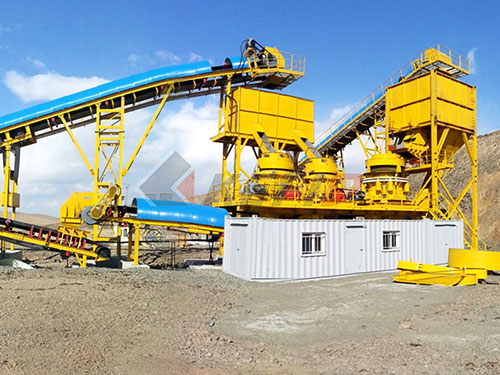
- Digitalization: Producers are integrating IoT sensors, advanced process control, and digital twins to optimize crushing circuits. Metso Outotec’s Metrics and Sandvik’s OptiMine are examples.
- Energy Efficiency: HPGR and stirred milling are being adopted to reduce energy consumption in fine crushing and grinding. Producers like FLSmidth and Thyssenkrupp are promoting HPGR-based circuits.
- Modularization: To reduce site construction time and cost, producers are offering pre-assembled modules. Metso Outotec’s modular plants and Sandvik’s FastPlant are samples.
- Sustainability: Dust suppression, noise reduction, and water recycling are increasingly specified. Producers are responding with enclosed crushing stations and dry fog systems.
- Chinese Producers’ Global Expansion: Chinese fabricators such as Zhongding and NMS are increasingly exporting complete plants, particularly to Africa, Southeast Asia, and South America, often at competitive prices.
6. Case Samples of Producer Deliveries
- Metso Outotec at Vale’s S11D (Brazil): Supplied primary crushing stations with gyratory crushers and apron feeders for 90 Mtpa capacity. The plant features semi-mobile units and advanced automation.
- Thyssenkrupp at BHP’s South Flank (Australia): Delivered primary crushing stations with gyratory crushers and heavy-duty feeders for 80 Mtpa. The plant is designed for high availability and low maintenance.
- Sandvik at LKAB’s Kiruna (Sweden): Provided underground crushing stations with jaw crushers and cone crushers for magnetite ore. The plant operates in harsh Arctic conditions.
- Zhongding at a Chinese-owned mine in Liberia: Supplied a 1,000 t/h crushing plant with jaw and cone crushers, demonstrating the growing role of Chinese producers in African iron ore.
7. Conclusion
Iron ore crushing plant producers form a diverse and competitive market. Global OEMs like Metso Outotec, Sandvik, FLSmidth, and Thyssenkrupp dominate high-capacity, technically demanding projects, while regional fabricators and Chinese producers offer cost-effective alternatives for smaller or less complex operations. Mobile and modular plant producers serve niche applications, and turnkey integrators provide single-point responsibility.
For project developers, the selection of a producer should be based on a rigorous assessment of ore characteristics, capacity requirements, site conditions, and lifecycle costs. Samples of past projects—such as those cited above—provide valuable benchmarks. As the iron ore industry moves toward digitalization, energy efficiency, and sustainability, producers that can integrate advanced technologies and deliver reliable after-sales support will remain preferred partners.
Ultimately, the “sample” that matters most is the one that matches the specific technical and commercial context of a given iron ore deposit. By studying representative producer offerings and project references, stakeholders can make informed decisions that optimize capital expenditure, operating expenditure, and plant performance over the life of the mine.
