Iron Ore Crushing Plant OEM Factory Catalog: A Comprehensive Guide for Global Buyers and Project Developers
Introduction
In the global mining and mineral processing industry, the iron ore crushing plant represents a critical link in the value chain—transforming raw, run-of-mine (ROM) ore into sized, consistent feedstock suitable for grinding, beneficiation, and downstream pelletizing or sintering. For engineering, procurement, and construction (EPC) firms, mining companies, and distributors, an OEM (Original Equipment Manufacturer) factory catalog is far more than a product list; it is a technical roadmap that defines capacity ranges, equipment configurations, metallurgical performance, and after-sales support. This article provides a detailed, objective overview of what a professional iron ore crushing plant OEM factory catalog should contain, how to interpret its specifications, and how to select the right OEM partner for your project.
1. Why an OEM Factory Catalog Matters in Iron Ore Crushing
Unlike generic equipment brochures, an OEM factory catalog is issued directly by the manufacturer that designs, casts, machines, and assembles the core crushing equipment—typically jaw crushers, gyratory crushers, cone crushers, impact crushers, vibrating feeders, screens, and belt conveyors. Because the OEM controls the entire production process, the catalog can provide:
- Verified technical data (throughput, power draw, reduction ratio, product curve)
- Material and heat-treatment standards (e.g., Mn18Cr2, Mn22Cr2, or high-chrome alloys)
- Customization options (feed opening, closed-side setting, automation level)
- Spare parts interchangeability and wear life estimates
- Compliance certifications (CE, ISO 9001, GOST, ASME)
For iron ore—a hard, abrasive, and often high-silica material—the catalog must address wear protection, dust suppression, and structural fatigue life explicitly. A well-structured OEM catalog therefore serves as a pre-engineering document that reduces project risk and accelerates procurement.
2. Core Equipment Categories in a Typical Iron Ore Crushing Plant Catalog
A complete OEM factory catalog for iron ore crushing typically organizes products into primary, secondary, and tertiary stages, plus auxiliary equipment.
2.1 Primary Crushing Equipment
- Jaw Crushers: Designed for high-capacity primary reduction of ROM ore up to 1,200 mm feed size. Catalog entries specify feed opening (e.g., 1,200 × 1,500 mm), eccentric shaft speed, motor power (200–400 kW), and capacity (500–1,500 t/h). OEMs often list jaw plate profiles (corrugated, smooth, toothed) and wear life in hours per ton.
- Gyratory Crushers: For very large mines (>2,000 t/h), gyratory crushers offer superior capacity and lower operating cost per ton. The catalog should include mantle and concave material grades, hydraulic setting adjustment, and spider arm design.
2.2 Secondary and Tertiary Crushing Equipment
- Cone Crushers: The workhorse for iron ore secondary and tertiary crushing. OEM catalogs distinguish between standard head (coarse) and short head (fine) configurations. Key specifications include:
- Closed-side setting (CSS) range: 6–50 mm
- Throughput: 100–800 t/h
- Cavity types: coarse, medium, fine, extra-fine
- Automation: hydraulic tramp release, liner wear compensation
- HPGR (High-Pressure Grinding Rolls): Increasingly included in OEM catalogs for iron ore, especially for dry processing and pre-grinding. Catalog data covers roll diameter, roll width, specific pressing force (N/mm²), and edge wear protection.
2.3 Auxiliary and Material Handling Equipment
- Vibrating Grizzly Feeders: For scalping fines before primary crushing. Catalog includes bar spacing, stroke, and wear liners.
- Vibrating Screens: Banana screens, horizontal screens, and dewatering screens. OEMs list screening area, deck configuration, and polyurethane or rubber media options.
- Belt Conveyors: Catalog specifies belt width (800–2,400 mm), trough angle, idler type, and drive power.
- Dust Collectors and Suppression Systems: Essential for iron ore due to silica dust. Catalog includes air-to-cloth ratio, filter media, and water spray nozzle layout.
3. How to Read an OEM Factory Catalog: Key Technical Parameters
A professional OEM catalog does not simply list “capacity: 500 t/h.” It provides a matrix of parameters that vary with ore characteristics. Buyers should focus on:
- Bond Work Index (BWi): Iron ore typically ranges from 12–18 kWh/t. Catalog capacity curves are often based on a reference BWi (e.g., 14 kWh/t). Adjustments for harder ore must be stated.
- Feed Size Distribution: Maximum lump size, fines content, and moisture level (typically 2–8% for iron ore).
- Reduction Ratio: Primary (3–6:1), secondary (3–5:1), tertiary (2–4:1). The catalog should provide product gradation curves.
- Power Draw and Energy Consumption: kWh per ton of product. OEMs with test data from real iron ore mines provide more reliable figures.
- Wear Parts Life: Expressed in hours or tons per set of liners. For iron ore, manganese steel liners may last 800–1,500 hours in secondary crushing, while high-chrome or ceramic-insert liners can extend to 2,000+ hours.
- Availability and Utilization: Catalog should state design availability (e.g., 95%) and recommended maintenance intervals.
4. Customization and OEM Engineering Services
A genuine OEM factory catalog is not a static PDF. It reflects the manufacturer’s ability to customize:
- Modular vs. Mobile Plants: For remote iron ore deposits, catalog may include semi-mobile or track-mounted crushing stations.
- Automation and Control: PLC-based systems with remote monitoring, automatic CSS adjustment, and predictive maintenance.
- Structural Design: Seismic zone compliance, wind load, and foundation bolt layouts.
- Material Testing: OEMs may offer laboratory crushing tests (e.g., drop weight tests, abrasion index) to validate catalog data.
5. Factory Audit and Quality Assurance Indicators in the Catalog
Objective buyers should look for catalog statements about:
- Casting and Forging Capabilities: In-house foundry with spectrum analysis, ultrasonic testing, and heat treatment furnaces.
- Machining Tolerance: Eccentric shaft runout <0.05 mm, bearing fits per ISO 286.
- Assembly and Test Run: Each crusher is no-load tested for 4–8 hours; catalog should mention test reports.
- Certifications: ISO 9001:2015, CE marking, and compliance with Australian AS 4100 or European EN 1090 for structural steel.
6. Spare Parts and After-Sales Support in the Catalog
A comprehensive OEM catalog dedicates a section to:
- Recommended Spare Parts List (RSPL) for 1–2 years of operation.
- Wear Part Interchangeability across crusher models.
- Global Service Network: Response time, field service engineers, and training programs.
- Digital Tools: QR codes on parts, online portal for ordering, and augmented reality maintenance guides.
7. Case Study: Typical Iron Ore Crushing Plant Configuration from an OEM Catalog
Consider a 1,500 t/h iron ore crushing plant for a mine in Western Australia. A typical OEM catalog configuration might be: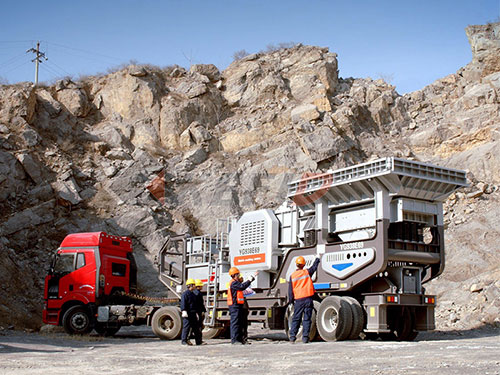
- Primary: 1 × gyratory crusher, 1,200 mm feed opening, 350 kW, capacity 1,500 t/h at 150 mm CSS.
- Secondary: 2 × cone crushers, 300 kW each, capacity 750 t/h each at 40 mm CSS.
- Tertiary: 2 × short head cone crushers, 250 kW each, capacity 500 t/h each at 12 mm CSS.
- Screening: 4 × banana screens, 3.6 m × 8.5 m, double deck.
- Conveying: 1,200 mm belt width, 3.5 m/s belt speed.
- Dust Control: 4 × reverse pulse jet collectors, 40,000 m³/h each.
The catalog would provide dimension drawings, foundation loads, and utility requirements (power, water, compressed air).
8. Common Pitfalls When Using an OEM Catalog
- Assuming catalog capacity is guaranteed: Capacity depends on ore competence, moisture, and feed gradation.
- Ignoring wear cost per ton: Cheap liners may reduce capital cost but increase downtime.
- Overlooking structural steel scope: Some OEM catalogs exclude chutes, hoppers, and supports.
- Underestimating commissioning time: OEM catalog should state typical erection and commissioning weeks.
9. How to Select the Right OEM Factory
- Request a tailored catalog with your ore’s BWi, abrasion index, and moisture.
- Visit the factory to inspect casting, machining, and assembly lines.
- Ask for reference lists of iron ore projects in similar climate and altitude.
- Compare total cost of ownership (TCO) over 5 years, not just initial price.
- Verify spare parts lead times and local stock availability.
10. Future Trends in Iron Ore Crushing OEM Catalogs
- Electrification and renewable power integration: Catalog will include motor efficiency (IE4/IE5) and variable frequency drives.
- Dry crushing and air classification: Reducing water use in arid regions.
- Digital twins: OEMs provide simulation models to predict wear and throughput.
- Modular pre-engineered plants: Faster deployment for small-to-medium iron ore deposits.
Conclusion
An iron ore crushing plant OEM factory catalog is a technical contract between the manufacturer and the buyer. It should be detailed, transparent, and backed by real test data and field references. By understanding the structure, parameters, and customization options described in this article, project developers and procurement teams can make informed decisions that reduce capital and operating costs, improve availability, and ensure long-term performance. Always demand a catalog that is specific to iron ore—not a generic mining brochure—and verify every specification through factory audits and pilot tests. The right OEM catalog is not a cost; it is a risk mitigation tool for the entire life of the crushing plant.
