
Testing Protocols and Quality Assurance in Stone Crusher Machine Production: An Industry Perspective
Introduction
The global construction and mining industries rely heavily on aggregates—crushed stone, sand, and gravel—as foundational materials. At the heart of aggregate production lies the stone crusher machine, a complex assembly of mechanical, hydraulic, and electrical components designed to reduce large rocks into smaller, usable sizes. For producers of these machines, testing is not merely a final inspection step; it is an integrated, multi-stage discipline that determines operational reliability, safety, and customer satisfaction. This article examines the testing methodologies employed by stone crusher machine producers, the standards they follow, the challenges they face, and the evolving technologies shaping quality assurance in this sector.
The Scope of Testing in Crusher Manufacturing
Stone crusher machines encompass several types—jaw crushers, cone crushers, impact crushers, hammer mills, and roller crushers—each with distinct mechanical principles. Consequently, testing protocols must be tailored to the specific design. However, producers generally categorize testing into three phases: component-level testing, sub-assembly testing, and full-machine performance testing.
Component-level testing begins with raw materials and purchased parts. Bearings, shafts, gears, liners, and hydraulic cylinders are subjected to dimensional verification, hardness testing, and non-destructive examinations such as ultrasonic or magnetic particle inspection. For castings and forgings, producers often require certificates of conformity and may conduct spectrochemical analysis to confirm alloy composition. This early-stage testing prevents defective components from entering the assembly line, reducing rework costs and warranty claims.
Sub-assembly testing focuses on critical functional units. For instance, the eccentric shaft assembly in a jaw crusher is dynamically balanced and run at increasing speeds to detect vibration anomalies. Cone crusher hydraulic systems undergo pressure and leak tests at 1.5 times the rated working pressure. Lubrication circuits are flushed and tested for flow rate and contamination levels. These tests are typically performed on dedicated test benches equipped with data acquisition systems that record torque, temperature, pressure, and vibration signatures.
Full-Machine Performance Testing
The most comprehensive phase is full-machine testing, where the assembled crusher is operated under controlled conditions. Producers use test beds with variable-frequency drives to simulate different feed materials and throughput requirements. Key parameters monitored include:
For mobile crushers, testing may also include track or wheel mobility, engine integration, and dust suppression system efficacy. Producers often conduct “no-load” and “full-load” tests, gradually increasing feed size and hardness to identify performance boundaries. A typical full-load test might run continuously for 8 to 24 hours, with periodic sampling of output material.
Standards and Regulatory Compliance
Stone crusher machine producers must adhere to a complex web of international, regional, and national standards. ISO 21873-1 and ISO 21873-2 specify safety requirements for mobile crushers, covering guarding, emergency stops, and noise emission. In the European Union, the Machinery Directive 2006/42/EC mandates CE marking, requiring risk assessments and conformity testing. In the United States, OSHA regulations and ANSI/ASABE standards govern workplace safety and machine design.
Producers also follow industry-specific standards such as ASTM C136 for sieve analysis of aggregates, which directly informs crusher performance validation. For electrical components, IEC 60204-1 ensures control systems are safe and reliable. Compliance testing is often outsourced to accredited third-party laboratories, but many large producers maintain in-house metrology labs to reduce lead times.
Challenges in Crusher Testing
Testing stone crushers presents unique challenges. First, the abrasive and high-impact nature of feed materials means test equipment wears rapidly. Producers must budget for frequent replacement of test liners and screens. Second, reproducing real-world feed conditions—variable rock hardness, moisture content, and feed size distribution—is difficult in a controlled test bed. Some producers use synthetic rock or graded gravel, but these may not fully replicate field performance. Third, large crushers can weigh over 100 tonnes and require substantial foundation and power supply for testing, limiting the number of units that can be tested simultaneously.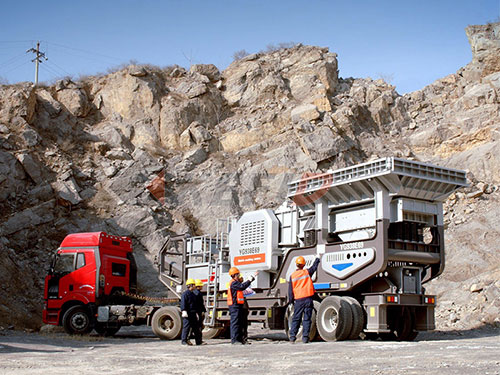
Another challenge is balancing testing duration with production deadlines. Comprehensive testing is time-consuming, yet customers expect quick delivery. Producers address this by using accelerated life testing and statistical reliability models, but these cannot entirely replace empirical validation. Finally, data management is a growing concern. Modern crushers generate vast amounts of test data, requiring robust software for analysis, traceability, and reporting.
Technological Advances in Testing
The industry is witnessing a shift toward smarter, more data-driven testing. Internet of Things (IoT) sensors embedded in crushers during testing transmit real-time vibration, temperature, and pressure data to cloud platforms. Machine learning algorithms analyze this data to detect early signs of failure or performance degradation. Digital twins—virtual replicas of physical crushers—allow producers to simulate thousands of operating scenarios before physical testing, optimizing chamber geometry and drive parameters.
Non-destructive testing (NDT) has also advanced. Phased array ultrasonic testing can inspect welds and castings with greater resolution. Thermographic imaging identifies hot spots in bearings or electrical panels during test runs. Laser metrology ensures alignment of shafts and pulleys to tolerances within microns. These technologies reduce the risk of latent defects and improve first-time yield.
Case Example: Testing a Cone Crusher
To illustrate, consider a producer testing a new 500 kW cone crusher. The process begins with component verification: the main shaft is checked for straightness, the eccentric bushing for clearance, and the hydraulic cylinder for seal integrity. The crusher is then assembled and run without feed for two hours to establish baseline vibration and temperature. Next, graded granite (10–50 mm) is fed at 300 t/h, gradually increasing to 600 t/h. Output is sampled every 15 minutes for gradation analysis. After eight hours, the machine is stopped, and liner wear is measured. The hydraulic system is pressure-tested, and the control system is validated for emergency stop response time. Finally, a report is generated, documenting all parameters against design specifications.
Conclusion
Testing in stone crusher machine production is a rigorous, multidisciplinary endeavor that combines mechanical engineering, materials science, and data analytics. Producers who invest in comprehensive testing protocols—from component inspection to full-load performance validation—can deliver machines that are safer, more efficient, and more durable. As the industry moves toward automation and predictive maintenance, testing will increasingly rely on digital tools and continuous monitoring. Ultimately, the credibility of a stone crusher producer rests not only on design innovation but on the verifiable evidence that their machines perform reliably under the most demanding conditions. For buyers, understanding these testing practices is essential when evaluating suppliers and ensuring long-term return on investment.
If you have any questions about our products, please feel free to contact us. We take all inquiries and suggestions very seriously.