Title: Import Stone Crusher Machine Customization: A Comprehensive Guide for Global Buyers
Introduction
The global demand for crushed stone, sand, and gravel continues to rise, driven by infrastructure development, urbanization, and industrial construction. At the heart of this demand lies the stone crusher machine—a critical piece of equipment that transforms large rocks into usable aggregates. For importers, whether they are construction firms, mining operators, or aggregate producers, the decision to purchase a stone crusher is not merely a transactional one. It involves careful consideration of technical specifications, operational efficiency, and long-term cost-effectiveness. Among the most significant factors influencing this decision is customization. This article provides a detailed, professional, and objective analysis of importing customized stone crusher machines, covering the rationale, technical aspects, procurement process, quality assurance, and key considerations for international buyers.
1. Understanding the Need for Customization
Stone crusher machines are not one-size-fits-all. The geological characteristics of the raw material, the desired output specifications, the operational environment, and the local regulatory framework all necessitate tailored solutions. Customization allows importers to optimize performance, reduce waste, and maximize return on investment (ROI). Key drivers for customization include:
- Material Properties: Hardness (e.g., granite, basalt, limestone), abrasiveness, moisture content, and feed size vary significantly. A crusher designed for soft limestone will fail prematurely when processing hard granite.
- Output Requirements: Different projects require specific aggregate sizes (e.g., 0-5mm, 5-20mm, 20-40mm) and shapes (cubical vs. flaky). Customization ensures the crusher configuration—such as the number of crushing stages, chamber design, and screen apertures—matches these needs.
- Capacity and Throughput: Importers must match the machine’s capacity (tons per hour) to their production targets. Oversized machines waste energy and capital; undersized machines create bottlenecks.
- Site Constraints: Space limitations, power supply (voltage, frequency), and environmental regulations (noise, dust, emissions) often require modifications to standard designs.
- Integration with Existing Systems: Many importers already have conveyors, screens, or washing plants. Customization ensures seamless compatibility.
2. Types of Customization Available
Customization can be applied at multiple levels, from minor adjustments to complete redesigns. The following are the most common categories:
2.1 Mechanical and Structural Customization
- Chamber Geometry: The crushing chamber’s shape, angle, and depth can be optimized for specific feed materials. For example, a “coarse” chamber is ideal for primary crushing of large rocks, while a “fine” chamber suits secondary or tertiary applications.
- Rotor Design (for impact crushers): Rotor diameter, width, number of blow bars, and hammer configuration can be tailored to achieve desired reduction ratios and particle shape.
- Jaw Profile (for jaw crushers): Tooth patterns, cheek plate designs, and toggle plate angles affect crushing efficiency and wear life.
- Frame and Base: Heavy-duty frames with reinforced steel can be specified for high-capacity operations or harsh environments. Skid-mounted or mobile chassis options are available for portable applications.
- Feed Opening and Discharge Setting: Adjustable or fixed settings can be customized to handle specific feed sizes and produce precise output gradations.
2.2 Electrical and Control System Customization
- Motor Power and Voltage: Importers must specify the local voltage (e.g., 380V/50Hz, 480V/60Hz) and motor power (kW) to match available power supply and load requirements.
- Automation and PLC: Advanced control systems can be integrated for remote monitoring, automatic adjustment of crusher settings, and real-time data logging. Custom software can be developed for specific operational protocols.
- Soft Starters and VFDs: Variable frequency drives allow for smooth start-up and speed control, reducing mechanical stress and energy consumption.
2.3 Wear Parts and Material Selection
- Liner Materials: High-manganese steel, chromium carbide, or ceramic composites can be selected based on abrasiveness. For highly abrasive materials, custom alloys or heat treatments may be applied.
- Blow Bars and Hammers: Different profiles (e.g., high-chrome, martensitic, or ceramic) and shapes (e.g., straight, curved, or winged) can be designed to optimize impact energy and wear life.
- Screen Media: Custom mesh sizes, wire diameters, and materials (polyurethane, rubber, or steel) ensure accurate screening and durability.
2.4 Environmental and Safety Customization
- Dust Suppression Systems: Water spray nozzles, misting systems, or baghouse filters can be integrated to meet local emission standards.
- Noise Reduction: Soundproof enclosures, vibration dampeners, and low-noise components can be specified for urban or regulated sites.
- Safety Guards and Interlocks: Customized safety features, such as emergency stop buttons, light curtains, and lockout/tagout systems, are often required by importers’ internal safety policies.
3. The Procurement Process for Customized Stone Crushers
Importing a customized stone crusher involves a structured process that balances technical precision with commercial negotiation. The following steps are typical:
Step 1: Needs Assessment and Technical Specification
The importer must first define the project requirements. This includes:
- Material analysis (e.g., compressive strength, abrasion index, moisture content).
- Target production capacity (tons per hour).
- Desired product size distribution and shape.
- Site conditions (elevation, temperature, space, power availability).
- Budget and timeline.
Step 2: Supplier Selection and Due Diligence
Not all manufacturers offer genuine customization. Importers should evaluate suppliers based on:
- Experience in exporting to the target region.
- Engineering capabilities (in-house design, CAD/CAM, simulation software).
- Quality certifications (ISO 9001, CE, GOST, etc.).
- References from similar projects.
- After-sales support (spare parts availability, technical documentation, remote troubleshooting).
Step 3: Design and Proposal
The supplier’s engineering team will create a customized design, often including:
- 3D models and layout drawings.
- Detailed bill of materials (BOM).
- Performance curves and power consumption estimates.
- Quotation with itemized costs for customization.
Step 4: Review and Approval
The importer should review the design for compliance with local standards (e.g., electrical codes, safety regulations) and operational feasibility. A technical meeting or site visit may be necessary.
Step 5: Manufacturing and Quality Control
During production, the importer may request:
- Material test certificates (e.g., for steel, wear parts).
- In-process inspections (e.g., welding quality, dimensional checks).
- Factory acceptance tests (FAT) where the machine is run under load to verify performance.
Step 6: Shipping and Logistics
Customized machines often have non-standard dimensions or weights. Importers must coordinate:
- Container or break-bulk shipping.
- Customs clearance (HS code 8474.20 for crushing machinery).
- Insurance for high-value equipment.
Step 7: Installation and Commissioning
On-site assembly, electrical connection, and calibration are critical. Many suppliers offer remote or on-site supervision. A trial run with the actual material should be conducted to confirm performance.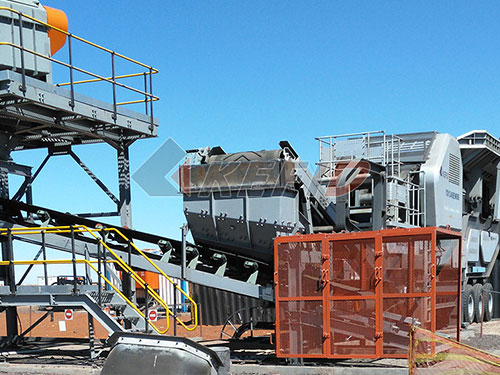
4. Quality Assurance and Standards
Customization does not mean compromising on quality. Importers should ensure that the customized machine meets or exceeds international standards. Key quality indicators include:
- Material Quality: All structural steel, wear parts, and electrical components should conform to recognized standards (e.g., ASTM, DIN, GB).
- Welding and Fabrication: Non-destructive testing (NDT) such as ultrasonic or X-ray inspection should be performed on critical welds.
- Performance Guarantees: The supplier should provide written guarantees for capacity, power consumption, and product gradation, with penalties for non-compliance.
- Warranty: A minimum of 12-24 months for mechanical parts, with extended options for wear parts.
5. Challenges and Risks in Customization
While customization offers significant benefits, it also introduces risks that importers must manage:
- Lead Time: Custom designs and manufacturing can extend delivery times by 4-12 weeks compared to standard models.
- Cost Overruns: Unforeseen engineering changes or material shortages can increase costs. A fixed-price contract with clear scope is essential.
- Compatibility Issues: If the importer’s site conditions change (e.g., power supply fluctuations), the customized machine may underperform.
- After-Sales Support: Not all suppliers have local service centers. Importers should negotiate spare parts availability and remote support before purchase.
- Intellectual Property: Some suppliers may be reluctant to share detailed drawings. Importers should secure non-disclosure agreements (NDAs) if proprietary designs are involved.
6. Case Study: Customization for a Limestone Quarry in Southeast Asia
To illustrate the practical application, consider a hypothetical scenario: A quarry in Vietnam requires a primary jaw crusher to process limestone with a compressive strength of 150 MPa, producing 300 tons per hour of 0-200mm material. The site has limited space and a 380V/50Hz power supply.
Customization Applied:
- Jaw Profile: A deep, steeply angled jaw chamber with a curved tooth profile to maximize throughput and reduce jamming.
- Frame: A compact, skid-mounted design to fit within the existing conveyor layout.
- Motor: A 160kW motor with a soft starter to handle voltage fluctuations.
- Wear Parts: High-manganese steel liners with a 14% manganese content for extended life.
- Dust Control: Integrated water spray nozzles at the feed hopper and discharge chute.
Outcome: The customized crusher achieved 98% of the target capacity within the first month, with wear life exceeding the standard model by 30%. The importer reported a 15% reduction in overall operating costs due to lower energy consumption and fewer stoppages.
7. Conclusion
Importing a customized stone crusher machine is a strategic investment that can significantly enhance operational efficiency, product quality, and profitability. However, it requires a disciplined approach: thorough needs assessment, careful supplier selection, rigorous quality control, and proactive risk management. For importers, the key is to balance the desire for bespoke solutions with the practical realities of cost, time, and after-sales support. By engaging with experienced manufacturers who offer transparent engineering processes and robust warranties, importers can ensure that their customized stone crusher delivers reliable performance for years to come. As the global construction industry continues to evolve, the ability to tailor crushing equipment to specific local conditions will remain a competitive advantage for forward-thinking importers.
