High Quality 250–300 TPH Stone Crushing Plant: Factory Price, Engineering Excellence, and Operational Value
In the global aggregate and mining industry, the difference between a profitable quarry operation and a marginal one often comes down to the selection of the primary and secondary crushing equipment. Among the most sought-after configurations is the 250–300 tons per hour (TPH) stone crushing plant—a capacity range that balances throughput, capital expenditure, and operational flexibility for medium-to-large scale projects. This article provides a comprehensive, professional, and objective analysis of a high-quality 250–300 TPH stone crushing plant offered at factory-direct pricing, covering design principles, component specifications, cost structure, performance metrics, and long-term economic considerations.
1. Market Context and Demand for 250–300 TPH Plants
The 250–300 TPH segment serves a critical niche. It is large enough to support major infrastructure projects—such as highway construction, railway ballast production, dam concrete aggregates, and commercial ready-mix plants—yet not so massive that it requires multi-million-dollar civil works and complex permitting. Typical applications include:
- Commercial aggregate production for urban development and concrete batching.
- Contract crushing for large-scale earthworks and road base layers.
- Mining auxiliary operations (e.g., crushing of overburden or low-grade ore).
- Recycling of construction demolition waste when configured with appropriate screens and magnetic separators.
A 250–300 TPH plant, when correctly engineered, can produce multiple product sizes simultaneously—typically 0–5 mm, 5–10 mm, 10–20 mm, and 20–40 mm—with a flakiness index below 15% and cubic particle shape, meeting stringent international standards (ASTM, BS EN, IS, and GB/T).
2. Core Design Philosophy: “High Quality” Defined
The term “high quality” in the context of a crushing plant is not a marketing slogan. It refers to measurable engineering attributes:
- Structural integrity: The main frame, hoppers, and support structures are fabricated from low-alloy high-strength steel (e.g., Q345B or equivalent), with stress-relieved welds and anti-fatigue design for 24/7 operation.
- Component reliability: Bearings, gears, and hydraulic systems are sourced from Tier-1 manufacturers (SKF, NSK, Siemens, or equivalent). Crusher liners are made of high-chrome or manganese steel (Mn13Cr2 or Mn18Cr2) with a hardness of 180–220 HB for jaw plates and 200–280 HB for cone liners.
- Automation and safety: A PLC-based control system with touchscreen interface, remote monitoring, and automatic overload protection. Emergency stops, interlocking guards, and dust suppression nozzles are standard.
- Energy efficiency: Motors are IE3 or IE4 premium efficiency class. The total installed power for a 250–300 TPH plant typically ranges from 350 kW to 450 kW, depending on the hardness of the feed material.
3. Typical Process Flow and Equipment Configuration
A standard high-quality 250–300 TPH plant follows a three-stage crushing and screening circuit. Below is a representative configuration, which can be customized based on feed size (typically 500–700 mm) and final product requirements.
Stage 1: Primary Crushing
- Equipment: Jaw crusher (e.g., PE-900×1200 or equivalent) with a feed opening of 900×1200 mm.
- Capacity: 220–320 TPH at a closed side setting (CSS) of 100–150 mm.
- Key features: Hydraulic wedge adjustment for quick CSS changes, deep crushing chamber, and reversible jaw plates for extended wear life.
Stage 2: Secondary Crushing
- Equipment: Standard cone crusher (e.g., CS160 or HP200) or a secondary impact crusher (for softer limestone).
- Role: Reduces 100–150 mm feed to 30–60 mm.
- Key features: Hydroset hydraulic adjustment, tramp iron release system, and high eccentric throw for better particle shape.
Stage 3: Tertiary Crushing (Optional but Recommended)
- Equipment: Short-head cone crusher (e.g., CS160D or HP300) or a vertical shaft impact (VSI) crusher for sand production.
- Role: Produces final fine aggregates (0–10 mm) and improves cubicity.
- Key features: Cascade feed system, variable speed rotor, and wear-resistant carbide tips.
Screening and Conveying
- Vibrating screens: Two or three decks (e.g., 2YK2160 or 3YK2470) with polyurethane or rubber screen panels to reduce blinding and noise.
- Belt conveyors: Widths of 800–1200 mm, with heavy-duty rubber belts (EP-200 or NN-200), impact idlers at loading points, and belt scales for production monitoring.
Auxiliary Systems
- Dust collection: Baghouse or wet scrubber systems to meet local environmental regulations.
- Water spray system: Nozzles at transfer points and crusher discharge.
- Electrical control room: Pre-wired, pre-tested, and containerized for easy installation.
4. Factory Price: What Does It Include and How Is It Justified?
The phrase “factory price” indicates that the buyer is purchasing directly from the manufacturer, eliminating intermediary markups. However, a professional buyer must understand the cost breakdown to evaluate whether the price is genuinely competitive.
4.1 Cost Components of a 250–300 TPH Plant
| Component |
Approximate Share of Total Cost |
Notes |
| Crushers (jaw + cone + VSI) |
45–55% |
Highest-cost items; quality of castings and machining dominates. |
| Screens and feeders |
10–15% |
Vibrating mechanisms and screen media. |
| Conveyors and chutes |
10–15% |
Steel structure, idlers, pulleys, and belts. |
| Electrical and automation |
8–12% |
Motors, VFDs, PLC, cabling, and control panels. |
| Steel structures and hoppers |
8–10% |
Primary and secondary hoppers, support frames. |
| Dust suppression and safety |
3–5% |
Nozzles, piping, guards, and fire extinguishers. |
| Engineering, testing, and documentation |
3–5% |
CAD drawings, load tests, and manuals. |
A realistic factory price for a high-quality 250–300 TPH stationary plant (excluding civil works and installation) ranges from USD 450,000 to USD 750,000 depending on the brand, automation level, and whether the plant is modular or fixed. A semi-mobile or skid-mounted version may cost 10–20% more due to additional structural reinforcement and transport frames.
4.2 Why Factory Price Does Not Mean Low Quality
Some buyers mistakenly equate “factory price” with “budget quality.” In reputable manufacturing facilities, factory-direct pricing is achieved through:
- Vertical integration: The manufacturer produces crushers, screens, and conveyors in-house, reducing outsourcing costs.
- Economies of scale: Batch production of standardized components (e.g., jaw plates, eccentric shafts) lowers unit costs.
- Reduced sales overhead: No distributor commissions, no regional warehousing, and direct technical support.
- Lean manufacturing: Just-in-time inventory and CNC machining reduce waste and rework.
Therefore, a factory price can still include high-grade materials, certified welding procedures, and full load testing before shipment. The key is to verify the manufacturer’s ISO 9001 certification, CE marking (if exporting to Europe), and third-party inspection reports (e.g., SGS or BV).
5. Performance Metrics and Quality Assurance
To objectively assess a “high-quality” 250–300 TPH plant, the following performance indicators should be guaranteed in the contract:
- Throughput: Continuous operation at 250–300 TPH for 10 hours per day, with a feed material of medium-hard limestone (compressive strength 120–180 MPa).
- Product gradation: Within ±5% of target curves for each product size, as per ASTM D448 or equivalent.
- Flakiness index: ≤15% for concrete aggregates, ≤20% for road base.
- Availability: ≥92% (excluding scheduled maintenance) over a 6-month trial period.
- Noise level: ≤85 dB(A) at 1 meter from the crusher enclosure.
- Dust emission: ≤50 mg/Nm³ at the baghouse outlet (if equipped).
A reputable factory will provide a performance test certificate based on a trial run with the buyer’s representative present. This test typically involves crushing 500–1000 tons of sample material and analyzing the output.
6. Operational Considerations and Total Cost of Ownership
Beyond the initial factory price, the economic viability of a 250–300 TPH plant depends on operational costs over a 10-year lifecycle.
6.1 Wear Parts Consumption
- Jaw plates: 0.05–0.10 kg per ton of crushed material (for abrasive granite). For 300 TPH operating 8 hours/day (2400 tons/day), this equals 120–240 kg/day. At USD 2.5–3.5 per kg, daily wear cost is USD 300–840.
- Cone liners: 0.03–0.06 kg per ton. Similar cost range.
- Screen panels: Replace every 3–6 months depending on feed abrasiveness.
6.2 Energy Consumption
- Total installed power: ~400 kW. At 80% load factor and 0.85 power factor, average consumption is ~272 kWh per hour.
- At 300 TPH, specific energy is ~0.9 kWh/ton. At USD 0.10/kWh, energy cost is USD 0.09/ton—a significant but manageable expense.
6.3 Maintenance Labor
- A well-designed plant requires 2–3 operators per shift and 1–2 maintenance technicians per day.
- Annual maintenance cost (excluding wear parts) is typically 2–3% of the initial factory price.
6.4 Total Cost per Ton
For a 250–300 TPH plant producing 600,000 tons per year (at 70% utilization), the total cost per ton (including depreciation, wear parts, energy, labor, and maintenance) typically ranges from USD 1.8 to USD 2.8 per ton, depending on local labor and electricity rates. This is highly competitive compared to mobile plants (USD 3.0–4.5/ton) due to lower fuel and maintenance overhead.
7. Factory Price vs. Total Installed Cost
Buyers must distinguish between the factory price (ex-works) and the total installed cost (TIC). The TIC includes: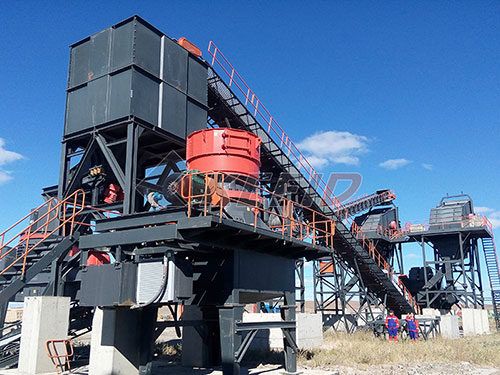
- Civil works: Foundation concrete, anchor bolts, and drainage. For a 250–300 TPH plant, this can cost USD 80,000–150,000.
- Transportation: From factory to site, including customs, freight, and insurance. For a 40-foot container load of components, expect USD 20,000–50,000 for international shipping.
- Installation and commissioning: USD 50,000–100,000, depending on local crane availability and labor rates.
- Training and after-sales support: Often included in the factory price, but travel and accommodation for factory engineers may be extra.
Thus, a factory price of USD 600,000 may result in a TIC of USD 800,000–900,000. A professional buyer should request a turnkey quotation that includes all these items to avoid budget overruns.
8. How to Verify “High Quality” Before Purchase
Given the significant capital outlay, the following due diligence steps are recommended:
- Request a reference list: Ask for at least three installations of similar capacity in your region or with similar rock types. Contact the plant managers directly.
- Inspect the factory: If possible, visit the manufacturing facility to check welding quality, machining tolerances, and inventory of spare parts.
- Review the test report: Ask for a video or witnessed test of the crusher running at full load with a specified feed.
- Check after-sales terms: Ensure a minimum 12-month warranty on major components (crusher main shaft, bearings, and motors). Verify that spare parts are available within 48 hours for critical items.
- Compare total cost of ownership: Do not choose solely on the lowest factory price. Calculate the cost per ton over 5 years, including downtime losses.
9. Conclusion: The Strategic Value of a Factory-Direct 250–300 TPH Plant
A high-quality 250–300 TPH stone crushing plant at factory price represents an excellent capital investment for aggregate producers who require consistent output, low operating costs, and rapid payback. The key is to balance the initial price with verified engineering quality, robust after-sales support, and a realistic assessment of site-specific conditions.
When sourced from a reputable manufacturer with ISO-certified processes, a factory-direct plant can deliver:
- Payback period: 2–3 years at typical aggregate selling prices of USD 8–15 per ton.
- Operational lifespan: 15–20 years with proper maintenance.
- Scalability: The plant can be upgraded with additional screening or a VSI for sand production without replacing the core crushers.
In summary, the phrase “High Quality 250–300 TPH Stone Crushing Plant Factory Price” is not an oxymoron. It is a realistic procurement strategy for informed buyers who understand that true value lies not in the sticker price alone, but in the engineering integrity, performance guarantees, and lifecycle economics that a professional manufacturer can provide. By conducting thorough due diligence and negotiating a detailed technical specification, buyers can secure a crushing solution that meets both their production targets and their financial constraints—today and for decades to come.
