Top Ten Stone Crusher Machine Processing Plant Price: A Comprehensive Market Analysis

The establishment of a stone crusher machine processing plant is a capital-intensive endeavor, pivotal to the mining, construction, and infrastructure sectors. The term “price” encompasses far more than the mere sum of equipment invoices; it represents the total capital expenditure (CAPEX) required to achieve operational readiness. This detailed analysis explores the multifaceted cost structure of setting up a top-tier processing plant, breaking down the components that define a “Top Ten” investment in terms of efficiency, reliability, and long-term value.

1. Deconstructing the “Total Plant Price”

A holistic view of plant price must consider three primary layers:Top Ten Stone Crusher Machine Processing Plant Price
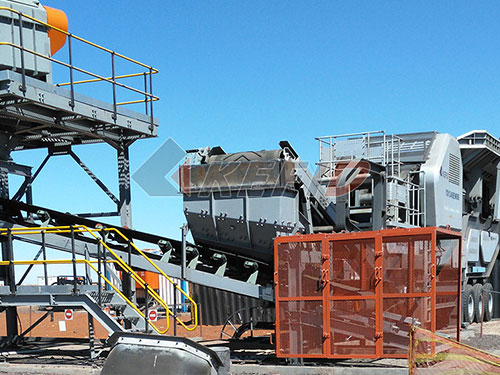
  • Core Crushing Machinery (30-45% of CAPEX): This is the heart of the operation. Costs vary dramatically based on capacity (TPH – Tons Per Hour), hardness of material (abrasiveness), and desired final product gradation.
  • Auxiliary & Supporting Equipment (25-35% of CAPEX): Often underestimated, this includes feeders, conveyors, screens (vibrating, trommel), electrical panels, motors, dust suppression systems, and generators.
  • Civil Works & Infrastructure (20-30% of CAPEX): This covers site preparation, foundations for heavy machinery, structural steel for platforms and hoppers, access roads, drainage, and utility connections (power, water).

2. The Price Spectrum: From Portable to Stationary Giants

Plant configuration is the primary price determinant.

  • Mobile Crusher Plants ($150,000 – $800,000+): These self-contained units on tracked or wheeled chassis offer flexibility for multiple sites or smaller projects. Prices depend on whether it’s a jaw crusher primary unit or a full cone/impact crusher circuit with an onboard screen.

    • Pros: Lower initial civil costs, quick setup.
    • Cons: Higher per-ton operating cost (OPEX), limited capacity compared to stationary plants.
  • Semi-Mobile / Modular Plants ($500,000 – $2.5 Million): These offer a middle ground with pre-assembled modules that are transported and connected on-site. They provide better scalability than mobile plants.

    • Pros: Balanced CAPEX/OPEX, easier relocation than stationary plants.
    • Cons: Still require some civil work and assembly.
  • Stationary Processing Plants ($1 Million – $10+ Million): These are permanent installations designed for high-volume production over decades. The “Top Ten” plants in terms of output almost always fall into this category.

    • Pros: Lowest long-term OPEX per ton, highest efficiency and automation potential.
    • Cons: Very high initial CAPEX and lengthy commissioning time.

3. Core Machine Technology & Cost Drivers

The choice of crusher directly impacts both price and performance.

  1. Jaw Crushers: The workhorse for primary crushing. Prices range from ~$50k for a small unit to over $1 million for large mining-grade jaws. Cost drivers: size/capacity (feed opening), robustness of frame and bearings.
  2. Cone Crushers: Essential for secondary/tertiary crushing of hard, abrasive stone. More complex mechanically than jaws.
    • Hydrocone types offer excellent control but are premium-priced ($200k – $1.5M+).
    • Cost drivers: head diameter, hydraulic system complexity, automation features like ASRi.
  3. Impact Crushers (Horizontal & Vertical Shaft): Ideal for softer stone or producing highly cubical aggregate.
    • HSI crushers are common in aggregate circuits ($150k – $800k).
    • VSI crushers are key for manufactured sand production but command higher prices due to precision wear parts ($250k – $900k+).
  4. Gyratory Crushers: For very high-capacity primary stations (>1000 TPH). Extremely high capital cost ($2M+) but unparalleled throughput in large-scale mining/quarrying.

4. The “Hidden” Multipliers in Plant Pricing

Beyond base machinery costs:

  • Automation & Control Systems: A basic PLC panel may cost $50k; a full plant-wide SCADA system with load monitoring, camera surveillance, and advanced analytics can add $200k-$500k but drastically improves yield and efficiency.
  • Dust Suppression & Environmental Compliance: Simple spray systems are inexpensive; comprehensive baghouse filtration or mist cannon systems for stringent environmental regulations can exceed $300k.
  • Power Supply: Connecting to high-voltage grid power involves significant cost. Large plants may require substantial investment in transformers and substations.
  • Spare Parts Inventory: A prudent initial spare parts holding (liners/mantles/blow bars/bearings) can easily amount to 10-15% of the machine purchase price.

5. Regional Market Variations & Brand Tiers

Price is not globally uniform.

  • European/North American Brands (Metso Outotec/Sandvik/Terex): Represent the premium tier with advanced technology R&D support global service networks Prices are highest but often justified by reliability resale value
  • Chinese Brands (SBM Shanghai Joyal Liming Heavy Industry): Have made significant quality strides offering competitive technology at 30-50% lower initial purchase price Key considerations: after-sales service proximity availability
  • Local assembly tariffs logistics all affect final delivered price

6.Case Study Price Estimates

To illustrate here are approximate total plant price ranges based on capacity assuming stationary configuration standard auxiliary equipment basic civil works Premium components automation will push figures toward upper boundsTop Ten Stone Crusher Machine Processing Plant Price

Plant Capacity Typical Configuration Estimated Total Plant Price Range
Low-Capacity (<200 TPH) Jaw + Cone + Screen Basic Feeders/Conveyors $750 000 – $1 8 Million
Medium-Capacity(200-500 TPH) Jaw + Cone(s) + Multiple Screens Full Conveyor Circuit Dust Control $1 8 – $4 Million
High-Capacity(500-1000 TPH) Gyratory/Jaw + Multiple Cones HSIs Complex Screening Towers Advanced Controls $4 – $8 Million
Mega-Capacity(>1000 TPH) Primary Gyratory Multiple Secondary/Tertiary Trains Full Automation Environmental Systems $8 Million – $15+ Million

Conclusion: Price vs Value Optimization

Focusing solely on the lowest bid for machinery is a critical mistake in planning a “Top Ten” processing plant True cost is measured over its lifecycle Therefore strategic investment should prioritize:

1 Energy Efficiency: Higher efficiency motors drives may have higher upfront cost but save millions in OPEX
2 Maintainability Design: Easy access liners hydraulic adjustment reduce downtime labor costs
3 Flexibility Scalability: Designing flow allowing future expansion avoids costly complete overhauls later
4 Supplier Partnership: Choosing supplier strong local technical support reliable spare parts supply minimizes production losses

Ultimately while mobile semi-mobile solutions suit specific scenarios true industry-leading stone processing operations demand purpose-built stationary plants Their superior throughput reliability optimized product control deliver lowest cost per ton over time—the ultimate metric defining successful investment Therefore while initial price tag important it must be evaluated within comprehensive framework total ownership return investment where quality engineering operational synergy deliver superior long-term value

Leave Message

*

If you have any questions about our products, please feel free to contact us. We take all inquiries and suggestions very seriously.