
Gold Ore Crushing Equipment Suppliers: Design Service and Integrated Solutions
In the global mining industry, the extraction of gold from raw ore is a complex, multi-stage process that begins with one of the most critical and energy-intensive operations: crushing. The efficiency, reliability, and design of gold ore crushing equipment directly influence downstream recovery rates, operational costs, and the overall profitability of a mining project. As ore grades decline and deposits become more complex, the role of specialized gold ore crushing equipment suppliers has evolved far beyond simple equipment manufacturing. Today, leading suppliers provide comprehensive design services that integrate process engineering, equipment selection, layout optimization, and lifecycle support. This article examines the technical and strategic dimensions of gold ore crushing equipment supply, with a particular focus on the design services that distinguish top-tier suppliers from commodity vendors.
The Technical Context of Gold Ore Crushing
Gold ore crushing is not a one-size-fits-all operation. The physical and chemical characteristics of the ore—such as hardness, abrasiveness, moisture content, clay content, and liberation size—determine the optimal crushing circuit. The primary objective is to reduce run-of-mine (ROM) ore from sizes that can exceed one meter in diameter to a product size suitable for grinding, typically below 10–20 mm for ball mill feed. This reduction is achieved through a sequence of crushing stages: primary, secondary, and sometimes tertiary or quaternary crushing.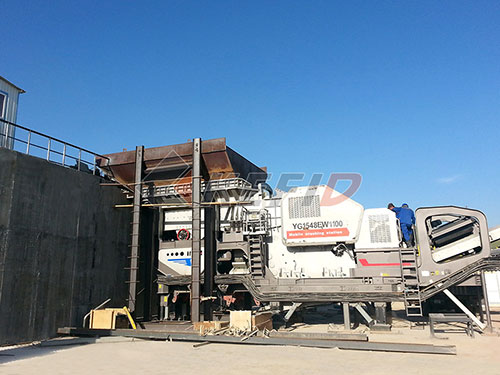
Primary crushing is usually performed by a gyratory crusher or a large jaw crusher, depending on the throughput and ore characteristics. Gyratory crushers are preferred for high-capacity operations (often exceeding 1,000 tonnes per hour), while jaw crushers are more common in smaller or underground operations. Secondary and tertiary crushing may employ cone crushers, high-pressure grinding rolls (HPGR), or impact crushers. The choice among these technologies has profound implications for energy consumption, wear part costs, and the generation of fines, which can affect gold recovery in subsequent leaching or flotation circuits.
The Role of the Equipment Supplier
A gold ore crushing equipment supplier is responsible for delivering not just individual machines but a functional, optimized system. This responsibility begins with a thorough understanding of the ore body and the project’s economic and operational constraints. Suppliers must collaborate closely with geologists, metallurgists, and mine planners to ensure that the crushing circuit aligns with the mine’s production schedule, ore variability, and long-term expansion plans.
Modern suppliers offer a spectrum of services, ranging from the supply of standard crushers to the delivery of complete “design-build” packages. The most sophisticated suppliers provide:
Design Service as a Differentiator
In a competitive market, the design service offered by a supplier is often the key differentiator. A well-designed crushing circuit can reduce capital expenditure (CAPEX) by eliminating unnecessary equipment, lower operating expenditure (OPEX) through energy-efficient comminution, and improve gold recovery by minimizing slimes and over-crushing. Conversely, a poorly designed circuit can lead to bottlenecks, excessive wear, and costly downtime.
Consider the example of a gold mine in Western Australia processing a hard, abrasive ore with high clay content. A supplier that merely provides a standard jaw and cone crusher may fail to account for the clay’s tendency to blind screens and choke crushers. A supplier with robust design services, however, would conduct material handling tests, recommend a scrubber or a specialized feeder, and design a circuit with adequate surge capacity and screen media selection. This proactive approach prevents operational issues before they arise.
Another critical design consideration is the integration of crushing with grinding and downstream processes. For instance, if the gold is liberated at a relatively coarse size, a supplier might recommend a circuit that produces a coarser product for heap leaching, thereby reducing grinding costs. Alternatively, for a refractory ore requiring fine grinding before oxidation, the crushing circuit must be designed to deliver a consistent, fine feed to the grinding mills. These decisions require a deep understanding of gold metallurgy, not just mechanical crushing.
Technological Trends in Crushing Equipment Design
Several technological trends are shaping the design services offered by gold ore crushing equipment suppliers:
Selecting a Supplier with Strong Design Capabilities
When selecting a gold ore crushing equipment supplier, mining companies should evaluate several factors:
Conclusion
The supply of gold ore crushing equipment is a multifaceted discipline that blends mechanical engineering, process metallurgy, and project management. As gold mining projects become more complex and capital-constrained, the design service offered by equipment suppliers is no longer a luxury but a necessity. A supplier that can deliver an optimized, reliable, and flexible crushing circuit—backed by rigorous testing, simulation, and lifecycle support—provides a competitive advantage that resonates throughout the mine’s life. For mining companies, investing in a supplier with strong design capabilities is not merely a procurement decision; it is a strategic choice that affects recovery rates, costs, and ultimately, the viability of the entire gold project. As the industry moves toward greater automation, energy efficiency, and remote operations, the design service component of gold ore crushing equipment supply will only grow in importance, shaping the next generation of gold processing plants.
If you have any questions about our products, please feel free to contact us. We take all inquiries and suggestions very seriously.