Gold Ore Crushing Equipment Fabricator Prices: A Comprehensive Analysis

The procurement of gold ore crushing equipment represents a significant capital expenditure for any mining operation, from small-scale artisanal ventures to large industrial mines. The term “fabricator prices” refers to the cost structures set by the companies that design, engineer, and manufacture this specialized machinery. Understanding these prices requires a deep dive into the equipment ecosystem, the factors influencing fabrication costs, and the total value proposition beyond the initial price tag. This article provides a detailed, objective analysis of the market dynamics shaping gold ore crushing equipment fabricator prices.

The Gold Ore Crushing Circuit and Key Equipment

Gold ore crushing is rarely a single-step process. It is part of a comminution circuit (size reduction) that typically includes primary, secondary, and sometimes tertiary crushing stages, followed by milling. The fabricator’s price is heavily influenced by the equipment’s role in this circuit.

  1. Primary Crushers (Coarse Crushing): These are heavy-duty machines designed to handle run-of-mine (ROM) ore directly from the pit.Gold Ore Crushing Equipment Fabricator Prices
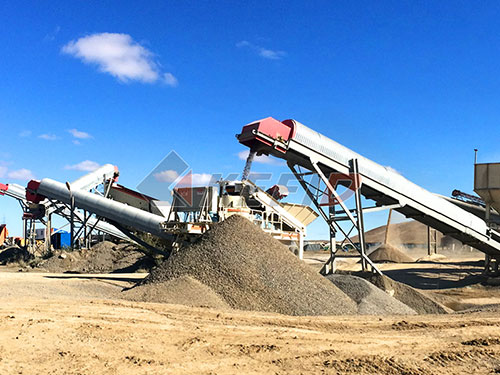
    • Jaw Crushers: The workhorse of primary crushing. Prices vary dramatically based on size (feed opening), capacity (TPH), and power. A small, mobile jaw crusher might start around $50,000 – $100,000, while a massive, stationary unit for a high-capacity mine can exceed $1.5 million.
    • Gyratory Crushers: Used for very high-capacity operations (>1,000 TPH). Their complex internal mechanism and immense size make them the most expensive primary option, with fabricator prices easily ranging from $2 million to $5+ million.
  2. Secondary/Tertiary Crushers (Intermediate & Fine Crushing): These further reduce ore size for optimal feed to grinding mills.

    • Cone Crushers: The dominant choice for secondary/tertiary roles. Prices depend on horsepower, chamber design (for finer product), and automation features. Standard cone crushers can range from $200,000 to $800,000, with advanced models like high-pressure grinding rolls (HPGR) entering higher price brackets.
    • Impact Crushers: Less common for hard rock gold ore but used in certain applications. Generally priced lower than cone crushers of similar capacity.
  3. Auxiliary Equipment & Systems: The fabricator’s quote often includes or necessitates:

    • Feeders & Conveyors: Vital for material handling. Apron feeders for primary circuits are robust and costly ($100,000 – $500,000).
    • Screens: Scalping and sizing screens are integral to circuit efficiency.
    • Electrical & Control Systems: Modern PLC-based automation systems can add 15-25% to the base equipment cost but are crucial for optimization.
    • Modular & Mobile Plants: A growing trend where fabricators pre-assemble sections on skids or trailers. While offering faster deployment, the engineering premium places prices for a complete modular crushing plant between $750,000 and $4+ million.

Key Factors Determining Fabricator Prices

The price from an equipment fabricator is not arbitrary; it is a function of intricate cost drivers:

  1. Raw Material & Component Costs:Gold Ore Crushing Equipment Fabricator Prices

    • Steel: The primary material. Fluctuations in global steel prices directly impact fabrication costs. High-abrasion areas require expensive alloy steels (e.g., manganese steel liners).
    • Castings & Forgings: Critical wear parts like mantles, concaves, and jaw plates are specialized castings whose cost depends on metallurgy and complexity.
    • Bearings & Drives: Large-scale crushers require massive, custom bearings and high-torque motor drives from specialized suppliers like SKF or Siemens.
  2. Engineering & Design Complexity:

    • Custom-designed features for specific ore characteristics (e.g., high abrasiveness vs. high clay content) increase R&D costs.
    • Innovations in energy efficiency or automation require significant engineering investment recouped in the sale price.
  3. Manufacturing & Labor Overhead:

    • Geographic location of fabrication matters immensely. Labor costs in North America or Europe are higher than in some Asian regions.
    • Quality control standards (ISO certification), welding procedures (for stress relief), and machining precision all contribute to overhead.
  4. Brand Equity & Intellectual Property:

    • Established brands like Metso Outotec , FLSmidth , Sandvik , and Weir Minerals command premium pricing due to proven reliability, global service networks (“F-Liner” programs), and patented technologies (e.g., Sandvik’s “ASRi” automatic setting regulation).
    • Lower-cost fabricators from emerging markets offer competitive base prices but may lack extensive field-proven R&D.
  5. Market Dynamics:

    • The gold price cycle drives demand; high gold prices spur mine expansion and new projects increasing demand for equipment allowing fabricators to maintain firmer pricing.
    • Global supply chain health affects lead times and costs for components.

Price Ranges: A General Overview

It is critical to note that all prices are highly indicative and project-specific:

  • Small-Scale/Modular Plant (50-100 TPH): A basic setup might cost between $500k – $1M fabricated.
  • Mid-Scale Fixed Plant (500-1,000 TPH): A complete circuit could range from $3M – $8M, heavily dependent on technology choices。
  • Large-Scale Turnkey Project (>2,500 TPH): Primary gyratory, multiple cones, conveyors, screens,and full automation can represent a capital commitment of $15M – $40M+ solely for the crushing package。

Beyond Sticker Price: Total Cost of Ownership (TCO)

A professional procurement decision focuses on TCO, where fabricator price is just one component:

1。 Operational Costs: Energy consumption is ~50% of comminution cost。 An energy-efficient crusher with a higher upfront price may offer far lower lifetime operating costs。
2。 Maintenance & Wear Parts: Availability和costof wear parts(liners)are crucial。 Some fabricators use proprietary designs that create long-term dependency。
3。 Downtime Costs: In gold mining, downtime can mean thousands in lost revenue per hour。 Equipment reliability—directly linked to fabrication quality—is paramount。
4。 Service & Technical Support: Proximity of technical experts, availability of field service crews,and training programs add intangible value that justifies choosing a higher-priced但support-rich supplier。

Conclusion

Gold ore crushing equipment fabricator prices are a complex amalgamation of material science, mechanical engineering, market forces,and value-added services。 While entry-level pricing from regional fabricators can be attractive ,the long-term economics of gold extraction overwhelmingly favor investing in robust , efficient ,and well-supported technology 。 The most astute mining companies engage fabricators early in the planning process ,clearly defining their ore characteristics ,capacity requirements ,and operational philosophy 。 This collaboration allows fabricators to propose optimized solutions where the price reflects not just metal和labor ,but engineered performance that minimizes total cost per ton crushed over the life-of-mine —the ultimate metric in a capital-intensive industry like gold mining。

Therefore ,when evaluating “fabricator prices,” it is imperative to conduct a thorough comparative analysis based on guaranteed performance metrics (throughput , product size , power draw), projected operating costs ,and lifecycle support 。 In this context ,the initial purchase price transforms from being merely an expense into an investment decision with direct consequences for project NPV (Net Present Value)and long-term profitability

Leave Message

*

If you have any questions about our products, please feel free to contact us. We take all inquiries and suggestions very seriously.