
Commercial Quarry Ballast Crushing Equipment Importers: Market Dynamics, Sourcing Considerations, and Operational Best Practices
Introduction
The global aggregates industry underpins modern infrastructure development, and commercial quarry operations occupy a central position within this value chain. Ballast—the graded crushed stone used primarily in railway track beds, road sub-bases, and concrete applications—demands precise particle-size distribution, angularity, and durability. Consequently, the crushing equipment deployed to produce specification-grade ballast is among the most critical capital investments a quarry operator makes. For importers of commercial quarry ballast crushing equipment—whether distributors, rental fleet operators, or large quarry groups procuring directly from overseas manufacturers—the sourcing decision carries long-term implications for productivity, cost per ton, and regulatory compliance. This article examines the importer landscape, key equipment categories, technical and commercial evaluation criteria, logistical and regulatory considerations, and emerging trends shaping the import trade in ballast crushing machinery.
The Role of Importers in the Aggregates Equipment Supply Chain
Importers of quarry crushing equipment serve as intermediaries between original equipment manufacturers (OEMs)—concentrated in regions such as Western Europe, North America, China, India, and Turkey—and end users operating quarries in Africa, the Middle East, Southeast Asia, Latin America, and other rapidly urbanizing markets. Their functions extend well beyond transaction facilitation. Established importers typically provide pre-sales technical consultation, specification matching between rock type and crusher configuration, customs clearance and logistics management, spare-parts inventory, field service and maintenance support, operator training, and warranty administration.
The importer’s value proposition rests on bridging information asymmetries: OEMs may lack local market intelligence regarding feed material characteristics, climate conditions, power supply reliability, and regulatory frameworks, while quarry operators may lack direct access to manufacturer networks, financing instruments, and after-sales infrastructure. A competent importer therefore maintains engineering competence alongside commercial acumen—an important distinction from general industrial-goods trading.
Principal Equipment Categories in Ballast Production
Commercial ballast crushing circuits typically comprise multiple stages, and importers must understand how each equipment class contributes to final product conformity with standards such as EN 13450 (railway ballast) or national highway authority specifications.
Primary crushing. Jaw crushers and gyratory crushers reduce run-of-quarry rock to manageable feed sizes. Jaw crushers dominate in mobile and semi-mobile configurations owing to their simplicity and tolerance of varied feed, while gyratory units offer higher throughput for large stationary installations.
Secondary and tertiary crushing. Cone crushers—particularly high-speed, fine-chamber variants—are the workhorses of ballast shaping, producing the cubical, angular particles that railway specifications demand. Impact crushers (horizontal-shaft and vertical-shaft) offer superior reduction ratios and shape but require feed material with controlled abrasiveness to manage wear costs.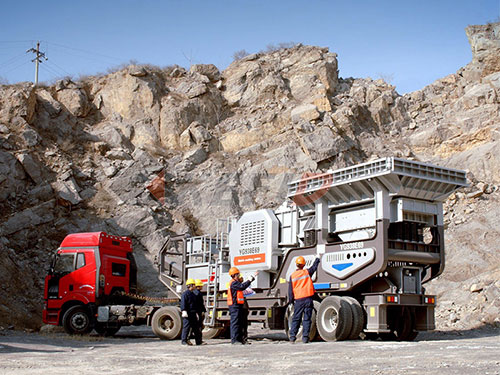
Screening and classification. Vibrating screens, including heavy-duty scalping and multi-deck sizing screens, determine the grading envelopes that define saleable ballast. Importers increasingly bundle screens with crushers as integrated circuits rather than discrete units.
Feeders, conveyors, and auxiliary systems. Apron feeders, belt conveyors, dust-suppression systems, and magnetic separators complete the circuit. Auxiliary equipment often represents a substantial share of total import value and is frequently overlooked in initial budgeting.
Mobile and modular plants. Track-mounted jaw-cone-screen combinations and containerized modular plants have gained importer traction, particularly in markets where permitting for stationary installations is slow or where contractors require redeployable assets.
Technical Evaluation Criteria for Importers
Sophisticated importers apply structured technical due diligence before committing to OEM supply agreements or one-off purchases.
Throughput and reduction ratio verification. Manufacturers’ nominal capacity figures require adjustment for feed gradation, bulk density, work index, and closed-side settings. Importers should request reference installations processing comparable rock types and verify performance data independently.
Wear-part economics. Ballast production from abrasive igneous or metamorphic rock imposes significant wear on jaw plates, cone liners, and blow bars. Importers must model cost-per-ton wear consumption, confirm local availability of pattern parts, and negotiate OEM or aftermarket supply arrangements before import.
Power and infrastructure compatibility. Voltage, frequency, and phase configurations vary by market; crusher drive systems must match local grid conditions or be specified with appropriate transformers and soft starters. In remote quarries, diesel-electric options merit evaluation.
Compliance and certification. Imported machinery must satisfy destination-market requirements, which may include CE marking, ISO conformity, local electrical safety codes, and emissions standards for onboard engines. Documentation packages—technical files, declarations of conformity, and manuals in required languages—should be contractually specified.
Automation and telematics. Modern crushers incorporate PLC-based control, remote monitoring, and predictive maintenance telemetry. Importers should assess connectivity infrastructure at customer sites and clarify data ownership and subscription costs associated with telematics platforms.
Commercial and Contractual Considerations
Import transactions for capital equipment involve layered risk that warrants careful contractual architecture.
Incoterms and logistics. Heavy crushers and screens ship as break-bulk or flat-rack cargo; importers must select Incoterms (commonly FOB, CFR, or CIF) that align with their logistics competence and insurance arrangements. Port handling, inland heavy-haul permits, and crane capacity at destination require early planning.
Payment structures. Letters of credit, documentary collections, and staged payment against pre-shipment inspection remain standard. For high-value circuits, importers increasingly negotiate retention sums released upon commissioning and performance verification.
Warranty and performance guarantees. Beyond standard defect warranties, importers should seek throughput and product-shape guarantees tied to defined feed conditions, with remedies specified for shortfalls. Spare-parts availability commitments—including guaranteed response times for critical components—are essential in markets distant from OEM factories.
Financing instruments. Export credit agency facilities, supplier credit, and leasing structures influence total cost of ownership and should be evaluated alongside headline equipment pricing. Importers serving smaller quarry clients may themselves offer rental or lease-to-own arrangements, requiring them to manage currency and residual-value risk.
After-sales infrastructure. The importer’s commercial sustainability depends on service capability: technician training, tooling, diagnostic software licenses, and parts warehousing. OEMs increasingly audit importer service competence as a condition of distribution agreements.
Regulatory, Tariff, and Customs Dimensions
Importers operate within complex trade frameworks. Machinery classification under harmonized tariff schedules determines duty rates, which may differ between complete machines, components, and parts—creating incentives (and compliance obligations) around customs valuation and country-of-origin rules. Preferential trade agreements can materially alter landed costs. Additionally, many jurisdictions require type approval or registration of certain equipment, and quarantine or fumigation rules apply to crated shipments using wooden packaging under ISPM 15. Importers should maintain robust documentation trails and engage customs brokers experienced in heavy machinery.
Market Trends Affecting Equipment Importers
Several structural trends are reshaping the import landscape. First, Chinese and Indian OEMs have expanded their global distribution networks, intensifying price competition in mid-tier capacity ranges while European and North American manufacturers emphasize premium automation, sustainability, and service integration. Second, demand for mobile and modular solutions is rising as quarry operators seek faster deployment and lower capital exposure. Third, electrification—including battery-electric and hybrid drive options—is emerging in response to emissions regulation and energy cost volatility, requiring importers to develop new technical competencies. Fourth, digital service models, including condition monitoring subscriptions and performance-based maintenance contracts, are shifting importer revenue from transactional sales toward recurring service streams. Finally, supply-chain volatility in steel, castings, and electronic components has encouraged importers to diversify OEM relationships and hold strategic buffer stock of critical wear parts.
Operational Best Practices for Importers
Successful importers institutionalize several practices: maintaining application engineering staff who can conduct site assessments and simulate circuit performance; building regional parts depots sized to installed-base density; investing in technician certification programs aligned with OEM curricula; implementing quality inspection at pre-shipment and commissioning stages; and maintaining transparent total-cost-of-ownership models that customers can audit. Documentation discipline—covering customs, warranty, and safety files—protects both commercial margins and regulatory standing.
Conclusion
The import trade in commercial quarry ballast crushing equipment is a technically demanding, capital-intensive, and service-dependent business. Importers create value by matching OEM capability to local rock conditions and regulatory requirements, by managing logistics and trade compliance, and by sustaining after-sales support that determines equipment availability and cost per ton over decades of service. As aggregates demand grows and equipment technology evolves toward electrification, automation, and digital services, importers who combine engineering depth with contractual rigor and service infrastructure will remain indispensable partners to quarry operators worldwide. Prospective entrants should approach the sector with realistic assessments of working-capital requirements, technical staffing needs, and the long gestation periods inherent in building OEM relationships and customer trust.
If you have any questions about our products, please feel free to contact us. We take all inquiries and suggestions very seriously.