
Gold Mining Equipment Processing Plant Catalog: A Comprehensive Technical Overview
The gold mining industry has evolved significantly over the past century, transitioning from rudimentary panning and sluicing operations to highly engineered, mechanized processing plants capable of handling millions of tonnes of ore annually. A modern gold processing plant is not a single machine but an integrated system of crushing, grinding, classification, gravity concentration, flotation, leaching, and recovery circuits. This catalog provides a professional, objective, and detailed examination of the core equipment categories, their functional roles, and the engineering principles that govern their selection and operation within a complete processing plant.
The first stage of any gold processing plant is the reduction of run-of-mine (ROM) ore, which can range from 300 mm to over 1,500 mm in diameter, to a size suitable for downstream grinding. The choice of primary crusher depends on ore hardness, abrasiveness, moisture content, and throughput requirements.
Jaw Crushers: These are the workhorses of primary crushing. They operate on the principle of compression, where a fixed jaw and a moving jaw create a V-shaped chamber. The ore is crushed between them as the moving jaw advances. Modern jaw crushers, such as the C-Series by Metso or the JW Series by Terex, offer capacities from 50 to over 1,500 tonnes per hour (tph). They are preferred for hard, abrasive ores due to their simple design and high reliability. Key specifications include feed opening size (e.g., 1,200 mm × 750 mm), closed side setting (CSS) range (typically 75–250 mm), and motor power (90–400 kW).
Gyratory Crushers: For very high-capacity operations (above 2,000 tph), gyratory crushers are superior. They consist of a conical head gyrating within a larger conical shell. The crushing action is continuous, providing a higher throughput-to-weight ratio than jaw crushers. They are typically used in large open-pit mines. The primary gyratory crusher (e.g., Superior MK-III by Metso) can accept feed sizes up to 1,500 mm and produce a product of 150–200 mm. Their maintenance is more complex, requiring specialized lifting equipment for the mantle and concave replacement.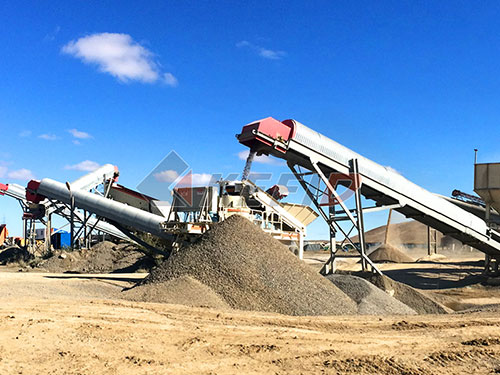
Impact Crushers: These are less common in primary gold applications due to their higher wear rates on abrasive ores. However, they are used for softer, friable ores or for recycling purposes. Horizontal shaft impactors (HSI) and vertical shaft impactors (VSI) are available. In gold plants, they are more often used in secondary or tertiary roles, or for pre-crushing in heap leach operations.
After primary crushing, the ore is typically reduced to 100–150 mm. Secondary and tertiary crushers further reduce this to 10–25 mm, which is the optimal feed size for grinding mills.
Cone Crushers: The dominant equipment in this stage. Cone crushers use a rotating mantle within a concave bowl, providing both compression and some attrition. They offer excellent product shape and a wide range of CSS adjustments. Modern cone crushers (e.g., HP Series by Metso, CH Series by Sandvik) are equipped with hydraulic adjustment systems, tramp iron release, and automatic setting regulation. They can produce a product of 6–50 mm, with capacities ranging from 100 to 1,000 tph. The crushing chamber design (short head vs. standard) is selected based on whether the duty is secondary or tertiary.
High-Pressure Grinding Rolls (HPGR): Increasingly adopted in gold plants for tertiary crushing or as a pre-grinding stage. HPGRs consist of two counter-rotating rolls, one fixed and one floating, which apply high pressure (up to 5,000 kN/m²) to the ore bed. This induces micro-cracks in the ore particles, significantly improving downstream grinding efficiency. HPGRs are particularly effective for competent ores and can reduce energy consumption by 20–30% compared to conventional cone crushers. They are also used in the comminution circuit of heap leach operations to increase the surface area for cyanide solution percolation.
Grinding is the most energy-intensive step in a gold processing plant, often consuming 40–50% of the total plant power. The objective is to liberate gold particles from the surrounding gangue minerals. The two primary types are:
Semi-Autogenous Grinding (SAG) Mills: These are large-diameter (up to 12 m), short-length mills that use a combination of ore itself and steel balls (typically 6–12% of mill volume) as grinding media. The ore is fed at one end and discharged through a grate at the other. SAG mills are capable of accepting feed directly from the primary crusher (100–200 mm) and reducing it to 1–2 mm. They are highly efficient for large-scale operations but require careful control of ore hardness and feed size distribution. Key parameters include mill speed (typically 70–80% of critical speed), ball charge, and liner design (rubber or steel).
Ball Mills: These are cylindrical mills, usually with a length-to-diameter ratio of 1.5:1 to 2:1, charged with steel balls (25–100 mm diameter). They operate in closed circuit with hydrocyclones to produce a final grind size of 75–150 microns (P80). Ball mills can be of overflow or grate discharge type. For gold plants, overflow ball mills are standard, as they allow for a finer product. The grinding media consumption is a significant operating cost, typically 0.5–1.5 kg per tonne of ore, depending on ore abrasiveness.
Vertical Stirred Mills (e.g., Vertimill, Isamill): Used for fine and ultra-fine grinding (below 20 microns), often in regrind circuits for refractory gold ores or for concentrate regrinding before leaching. These mills use a rotating screw or disc to stir a media charge (ceramic or steel beads). They are more energy-efficient than ball mills for fine grinding, with a smaller footprint and lower media consumption.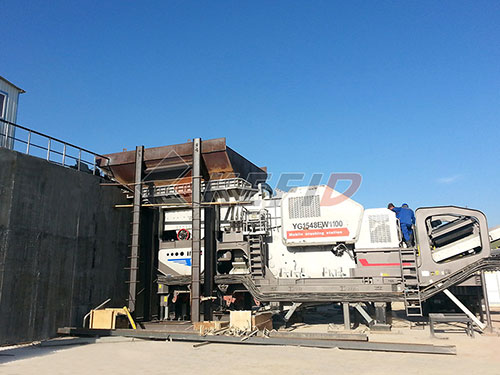
Classification separates particles by size and density, ensuring that the grinding mill receives only material of the correct size and that the product meets the required P80 for downstream processes.
Hydrocyclones: The most common classifier in modern gold plants. A hydrocyclone uses centrifugal force to separate coarse particles (underflow) from fine particles (overflow). The feed slurry is injected tangentially, creating a vortex. Coarse, heavy particles move to the wall and exit through the apex (underflow), while fine particles exit through the vortex finder (overflow). Cyclone diameter (typically 250–800 mm), inlet pressure (100–200 kPa), and apex diameter are the key variables. They are arranged in clusters to handle high volumetric flow rates.
Screens (Vibrating): Used in crushing circuits and for final product sizing. Banana screens and horizontal screens are common. They use a vibrating motion to stratify particles, allowing undersize material to pass through the screen deck. Screen apertures range from 0.5 mm to 100 mm. For fine screening (below 1 mm), high-frequency screens or Derrick screens are used.
Gravity concentration exploits the high specific gravity of gold (19.3 g/cm³) relative to gangue minerals (2.6–3.0 g/cm³). It is used to recover coarse, free-milling gold before cyanidation, reducing the load on the leach circuit and improving overall recovery.
Jigs: These are pulsating devices that create a fluidized bed. The ore is fed onto a screen, and water pulses are applied, causing heavy gold particles to sink and be collected in a hutch, while lighter particles are carried over the top. Jigs are effective for particles in the 1–10 mm range. They are often used in the primary grinding circuit (e.g., in a “gravity circuit” after the SAG mill).
Shaking Tables (e.g., Wilfley Table): These are inclined, riffled tables that vibrate longitudinally. The feed slurry is introduced at the top corner, and the combined action of vibration and water flow separates particles by density. Gold concentrates at the top edge, while lighter minerals are washed down. Shaking tables are used for final cleaning of concentrates, producing a high-grade gold product (often 50–70% Au).
Centrifugal Concentrators (e.g., Knelson, Falcon): These are the most efficient gravity devices for fine gold recovery (down to 10 microns). A Knelson concentrator consists of a rotating bowl with fluidized water injection through the bowl’s riffles. The high centrifugal force (up to 200 G) traps heavy gold particles in the riffles, while lighter material is flushed out. They are operated in batch mode, with periodic flushing of the concentrate. Modern units (e.g., Knelson XD series) have capacities up to 1,000 tph of solids. Falcon concentrators use a similar principle but with a smooth bowl and a continuous discharge option (for lower-grade concentrates).
Flotation is used for refractory gold ores, where gold is finely disseminated in sulfide minerals (e.g., pyrite, arsenopyrite). The process involves conditioning the ore slurry with reagents (collectors, frothers, activators) and then aerating it in flotation cells. Gold-bearing sulfides attach to air bubbles and rise to the surface as a froth, which is collected.
Mechanical Flotation Cells: These are the standard. They consist of a tank with an impeller-stator mechanism that agitates the slurry and disperses air. Modern cells (e.g., Outotec TankCell, Metso RCS) range from 5 m³ to 600 m³ in volume. They are arranged in banks of 4–8 cells, with the concentrate from each cell being successively cleaned. Key parameters include impeller speed, air flow rate, and froth depth.
Column Flotation Cells: These are tall, cylindrical vessels (height-to-diameter ratio of 3:1 to 5:1) that use a counter-current flow of slurry and air bubbles. The feed enters at the middle, and air is sparged from the bottom. Column cells provide a higher grade concentrate due to the longer froth washing zone. They are used for cleaning stages or for recovering fine particles (< 20 microns).
For oxide and free-milling ores, cyanide leaching is the primary method. The gold is dissolved in a dilute cyanide solution (0.02–0.05% NaCN) under alkaline conditions (pH 10–11) to form a gold-cyanide complex. The two main process configurations are:
Carbon-in-Leach (CIL) and Carbon-in-Pulp (CIP): In CIL, leaching and adsorption occur simultaneously in the same tanks. In CIP, leaching occurs in dedicated tanks, followed by adsorption in separate tanks. The equipment consists of a series of agitated tanks (typically 4–8) with inter-stage screens to retain the activated carbon. The carbon (typically 3–6 g/L) adsorbs the gold-cyanide complex. Key equipment includes:
Heap Leaching: For low-grade ores (0.2–1.0 g/t Au), heap leaching is used. The ore is crushed to 10–25 mm, agglomerated with cement, and stacked on a lined pad. A dilute cyanide solution is applied via drip emitters or sprinklers. The pregnant solution is collected in a pond and processed through a carbon adsorption circuit (typically a series of carbon columns). Equipment includes stacking conveyors, agglomeration drums, pad liners (HDPE), and solution collection pumps.
Once the gold is loaded onto carbon or in solution, it must be recovered and refined.
Elution (Desorption) Columns: Loaded carbon is stripped of gold using a hot caustic-cyanide solution (e.g., 1% NaOH, 0.1% NaCN) at 90–120°C. The elution column is a vertical pressure vessel (e.g., AARL or Zadra process). The resulting pregnant eluate is rich in gold (100–1,000 ppm).
Electrowinning Cells: The gold is recovered from the eluate by electrodeposition onto steel wool cathodes. The cells operate at a low voltage (2–5 V) and high current density. The gold-laden steel wool is then removed and smelted.
Merrill-Crowe Process: For high-grade solutions (e.g., from filtration or intensive leaching), zinc dust is added to precipitate the gold. The solution is first de-aerated in a vacuum tower, then zinc dust is added in a clarifier. The gold-zinc precipitate is filtered and smelted.
Smelting Furnaces: The final step is smelting the gold concentrate (from electrowinning or Merrill-Crowe) with fluxes (borax, silica, nitre) in an induction or resistance furnace at 1,200–1,400°C. The result is a doré bar (typically 80–95% gold and silver), which is then sent to a refinery for further purification.
A complete processing plant also includes:
Modern gold plants are heavily automated. Programmable Logic Controllers (PLCs) and Distributed Control Systems (DCS) monitor and control all equipment. Key instrumentation includes:
Advanced control strategies, such as model predictive control (MPC), are used to optimize grinding and leaching circuits, maximizing recovery while minimizing energy and reagent consumption.
The catalog of gold mining equipment processing plants is vast and highly specialized. From primary jaw crushers to centrifugal concentrators and electrowinning cells, each piece of equipment is selected based on a detailed metallurgical assessment of the ore. The modern plant is a model of engineering efficiency, integrating comminution, gravity, flotation, and hydrometallurgical processes to achieve gold recoveries exceeding 95% for free-milling ores. As ore grades decline and complexity increases, the industry continues to innovate, with advances in HPGR technology, stirred milling, and alternative lixiviants (e.g., thiosulfate) promising to shape the next generation of processing plants. For any project, a thorough review of this equipment catalog, coupled with pilot plant testing, remains the cornerstone of successful gold production.
If you have any questions about our products, please feel free to contact us. We take all inquiries and suggestions very seriously.