
Title: Understanding FDA Approval in the Context of 250–300 TPH Stone Crushing Plant Pricing: A Technical and Regulatory Analysis
Abstract
The phrase “FDA approved 250–300tph stone crushing plant prices” frequently appears in online search queries and supplier marketing materials. However, this phrasing reflects a fundamental regulatory misunderstanding. The United States Food and Drug Administration (FDA) does not approve, certify, or regulate industrial aggregate processing equipment such as stone crushing plants. This article provides a professional, objective examination of what FDA approval actually entails, why it does not apply to 250–300 tonnes-per-hour (TPH) crushing plants, and how prospective buyers should interpret pricing for such equipment in the context of genuine regulatory compliance frameworks. It further analyzes the technical and economic factors that drive the cost of a 250–300 TPH stone crushing plant, offering a realistic pricing overview and guidance on evaluating supplier claims.
1. Introduction
The global market for construction aggregates—crushed stone, sand, and gravel—continues to expand, driven by infrastructure development, urbanization, and population growth. A 250–300 TPH stone crushing plant represents a mid-to-large-scale stationary or semi-mobile installation capable of processing significant volumes of raw rock into graded aggregate products. Buyers researching such equipment often encounter promotional language claiming “FDA approval,” particularly on international B2B platforms. This article clarifies the regulatory reality and provides a structured framework for understanding pricing in this equipment category.
2. The FDA’s Actual Scope of Authority
The U.S. Food and Drug Administration is a federal agency within the Department of Health and Human Services. Its mandate covers:
Industrial machinery used in mining, quarrying, and aggregate production falls entirely outside the FDA’s jurisdiction. There is no FDA approval pathway, certification program, or registration requirement for a stone crushing plant. Consequently, any claim that a 250–300 TPH crushing plant is “FDA approved” is factually incorrect. Such language may originate from translation errors, deliberate marketing embellishment, or confusion with other regulatory regimes (e.g., USDA, OSHA, or CE marking under European directives).
Prospective buyers should treat “FDA approved” claims for crushing equipment as a red flag indicating either a lack of regulatory literacy or an intent to mislead. Legitimate manufacturers do not make such claims.
3. Relevant Regulatory Frameworks for Crushing Plants
While the FDA is irrelevant to crushing equipment, several other regulatory and standards frameworks genuinely apply, and these can influence both design and pricing:
Compliance with these frameworks—particularly dust suppression, noise attenuation, and safety guarding—adds measurable cost to a crushing plant and should be factored into any pricing comparison.
4. Technical Composition of a 250–300 TPH Crushing Plant
To understand pricing, one must first understand what a 250–300 TPH plant comprises. A typical configuration for medium-hard rock (e.g., limestone, granite, basalt) includes:
The aggregate weight of such a plant typically ranges from 80 to 200 tonnes, depending on configuration and whether it is stationary or semi-mobile (skid- or wheel-mounted).
5. Pricing Analysis for 250–300 TPH Crushing Plants
Pricing for a 250–300 TPH stone crushing plant varies widely based on configuration, manufacturer origin, component quality, and scope of supply. The following ranges reflect market conditions as of the mid-2020s and should be treated as indicative rather than definitive:
5.1 Stationary Plant (Basic Configuration)
A stationary plant with jaw primary, cone secondary, screens, and conveyors, sourced from established Chinese manufacturers, typically ranges from USD 150,000 to USD 350,000 (FOB China). This excludes civil works, foundations, electrical infrastructure, and installation.
5.2 Stationary Plant (Premium Configuration)
A plant incorporating European or Japanese-branded crushers (e.g., Metso, Sandvik, Kleemann components), enhanced automation, dust collection, and higher-grade structural steel ranges from USD 500,000 to USD 1,200,000 or more.
5.3 Semi-Mobile or Modular Plant
Skid-mounted or wheel-mounted modular plants command a premium of 20–40% over comparable stationary configurations due to structural engineering, transportability features, and reduced site assembly time. Expect USD 300,000 to USD 800,000 for modular Chinese-origin equipment and USD 800,000 to USD 1,800,000 for premium Western-origin modular systems.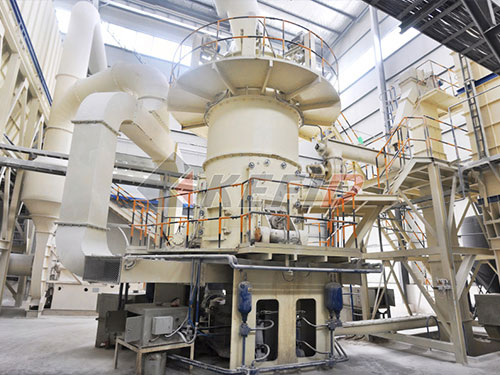
5.4 Additional Cost Considerations
5.5 Total Installed Cost
A realistic total installed cost for a 250–300 TPH plant, including equipment, civil works, electrical, installation, and contingency, ranges from approximately USD 300,000 (basic Chinese-origin stationary) to USD 2,000,000+ (premium Western-origin modular) .
6. Why “FDA Approved” Claims Distort Pricing Perception
The insertion of “FDA approved” into search queries and supplier listings creates several problems:
Buyers should instead request CE Declaration of Conformity, ISO 9001 certification, OSHA/MSHA compliance documentation (where applicable), and third-party inspection reports (e.g., SGS, Bureau Veritas) as evidence of genuine quality and compliance.
7. Procurement Recommendations
For buyers evaluating a 250–300 TPH crushing plant, the following steps are advised:
8. Conclusion
The concept of an “FDA approved 250–300tph stone crushing plant” is a regulatory fiction. The FDA has no jurisdiction over industrial aggregate processing equipment, and no such approval exists. Buyers should disregard this terminology and focus instead on genuine compliance frameworks—CE marking, ISO certification, OSHA/MSHA regulations, and EPA emissions standards—that materially affect equipment design, safety, and cost. Pricing for a 250–300 TPH crushing plant ranges from approximately USD 150,000 for a basic Chinese-origin stationary configuration to over USD 2,000,000 for a fully equipped, premium Western-origin modular installation, with total installed costs reflecting civil works, electrical infrastructure, and site-specific factors. Informed procurement, grounded in technical specifications and verifiable compliance documentation, remains the most reliable path to value in this equipment category.
Disclaimer: This article is provided for informational purposes only and does not constitute legal, regulatory, or procurement advice. Pricing figures are indicative estimates and vary by market conditions, supplier, and project specifics. Buyers should consult qualified engineers and regulatory specialists for project-specific guidance.
If you have any questions about our products, please feel free to contact us. We take all inquiries and suggestions very seriously.