
Export Quarry Ballast Crushing Equipment Processing Plant: A Comprehensive Analysis of Design, Function, and Global Market Dynamics
Introduction
The global quarrying and railway infrastructure sectors are intrinsically linked to the efficient production of ballast—a critical aggregate used as a foundation for railway tracks, roadways, and drainage systems. As demand for high-quality ballast escalates across emerging economies and developed nations undertaking rail network modernization, the export of complete quarry ballast crushing equipment processing plants has become a specialized and technically demanding segment of the heavy machinery industry. This article provides a detailed, objective examination of the components, operational principles, selection criteria, export considerations, and market trends associated with such processing plants. By analyzing the engineering and logistical dimensions, stakeholders can better understand the value chain from raw rock extraction to export-ready ballast.
1. Defining Quarry Ballast and Its Specifications
Ballast is typically produced from crushed hard rock such as granite, basalt, quartzite, or limestone. Unlike general construction aggregate, railway ballast must meet stringent specifications set by organizations such as the American Railway Engineering and Maintenance-of-Way Association (AREMA), the European Standard EN 13450, or national rail authorities. Key parameters include:
These requirements dictate that a quarry ballast crushing equipment processing plant cannot simply be a generic aggregate line. It must integrate specialized crushing, screening, and washing stages to ensure final product compliance.
2. Core Equipment Components of a Ballast Processing Plant
An export-oriented processing plant typically comprises several interconnected modules. The configuration depends on feed material characteristics, desired throughput (often 150–500 tonnes per hour), and site constraints.
2.1 Primary Crushing
Jaw crushers or gyratory crushers are standard for primary reduction. For hard rock quarries, a single-toggle jaw crusher with a feed opening of 1,000–1,200 mm is common. The primary crusher reduces run-of-quarry rock (up to 800 mm) to a nominal 150–200 mm product. Hydraulic adjustment and wear-resistant liners are essential for export markets where maintenance access may be limited.
2.2 Secondary Crushing
To achieve the cubical shape required for ballast, cone crushers—particularly high-speed, fine-chamber models—are preferred. Alternatively, horizontal shaft impactors (HSIs) can be used for less abrasive rock. The secondary stage further reduces material to approximately 60–80 mm, preparing it for final sizing. Automation systems that monitor CSS (closed side setting) and power draw are critical for consistent output.
2.3 Tertiary and Quaternary Crushing
For premium ballast, a tertiary cone or vertical shaft impactor (VSI) may be employed to eliminate flaky particles and ensure tight gradation. VSI crushers are especially effective in producing the angular, cubical shape mandated by railway standards. This stage often operates in closed circuit with a screen, recirculating oversize material.
2.4 Screening
Multi-deck vibrating screens are the heart of any ballast plant. Typically, a triple-deck screen separates material into oversize (+60 mm), product (25–60 mm), and fines (-25 mm). High-efficiency screens with polyurethane or rubber media reduce blinding and noise. For export, screens must be designed for ease of tensioning and replacement, as local spare parts may be unavailable.
2.5 Washing and Fines Removal
Ballast must be free of clay and dust. Log washers, spiral classifiers, or high-pressure water spray bars on screens are used to scrub material. The resulting slurry is processed in a thickener or filter press to recover water and produce a dry, stackable fines by-product. This closed-loop water management is increasingly required by environmental regulations in export destinations.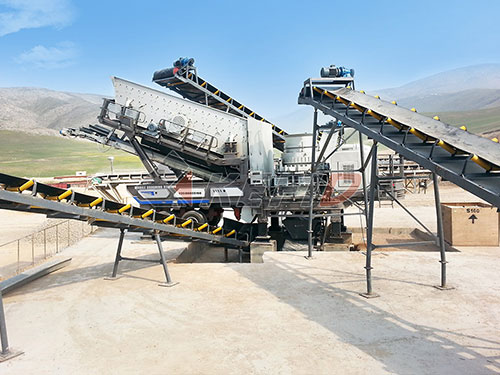
2.6 Auxiliary Systems
3. Plant Design and Process Flow
A typical export-oriented ballast processing plant follows this flow:
Throughput is balanced by surge bins and variable-frequency drives on feeders. The plant layout must allow for future expansion and easy access for maintenance.
4. Export Considerations for Ballast Crushing Plants
Exporting a complete processing plant involves engineering, logistics, and compliance challenges distinct from domestic sales.
4.1 Modularization and Containerization
Plants are often designed as skid-mounted or containerized modules to reduce shipping costs and on-site assembly time. Maximum module dimensions must fit into standard 40-foot high-cube containers or flat racks. Pre-wiring and pre-piping reduce installation errors in remote quarries.
4.2 Voltage and Frequency Compatibility
Export destinations may use 380V/50Hz, 440V/60Hz, or 660V systems. Motors, starters, and control panels must be specified accordingly. Dual-voltage motors or transformers can add flexibility.
4.3 Documentation and Certification
4.4 Spare Parts and After-Sales Support
Exporters must provide a recommended spare parts list for two years of operation, including jaw plates, cone liners, screen media, and bearings. Remote diagnostics via cellular or satellite links are increasingly expected. Training for local operators—either on-site or via virtual reality modules—reduces downtime.
4.5 Logistics and Incoterms
FOB, CIF, or DAP terms affect cost and risk. Heavy lifts (e.g., crusher main frames) may require break-bulk vessels. Exporters should account for port handling, inland transport, and customs clearance in the destination country.
5. Market Drivers and Global Demand
Several factors are propelling the export of quarry ballast crushing equipment processing plants:
Key exporting countries include China, Germany, Turkey, and India. Chinese manufacturers dominate the mid-range market due to competitive pricing and flexible financing. European suppliers lead in high-end automation and wear technology.
6. Economic and Operational Considerations
6.1 Capital vs. Operating Expenditure
A 300-tph ballast plant may cost USD 1.5–4 million FOB, depending on automation and wear materials. Operating costs are driven by energy (20–30 kWh/t), wear parts (0.5–1.5 USD/t), and labor. Exporters should provide total cost of ownership models.
6.2 Energy Efficiency
Variable-frequency drives on crushers and conveyors can reduce energy consumption by 15–20%. High-efficiency motors (IE3 or IE4) are mandatory in many markets.
6.3 Availability and Reliability
Mean time between failures (MTBF) should exceed 1,000 hours for critical components. Redundant lubrication systems and condition monitoring sensors improve availability.
7. Environmental and Safety Standards
Export plants must comply with increasingly stringent norms:
Documentation for environmental impact assessments (EIAs) is often required by the importing country.
8. Case Study: A Hypothetical Export Project
Consider a granite quarry in West Africa requiring 200 tph of railway ballast. The exporter designs a modular plant:
The plant is shipped in 12 containers and 4 flat racks. Installation takes 8 weeks with a 3-person expatriate team and 10 local workers. Commissioning includes 72-hour performance test. Spare parts for 2 years are supplied. The exporter provides training and a 12-month warranty.
9. Challenges and Risk Mitigation
10. Future Trends
Conclusion
The export of quarry ballast crushing equipment processing plants is a sophisticated engineering and commercial endeavor. Success requires a deep understanding of railway ballast specifications, modular plant design, international logistics, and after-sales support. As global rail infrastructure expands, demand for reliable, efficient, and environmentally compliant processing plants will continue to grow. Exporters that prioritize customization, documentation, and lifecycle support will capture sustainable market share. For quarry operators, investing in a properly designed export plant ensures consistent ballast quality, lower operating costs, and compliance with stringent standards—ultimately supporting the safety and longevity of railway networks worldwide.
If you have any questions about our products, please feel free to contact us. We take all inquiries and suggestions very seriously.