Export Iron Ore Crushing Plant Quote: A Comprehensive Technical and Commercial Analysis
The global iron ore market remains one of the most dynamic and capital-intensive sectors within the mining and metallurgical industries. As steel production continues to drive infrastructure development, automotive manufacturing, and heavy machinery fabrication, the demand for processed iron ore—specifically in the form of crushed, screened, and beneficiated lump ore and fines—has never been more critical. For engineering procurement and construction (EPC) firms, mining operators, and trading houses, the ability to secure an accurate, competitive, and technically robust export iron ore crushing plant quote is the cornerstone of project feasibility. This article provides a detailed, professional, and objective examination of the components, pricing drivers, technical specifications, logistical considerations, and strategic factors that define a credible export quotation for an iron ore crushing plant.
1. Scope Definition: What Does an Export Crushing Plant Quote Encompass?
An export quote is not merely a price list; it is a comprehensive commercial proposal that outlines the entire value chain from raw ore feed to shiploadable product. A professional quote must clearly delineate the following: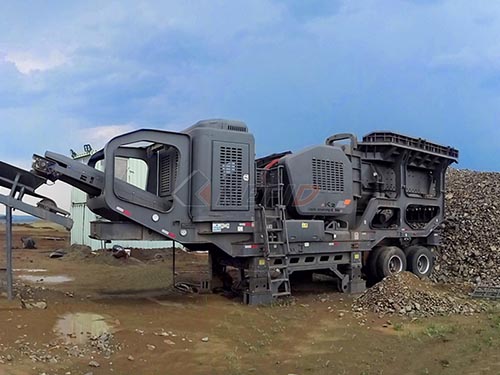
- Process Flow Design: Primary crushing (typically jaw or gyratory crushers), secondary crushing (cone crushers), tertiary crushing (high-pressure grinding rolls or short-head cones), and screening (vibrating screens with multiple decks). The quote must specify the target product size distribution, typically 0–6.3 mm for sinter feed fines and 6.3–31.5 mm for lump ore, as per standard international trade specifications (e.g., Platts IODEX).
- Capacity Rating: The nominal throughput in tonnes per hour (tph) or million tonnes per annum (Mtpa). Export plants typically range from 2 Mtpa to 20 Mtpa, with larger installations requiring modular or parallel crushing lines.
- Material Characteristics: The quote must be based on the specific ore type—hematite, magnetite, goethite, or blended ores—including Bond Work Index (Wi), abrasion index (Ai), moisture content, and bulk density. These parameters directly influence crusher selection, liner wear rates, and power consumption.
- Scope of Supply: The quotation should clearly separate equipment supply (crushers, screens, feeders, conveyors, chutes, dust suppression systems), structural steel, platework, electrical and instrumentation (E&I), control systems (PLC/SCADA), and civil works (foundations, earthworks). Many export quotes are offered on an FOB (Free On Board) or CIF (Cost, Insurance, Freight) basis, with clear Incoterms 2020 definitions.
2. Key Technical Components and Their Cost Implications
A detailed export quote must itemize the major mechanical equipment, as these represent 60–70% of the total plant capital cost. The following are the core components with their typical cost drivers:
- Primary Crusher: For high-capacity export plants, a gyratory crusher (e.g., 60-110 series) or a large jaw crusher (e.g., 1,500 x 1,200 mm) is standard. The quote should include the crusher base frame, main shaft, eccentric assembly, hydraulic adjustment system, and motor (typically 250–400 kW). Gyratory crushers are more expensive (USD 1.5–3 million) but offer higher throughput and lower maintenance per tonne compared to jaws.
- Secondary and Tertiary Cone Crushers: Modern plants employ heavy-duty cone crushers with automated setting regulation (e.g., HP series or CH series). Each unit costs between USD 500,000 and USD 1.2 million depending on cavity configuration (coarse, medium, fine) and power rating (200–500 kW). The quote must include spare bowl liners and mantle sets, which are consumables with a life of 3–6 months depending on ore abrasiveness.
- Screening Equipment: Multi-deck inclined or horizontal screens (e.g., 3.0 m x 7.3 m) are required for accurate classification. The quote should specify screen media (polyurethane, rubber, or wire mesh), which affects both cost and screening efficiency. High-frequency dewatering screens are often included for moisture control in fines.
- Conveying System: Belt conveyors, transfer chutes, and stackers. The quote must include belt width (1,200–1,800 mm), belt speed (2.5–4.0 m/s), and motor power. Long overland conveyors (if required) can add USD 1,000–2,000 per linear meter.
- Dust Suppression and Environmental Controls: Export plants must comply with international environmental standards (e.g., IFC Performance Standards). The quote should include water spray systems, baghouse filters, or dry fog systems. This can add 5–8% to total equipment cost but is non-negotiable for port-side operations.
3. Pricing Structure and Cost Drivers
An objective export quote must be transparent about the cost build-up. The major cost categories are:
- Equipment Cost (FOB factory): This is the base price from the manufacturer. For a 5 Mtpa plant, the total mechanical equipment cost typically ranges from USD 8 million to USD 15 million. Premium brands (Metso, Sandvik, FLSmidth, ThyssenKrupp) command a 15–25% premium over Chinese or Indian equivalents (e.g., CITIC, Shanghai Shibang, Puzzolana), but offer higher reliability and lower downtime.
- Engineering and Design: This includes process flow diagrams (PFDs), piping and instrumentation diagrams (P&IDs), 3D modeling, and structural calculations. Professional engineering fees range from 5–10% of equipment cost, depending on the complexity of the ore and the level of customization.
- Fabrication and Structural Steel: For a typical crushing plant, structural steel tonnage is 800–1,500 tonnes. At current global steel prices (USD 800–1,200 per tonne fabricated), this represents USD 640,000 to USD 1.8 million. The quote must specify whether steel is supplied painted, galvanized, or with specialized corrosion protection for marine environments.
- Electrical and Instrumentation: Motors, variable frequency drives (VFDs), switchgear, transformers, cabling, and control panels. This typically accounts for 12–18% of total plant cost. A modern PLC-based control system with remote monitoring adds USD 200,000–500,000.
- Freight and Logistics: For export quotes, sea freight from the manufacturing country (e.g., China, India, Europe) to the destination port (e.g., Port Hedland, Tubarão, Saldanha Bay) is a major variable. A 40-foot container of crusher parts costs USD 3,000–6,000, while break-bulk shipments of large crusher frames require specialized heavy-lift vessels. The quote must include marine insurance (typically 0.3–0.5% of cargo value) and port handling charges.
- Installation and Commissioning: If the quote includes supervision, the cost is typically USD 800–1,500 per day per expatriate engineer, plus travel and accommodation. Local labor costs vary significantly—from USD 20/hour in Southeast Asia to USD 80/hour in Australia.
4. Comparative Analysis: OEM vs. Non-OEM Quotes
When soliciting export quotes, buyers often receive proposals from both original equipment manufacturers (OEMs) and independent engineering firms that source equipment from multiple vendors. An objective comparison reveals:
- OEM Quotes: These are typically higher (10–20% premium) but include integrated process guarantees, single-point responsibility, and access to proprietary wear parts. For example, a Metso complete crushing plant quote for 10 Mtpa will include performance guarantees on throughput and product size, with penalties for non-compliance.
- Non-OEM/Integrator Quotes: These offer lower upfront costs (often 15–30% cheaper) but require the buyer to manage interface risks between different equipment suppliers. The quote may exclude critical items such as chute liners, fasteners, or safety guarding, leading to cost overruns during erection.
5. Operational and Maintenance Cost Considerations
A professional export quote should also provide an estimate of operating expenditure (OPEX) per tonne, as this influences the total cost of ownership (TCO). Key OPEX items include:
- Power Consumption: A typical crushing plant consumes 0.8–1.5 kWh per tonne of ore. At an industrial electricity tariff of USD 0.08–0.15/kWh, this translates to USD 0.06–0.23 per tonne.
- Wear Parts: Crusher liners, screen panels, and conveyor belts. For abrasive hematite (Ai > 0.5), liner life may be only 2,000–4,000 hours. Wear part costs range from USD 0.15–0.40 per tonne.
- Labor: A 5 Mtpa plant requires 15–25 operators and maintenance staff. Fully loaded labor costs vary from USD 30,000–80,000 per person per year in developing countries to USD 120,000+ in Australia or Canada.
6. Export Compliance and Documentation
An export quote must include all necessary documentation for customs clearance and international trade compliance. This includes: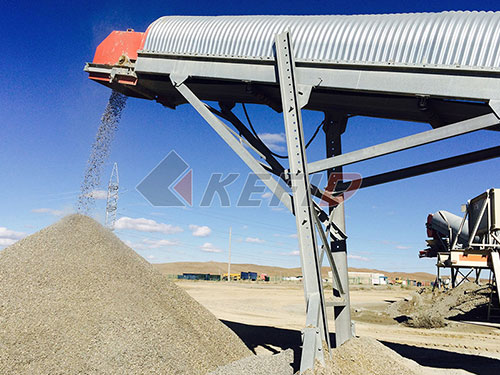
- Commercial Invoice and Packing List: Detailed with HS codes (e.g., 8474.20 for crushing machines).
- Certificate of Origin: Required for preferential tariff treatment under free trade agreements (e.g., RCEP, AfCFTA).
- Inspection Certificates: Pre-shipment inspection by SGS, Bureau Veritas, or Intertek to verify quantity, quality, and conformity to specifications.
- Export License: For certain dual-use technologies or when exporting to sanctioned countries (e.g., Russia, Iran), an export license may be required. The quote should state whether the supplier holds the necessary permits.
7. Lead Time and Project Scheduling
A realistic export quote must include a clear delivery schedule. Typical lead times are:
- Engineering and design: 4–8 weeks.
- Equipment fabrication: 12–20 weeks for standard crushers; 24–36 weeks for custom-built gyratory crushers.
- Sea freight: 4–8 weeks from China/India to Africa or South America; 6–10 weeks to Australia.
- Erection and commissioning: 16–30 weeks on-site, depending on labor availability and weather conditions.
Total project duration from order to first production is typically 12–18 months. A credible quote will include a Gantt chart or milestone schedule with penalty clauses for late delivery.
8. Risk Mitigation and Payment Terms
Professional export quotes should address risk allocation through:
- Payment Terms: Common terms are 30% advance payment, 40% against progress payment (e.g., upon completion of fabrication), 20% against shipping documents, and 10% against successful commissioning. Letters of credit (L/C) at sight are standard for high-value transactions.
- Performance Bonds and Guarantees: A 5–10% performance bond is typical, backed by a bank guarantee. The quote should specify the warranty period (usually 12–24 months from commissioning) and the response time for spare parts supply.
- Force Majeure and Dispute Resolution: The quote should reference governing law (e.g., English law or Singapore International Arbitration Centre rules) to avoid jurisdictional ambiguity.
9. Case Study: Indicative Quote for a 5 Mtpa Export Plant
To provide a concrete reference, consider a hypothetical export quote for a 5 Mtpa hematite crushing plant destined for a West African port. The ore has a Bond Work Index of 14 kWh/t, bulk density of 2.4 t/m³, and feed size of 800 mm.
- Equipment (FOB China): USD 9.5 million (including primary jaw crusher, two secondary cone crushers, four vibrating screens, six conveyors, and dust suppression).
- Engineering and supervision: USD 850,000.
- Structural steel and platework (fabricated in China): USD 1.4 million.
- E&I and control system: USD 1.6 million.
- Sea freight (CIF to West Africa): USD 1.2 million (including heavy-lift vessel for crusher frames).
- Installation and commissioning (supervision only): USD 600,000.
- Total capital cost (excl. civil works): USD 15.15 million.
This translates to a specific capital cost of approximately USD 3.03 per annual tonne of capacity, which is within the industry benchmark of USD 2.5–4.0 per annual tonne for open-pit, non-beneficiated crushing plants.
10. Conclusion: How to Evaluate an Export Quote
An export iron ore crushing plant quote is a living document that requires careful technical and commercial scrutiny. Buyers should not simply compare the bottom-line price but must evaluate:
- The completeness of the scope (are all chutes, walkways, and safety guards included?).
- The credibility of the performance guarantees (is there a penalty for not meeting throughput?).
- The availability of local after-sales support and spare parts warehousing.
- The financial stability of the supplier (can they sustain warranty obligations?).
In a market where iron ore prices fluctuate between USD 80 and USD 200 per tonne, the difference between a well-engineered plant and a budget-priced alternative can mean millions of dollars in lost production or excessive maintenance. Therefore, a professional, objective, and transparent export quote is not just a commercial document—it is the blueprint for a profitable and sustainable mining operation. Engaging a reputable engineering consultant to review the quote against international standards (ISO 9001, ISO 14001, and relevant safety codes) is strongly recommended before any financial commitment is made. Ultimately, the lowest quote is rarely the cheapest over a 10-year operating horizon; the optimal quote is one that balances capital cost, operational efficiency, and reliability.
