
Gyratory Crusher Exporter Prices: A Comprehensive Market Analysis and Procurement Guide
Introduction
The global mining and aggregate processing industries rely heavily on robust, high-capacity crushing equipment to reduce run-of-mine ore and rock to manageable sizes. Among the most critical machines in primary crushing circuits is the gyratory crusher. Known for its ability to handle extremely hard and abrasive materials, the gyratory crusher is a capital-intensive investment that demands careful consideration of price, quality, and after-sales support. For international buyers, understanding the dynamics of gyratory crusher exporter prices is essential to making informed procurement decisions. This article provides a detailed, objective analysis of the factors influencing export pricing, market trends, price ranges, and strategic considerations for buyers.
1. The Gyratory Crusher: A Technical Overview
Before delving into pricing, it is important to understand what distinguishes a gyratory crusher from other primary crushers (e.g., jaw crushers or impact crushers). A gyratory crusher consists of a concave surface (fixed) and a conical head (gyrating). The crushing action is continuous, with the head moving eccentrically to compress material against the concave. This design allows for a higher throughput capacity (often 2,000 to 10,000+ tons per hour) and a larger feed opening compared to jaw crushers of similar size. Key components include the main shaft, mantle, concave liners, spider assembly, hydraulic adjustment system, and drive train. The complexity and size of these components directly impact manufacturing costs and, consequently, export prices.
2. Factors Determining Gyratory Crusher Exporter Prices
Export prices for gyratory crushers are not arbitrary; they are the result of a confluence of technical, economic, and logistical factors. The following are the primary determinants:
a. Machine Size and Capacity
The single most significant price driver is the crusher’s physical size and throughput capacity. Small to medium gyratory crushers (e.g., 42-65 inch feed openings) are less expensive than large, ultra-heavy-duty units (e.g., 60-110 inch or 72-89 inch). A larger crusher requires more raw material (steel, castings), larger machining centers, and more complex assembly. For example, a 42-65 gyratory crusher may have an export price range of $500,000 to $1.2 million, while a 60-110 unit can exceed $3 million to $5 million.
b. Material and Component Quality
The metallurgy of wear parts (mantles and concaves) and structural components significantly affects price. High-manganese steel (e.g., 14% Mn) is standard, but premium alloys with chromium, molybdenum, or ceramic inserts can increase wear life by 20-50%—at a corresponding cost premium. Exporters offering OEM-grade or aftermarket parts with certified quality (e.g., ISO 9001, ASTM standards) typically charge 15-30% more than those using lower-grade materials.
c. Manufacturer Brand and Reputation
Established global brands—such as Metso Outotec, Sandvik, FLSmidth, Thyssenkrupp, and CITIC Heavy Industries—command premium prices due to their engineering expertise, reliability, and extensive service networks. A new gyratory crusher from a top-tier OEM can cost 20-40% more than a comparable unit from a lesser-known Chinese or Indian exporter. However, the latter may offer competitive pricing for buyers willing to accept longer lead times or less comprehensive support.
d. Customization and Configuration
Standard, off-the-shelf models are generally less expensive than custom-engineered solutions. Buyers may require specific features such as:
e. Manufacturing Location and Labor Costs
Export prices vary significantly by country of origin. Chinese manufacturers (e.g., Shenyang Sanland, Shanghai Shibang) often offer lower prices due to lower labor costs, government subsidies, and economies of scale. A Chinese-made gyratory crusher may be 30-50% cheaper than a European or North American equivalent. However, buyers must weigh this against potential differences in quality control, warranty terms, and shipping costs. Indian exporters (e.g., Puzzolana, Terex) occupy a middle ground, with prices typically 10-20% lower than Western OEMs.
f. Shipping, Logistics, and Import Duties
Gyratory crushers are extremely heavy (often 100-500 metric tons) and require specialized heavy-lift shipping, often in multiple sub-assemblies. Export prices quoted as FOB (Free on Board) exclude ocean freight, insurance, and inland transportation. A complete crusher shipped from China to a port in Africa or South America can add $50,000 to $200,000 in logistics costs. Additionally, import duties, taxes, and customs clearance fees vary by destination country (e.g., 5-20% in many developing nations), which must be factored into the total landed cost.
g. Market Demand and Commodity Cycles
The mining industry is cyclical. During periods of high commodity prices (e.g., copper, gold, iron ore), demand for new crushers surges, and exporters may raise prices by 10-15%. Conversely, during downturns, prices may soften, and exporters may offer discounts or flexible payment terms. As of 2025, the market is experiencing moderate growth driven by infrastructure projects in Asia and Africa, with prices stabilizing after post-pandemic inflation.
3. Typical Price Ranges for Gyratory Crushers (Export, 2025)
The following are approximate price ranges for new gyratory crushers, based on industry data and exporter quotations. Prices are in USD and are FOB (ex-works) unless noted.
| Crusher Size (Feed Opening) | Typical Capacity (tph) | OEM (Western) Price Range | Chinese Exporter Price Range | Indian Exporter Price Range |
|---|---|---|---|---|
| 42-65 inch | 1,200 – 2,500 | $1.2M – $2.0M | $600K – $1.0M | $800K – $1.3M |
| 50-65 inch | 1,800 – 3,500 | $1.8M – $2.8M | $900K – $1.5M | $1.2M – $1.8M |
| 54-75 inch | 2,500 – 4,500 | $2.5M – $3.8M | $1.3M – $2.2M | $1.6M – $2.5M |
| 60-89 inch | 3,500 – 6,000 | $3.5M – $5.5M | $1.8M – $3.0M | $2.2M – $3.5M |
| 60-110 inch | 5,000 – 10,000+ | $5.0M – $8.0M+ | $2.5M – $4.5M | $3.0M – $5.0M |
Note: Prices for used or refurbished gyratory crushers are typically 40-60% lower than new, but availability is limited and condition varies widely.
4. Additional Cost Considerations Beyond the Crusher Itself
Export prices often do not include essential ancillary equipment and services. Buyers should budget for:
5. Strategies for Buyers to Optimize Export Pricing
To secure competitive gyratory crusher exporter prices, buyers should adopt a structured procurement approach: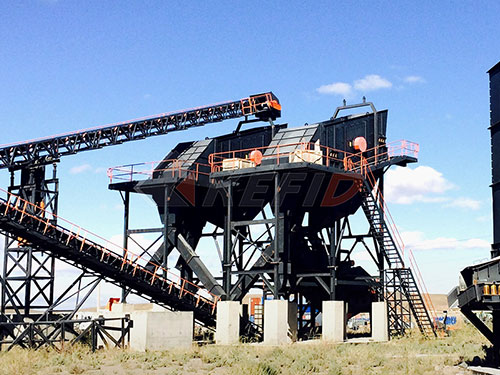
a. Request Multiple Quotations
Solicit bids from at least three to five exporters across different regions (e.g., China, India, Europe). Provide a detailed technical specification sheet to ensure apples-to-apples comparisons. Be wary of unusually low prices, which may indicate substandard materials or hidden costs.
b. Negotiate Payment Terms
Exporters often offer discounts for upfront payments or letters of credit (L/C). Typical terms are 30% down payment, 40% on shipment, and 30% on commissioning. Negotiating a lower down payment or milestone-based payments can improve cash flow.
c. Consider Used or Refurbished Units
For projects with tight budgets, a well-maintained used gyratory crusher from a reputable OEM can be a cost-effective alternative. Prices for used units range from $200,000 to $1.5 million, depending on age, condition, and remaining wear life. Ensure a thorough inspection by an independent engineer.
d. Evaluate Total Cost of Ownership (TCO)
The lowest purchase price does not always equate to the lowest total cost. Factor in:
A slightly more expensive crusher with better wear life and local service may save hundreds of thousands of dollars over a 10-year lifespan.
e. Leverage Trade Agreements and Financing
Some countries have free trade agreements (e.g., between India and certain African nations) that reduce import duties. Additionally, export credit agencies (e.g., China Exim Bank, US EXIM) may offer buyer financing at favorable rates, effectively reducing the upfront cost.
6. Market Outlook and Future Price Trends
The global gyratory crusher market is projected to grow at a CAGR of 4-6% through 2030, driven by increasing mining activity in Latin America, Africa, and Southeast Asia. Key trends affecting export prices include:
Conclusion
Gyratory crusher exporter prices are influenced by a complex interplay of technical specifications, manufacturing origin, market conditions, and logistical factors. While prices can range from under $1 million for a small Chinese-made unit to over $8 million for a large Western OEM model, buyers must look beyond the initial sticker price. A thorough evaluation of quality, after-sales support, total cost of ownership, and financing options is essential. By understanding the market dynamics and employing strategic procurement practices, international buyers can secure competitive pricing while ensuring reliable, long-term crushing performance for their operations. As the mining industry continues to expand, the demand for these massive machines will remain robust, making informed price negotiation a critical skill for project managers and procurement professionals alike.
If you have any questions about our products, please feel free to contact us. We take all inquiries and suggestions very seriously.