Custom Crushing and Screening Equipment Price: A Comprehensive Guide to Cost Factors, Market Dynamics, and Procurement Strategies
The global aggregate, mining, and construction recycling industries rely on crushing and screening equipment to transform raw rock, ore, and demolition debris into usable, saleable fractions. While off-the-shelf, standardized plants are common, a growing segment of operators—particularly those with unique feed materials, strict product specifications, or confined project footprints—opt for custom-engineered solutions. However, the question that dominates every procurement discussion is: What is the price of custom crushing and screening equipment?
Unlike standard catalog units, custom equipment has no single price point. A bespoke system can range from $250,000 for a small, skid-mounted jaw crusher with a simple screen to $15 million or more for a fully integrated, multi-stage, semi-mobile or stationary plant with advanced automation, dust suppression, and remote diagnostics. This article provides a professional, objective breakdown of the variables that determine custom equipment pricing, current market trends, and actionable guidance for budgeting and negotiation.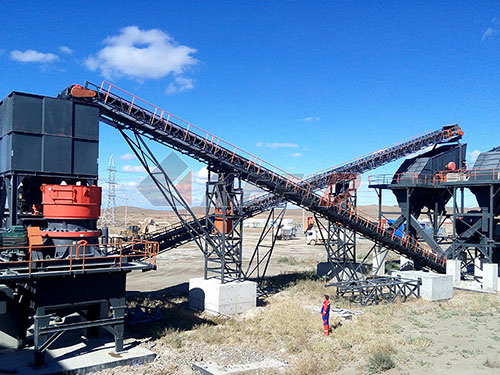
1. The Fundamental Price Architecture: What Are You Actually Paying For?
A custom crushing and screening system is not a single machine but an engineered assembly of mechanical, electrical, and structural components. The final price is a sum of several distinct cost centers:
- Primary Crushing Unit (e.g., Jaw, Gyratory, or Impact Crusher): $150,000 – $2,500,000 depending on feed opening, throughput (tph), and power rating.
- Secondary/Tertiary Crushers (Cone, VSI, or HPGR): $200,000 – $3,000,000 per unit.
- Screening Decks (Vibrating, Horizontal, or Banana Screens): $50,000 – $600,000 per screen, depending on number of decks, screen area, and throw angle.
- Feeders, Hoppers, and Grizzlies: $30,000 – $400,000.
- Conveyor Systems (Belt, radial stackers, transfer conveyors): $20,000 – $150,000 per conveyor, with total system costs often exceeding $1 million for large plants.
- Structural Steel, Chassis, and Skids: 10–20% of total equipment cost.
- Electrical, PLC Controls, and Automation: 8–15% of total cost, rising to 20% for fully autonomous plants.
- Dust Suppression, Noise Enclosures, and Safety Systems: 5–10% of total cost.
- Engineering, Design, and Project Management: 5–12% of total cost, often overlooked but critical for custom work.
Thus, a realistic baseline for a custom, mid-sized (300–500 tph) portable or modular plant is $1.5 million to $4 million. A large stationary system (1,000+ tph) with multiple stages, surge bins, and reclaim systems typically lands between $6 million and $12 million.
2. Key Cost Drivers Specific to Customization
The word “custom” implies deviation from standard designs. Each deviation carries a price premium. The following factors have the most significant impact on the final quote:
a) Feed Material Characteristics
- Abrasive rock (granite, basalt, quartzite): Requires high-chrome blow bars, manganese liners, and heavier-duty bearings. This can increase crusher cost by 15–25% compared to limestone-only designs.
- Moisture content and clay content: High clay requires additional washing systems, scrubbers, or specialized screen media (polyurethane vs. wire mesh), adding $100,000 – $500,000.
- Feed size distribution: Oversized boulders (>1,000 mm) necessitate larger primary crushers and heavier feeders, pushing costs upward.
b) Throughput and Reduction Ratio
- A custom plant designed for 200 tph will cost significantly less per ton than a 800 tph plant, but the per-ton capital cost is not linear. Doubling throughput typically increases price by 60–80%, not 100%, due to shared infrastructure.
- Higher reduction ratios (e.g., 6:1 in a single jaw) require larger crushers or additional stages, adding $300,000 – $800,000 per extra stage.
c) Mobility vs. Stationary
- Track-mounted mobile crushers: Premium of 30–50% over stationary equivalents due to hydraulic drives, undercarriages, and onboard conveyors. A custom track-mounted jaw crusher (e.g., 40” x 24”) can cost $500,000 – $1.2 million.
- Wheeled portable plants: Moderate premium (15–25%) over stationary, but lower than tracked.
- Stationary plants: Lowest equipment cost but higher civil works (foundations, retaining walls) that are often excluded from the equipment quote.
d) Automation and Digital Integration
- Basic PLC with start/stop and overload protection: +$50,000 – $150,000.
- Advanced automation with load-sensing, feed rate optimization, and remote monitoring (e.g., Metso Metrics, Sandvik My Fleet): +$200,000 – $600,000.
- Fully autonomous systems with AI-based particle size analysis and self-adjusting crusher settings: +$1 million or more.
e) Environmental Compliance
- Enclosed structures for noise reduction: +$100,000 – $500,000.
- High-efficiency baghouse or wet scrubber dust collection: +$150,000 – $800,000.
- Water recycling and settling ponds (for washing plants): +$200,000 – $1 million.
f) Geographic and Logistical Factors
- Freight and import duties: For a plant built in Europe or North America and shipped to Africa, Asia, or South America, freight can add 5–15% of equipment value. Remote sites with poor road access may require disassembly and re-assembly, adding another 5–10%.
- Local content requirements: Some countries mandate local fabrication of structural steel, which can either reduce or increase costs depending on local labor rates.
3. Market Price Benchmarks (2024–2025 Data)
Based on recent tenders, manufacturer quotes, and used-equipment auction data, the following are indicative price ranges for custom-built systems (excluding installation and civil works):
| System Type |
Typical Capacity |
Price Range (USD) |
| Custom skid-mounted jaw + screen (recycling) |
100–200 tph |
$350,000 – $700,000 |
| Custom portable cone + triple-deck screen |
250–400 tph |
$1.2M – $2.5M |
| Custom modular 2-stage (jaw + cone) plant |
400–600 tph |
$2.5M – $4.5M |
| Custom stationary 3-stage (jaw + cone + VSI) |
600–1,000 tph |
$5M – $9M |
| Custom high-spec washing & screening plant |
300–500 tph |
$3M – $6M |
| Fully automated, multi-stage, with surge and reclaim |
1,200+ tph |
$10M – $15M+ |
These figures assume standard steel grades, moderate abrasion, and no extreme environmental enclosures. Prices from Tier-1 manufacturers (Metso Outotec, Sandvik, Terex, Kleemann, McCloskey) are typically 20–35% higher than regional or second-tier brands (e.g., Superior Industries, IROCK, or Chinese OEMs like Sany and Zoomlion) for equivalent specifications.
4. The Hidden Costs of Customization: Engineering and After-Sales
A common mistake is comparing only the equipment purchase price. For custom systems, the engineering and integration cost is often the largest hidden variable. A reputable manufacturer will spend 200–500 engineering hours on your project, including:
- 3D modeling and finite element analysis (FEA) for structural integrity.
- Simulation of material flow (DEM analysis) to prevent bottlenecks.
- Electrical schematics and control logic design.
- Site-specific layout drawings and foundation loads.
These services are typically bundled into the equipment price, but if you request extensive modifications after the initial design freeze, change orders can add 10–20% to the total contract.
Additionally, spare parts and wear parts for custom equipment are not interchangeable with standard units. You must budget for a 2-year supply of manganese liners, screen media, and hydraulic components. For a $3 million plant, this is typically $150,000 – $300,000.
5. How to Obtain an Accurate Quote: A Step-by-Step Procurement Approach
Given the wide price variance, professional buyers should follow a structured RFQ (Request for Quotation) process:
- Define your process parameters in writing: Feed material type, max feed size, required product gradations (e.g., 0-5mm, 5-20mm, 20-40mm), moisture, clay content, and target throughput (tph) at 90% availability.
- Provide site constraints: Available footprint, power supply (voltage, phase, frequency), elevation above sea level, ambient temperature range, and any noise/dust limits.
- Request a performance guarantee: The quote should include a guaranteed throughput and product curve, with penalties for non-performance.
- Compare on a “total cost of ownership” basis: Ask for estimated power consumption (kWh/ton), wear part life (hours), and maintenance man-hours per month. A cheaper machine with 20% higher energy consumption will cost more over 5 years.
- Request a breakdown of exclusions: Freight, installation, commissioning, operator training, and initial wear parts are often excluded. Clarify these before comparing quotes.
- Negotiate on payment terms: Custom equipment often requires 30% down, 40% on fabrication start, 20% on pre-shipment inspection, and 10% on commissioning. Try to tie final payment to performance verification.
6. Price Trends and Future Outlook
As of late 2025, the market for custom crushing and screening equipment is experiencing moderate price inflation (3–6% annually) due to:
- Steel price volatility (global HRC steel prices have fluctuated between $600 and $900/ton).
- Supply chain constraints for hydraulic motors, bearings, and PLC components (lead times for custom gearboxes have extended to 6–9 months).
- Increased demand for recycled aggregates in Europe and North America, pushing manufacturers to prioritize custom recycling plants over traditional quarry equipment.
However, technological deflation is occurring in automation. The cost of sensors, cameras, and edge computing has dropped by 30% since 2020, making advanced monitoring more affordable. Expect future custom plants to include AI-driven crusher gap adjustment and predictive maintenance as standard, which will slightly raise upfront costs but reduce operating expenses.
7. Conclusion: Budgeting Realistically
The price of custom crushing and screening equipment is not a single number but a function of engineering complexity, material properties, mobility, automation, and geographic logistics. A pragmatic budget for a medium-scale custom plant (300–500 tph) should be $2 million to $4 million for the equipment alone, plus $500,000 to $1 million for installation, civil works, and commissioning. For high-capacity, fully automated stationary systems, expect $8 million to $15 million.
To avoid budget overruns, always:
- Engage at least three reputable manufacturers with proven custom experience.
- Provide complete, unambiguous process data.
- Insist on a fixed-price contract with clear performance guarantees.
- Allocate a 10–15% contingency fund for change orders and site-specific surprises.
In the end, the true value of custom equipment lies not in its purchase price but in its ability to produce a consistent, high-quality product at the lowest possible cost per ton over a 10–20 year lifespan. A well-engineered custom plant, despite its higher initial cost, often delivers a 20–30% lower operating cost compared to a standard plant that requires constant modifications. Therefore, treat the price as an investment in operational precision, not merely an expense.
